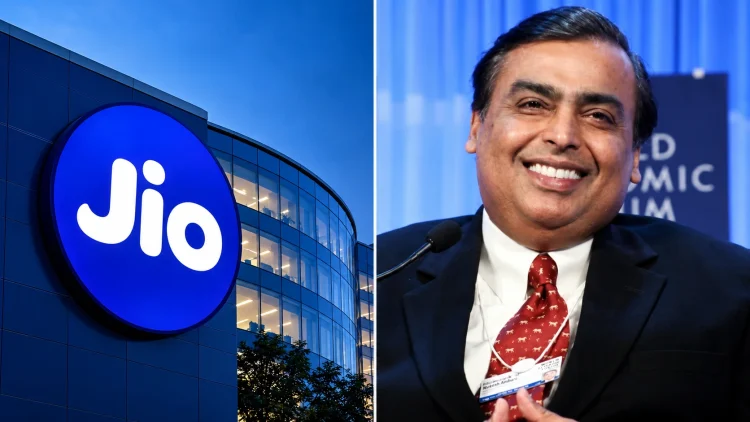
Jio Platforms IPO has drawn considerable attention from investors hoping for listing-day gains, but the experience of earlier large public offerings suggests that strong demand does not always translate into immediate profits. Shares of companies such as Hyundai Motor India, Life Insurance Corporation of India (LIC) and Paytm began trading below their issue prices, disappointing investors who expected a premium on listing. Jio Platforms, backed by Mukesh Ambani’s Reliance Industries group, is preparing for one of India’s largest IPOs. Strong anchor investor participation and a reported grey market premium (GMP) have fuelled optimism, but the eventual listing price will depend on market demand, valuation and broader trading conditions.
Why Large IPOs Do Not Always Deliver Listing Gains
India’s primary market has seen several sizeable public offerings in recent years, yet not all have rewarded investors on the first day of trading. According to figures cited in the report, eight of 13 IPOs larger than ₹10,000 crore opened with either a discount or only a limited premium.
The reported listing of shares associated with the National Stock Exchange of India also illustrates the point: they began trading at a premium of just 0.84% to the issue price.
A well-known brand and a large issue size can attract attention, but neither guarantees strong listing performance. The price at which shares are offered, investor expectations, demand during the subscription period and the overall market environment can all influence the outcome.
Hyundai, LIC and Paytm Offer Important Lessons
Several major IPOs have struggled to deliver gains on their debut. Hyundai Motor India’s ₹27,858 crore IPO in October 2024 had an issue price of ₹1,960 per share. The stock listed at ₹1,934, approximately 1.3% below the offer price.
LIC, whose IPO opened in May 2022, also made a weak debut. Its shares were issued at ₹949 but listed at ₹867.20, a discount of around 8.6%.
Paytm parent One 97 Communications experienced an even steeper decline when it listed in November 2021. Against an issue price of ₹2,150, the stock opened at ₹1,950, leaving investors with a first-day loss of roughly 9.3%.
LG Electronics India provided a contrasting example, with its shares reportedly listing at a premium of around 50% to the issue price. Together, these cases show that outcomes can differ significantly even among high-profile offerings.
Why Investors Are Watching Jio Platforms
Jio Platforms has attracted attention because of its position in India’s telecommunications and digital services markets. Its large customer base, expanding 5G network and broader digital business have helped make the IPO a major market event.
Institutional participation ahead of the public issue has also been substantial. According to the report, the company allocated shares worth approximately ₹8,109.85 crore to 212 anchor investors. Demand in the anchor book was reportedly more than ₹2.5 lakh crore.
The named investors included major global financial institutions such as BlackRock, Fidelity Investments, JPMorgan Asset Management, Franklin Templeton, Schroders and Invesco, along with Singapore’s sovereign investment fund and the Abu Dhabi Investment Authority.
Strong institutional interest can support market confidence, but anchor allocations do not guarantee a profitable listing. Investors still need to assess the company’s financial performance, growth outlook and valuation.
What the Reported Grey Market Premium Suggests
Market estimates cited on Tuesday put Jio Platforms’ grey market premium at around ₹260 per share. Against the upper end of the reported price band of ₹1,119, that would imply an indicative price of ₹1,379, or a premium of approximately 23.2%.
However, the grey market operates outside the official stock exchanges. Its prices are unofficial and can fluctuate significantly before listing. The premium is therefore an indication of market sentiment, not a reliable forecast of the final listing price.
If investor demand weakens or broader market conditions deteriorate, the expected premium could narrow. Conversely, stronger demand could lift expectations, though the actual outcome remains uncertain.
Can Jio Break the Trend of Weak Large-IPO Listings?
Jio Platforms enters the market with considerable brand recognition, a substantial customer base and reported institutional interest. These factors may support investor demand, but the experiences of Hyundai, LIC and Paytm show why expectations need to remain measured.
Before applying, investors should review the IPO documents, business performance, growth strategy, valuation and associated risks. Those seeking short-term listing gains should be particularly cautious about basing decisions solely on GMP figures or subscription enthusiasm.
Jio Platforms may deliver a stronger debut than some earlier large IPOs, but that will only become clear when trading begins. Strong demand can raise expectations; it cannot eliminate the possibility of losses.