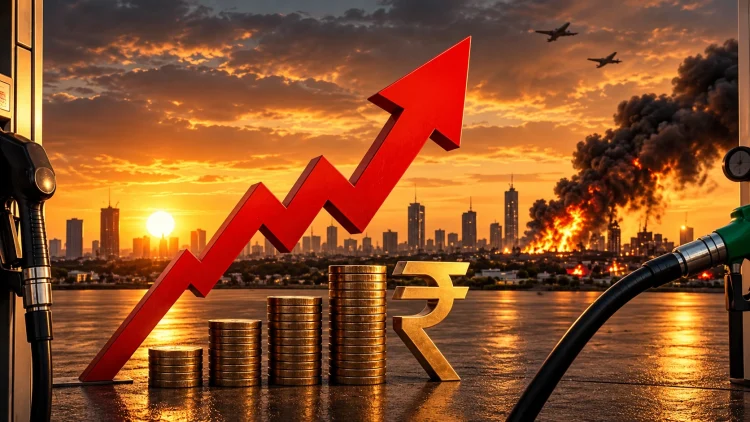
Brent Crude prices climbed above $110 per barrel on Wednesday as hopes for a peace agreement between the United States and Iran weakened amid rising tensions in the Middle East. Brent was trading around $110.15 per barrel, up approximately 1%, while US benchmark West Texas Intermediate (WTI) remained above $100. Statements from US Secretary of State Marco Rubio added to market concerns, with Washington indicating that economic pressure on Tehran would continue unless attacks on commercial vessels passing through the Strait of Hormuz stopped. For India, which depends heavily on imported crude oil, a sustained increase in global prices could raise import costs and complicate the outlook for domestic fuel prices. However, the impact on petrol and diesel rates will also depend on government policy and other pricing factors.
Brent Crude Rises Above $110, WTI Stays Above $100
Oil prices have experienced renewed volatility as traders assess the prospects for diplomatic progress between Washington and Tehran. Brent crude, an important international benchmark, was reported at around $110.15 per barrel on Wednesday, while WTI crude had closed at $101.79 per barrel on Tuesday.
Reports of attacks involving oil tankers near Saudi Arabia have also heightened concerns about the security of energy shipments. Market participants are watching developments around the Strait of Hormuz, a critical route for oil and other energy supplies.
The difference between Brent and WTI prices has narrowed, reflecting changing market conditions and supply concerns. However, oil prices can move sharply in response to diplomatic statements, shipping disruptions, production decisions and expectations about global demand.
Why Brent Crude Matters to Fuel Prices
Brent crude is a widely used benchmark for pricing oil traded internationally. It is a relatively light, low-sulphur crude oil that can be refined into products such as petrol, diesel, aviation fuel, kerosene and liquefied petroleum gas. Oil refining also produces feedstocks used in the manufacture of plastics, synthetic fibres, rubber and other industrial materials.
When international crude prices rise, refineries may face higher costs for their raw materials. Over time, those costs can affect fuel markets and businesses that rely heavily on transportation and energy. The extent of the impact depends on refining margins, exchange rates, taxes, distribution expenses and domestic pricing decisions.
Strait of Hormuz Dispute Adds to Market Uncertainty
The Strait of Hormuz is one of the world’s most important maritime routes for energy shipments. Any disruption to vessel movements through the narrow waterway can raise concerns about the availability and timely delivery of crude oil to international markets.
US Secretary of State Marco Rubio has described reaching a peace agreement with Iran as difficult and said economic pressure would continue until Tehran stopped targeting commercial ships passing through the strait. Iranian Foreign Minister Abbas Araghchi, meanwhile, has reportedly linked reopening the route to Washington accepting Iran’s conditions.
The report also said Iran had not accepted a proposal involving the transfer of an estimated 400 kilograms of nuclear material to Russia under supervision. Claims that an agreement between Washington and Tehran was close were also disputed, weakening hopes of an immediate diplomatic breakthrough.
Oil Prices Have Climbed More Than 75% This Year
Brent crude has gained more than 75% so far this year, according to the figures cited in the report. Concerns about conflict in the Middle East and possible supply disruptions linked to the Russia-Ukraine war have contributed to volatility in energy markets.
Higher oil prices can increase transportation and manufacturing costs, potentially adding to inflationary pressures. The effects may extend beyond fuel stations to logistics, aviation, agriculture and industries that use petroleum-based materials.
The final impact depends on how long prices remain elevated and whether supply disruptions become more severe. A sustained increase is generally more challenging for oil-importing economies than a short-lived market spike.
What Higher Crude Prices Could Mean for India
India imports a substantial share of the crude oil it consumes, making international prices an important factor in its energy bill. More expensive oil can increase import expenditure and place pressure on the rupee, depending on wider economic and currency conditions.
However, a rise in Brent crude does not automatically mean petrol and diesel prices will increase immediately at domestic fuel stations. Retail rates also depend on taxes, oil marketing companies’ pricing decisions, exchange rates and other costs.
The government recently changed export duties on petroleum products, with the reported rates revised from October 16. The duty on petrol exports was increased from ₹0.50 to ₹2.50 per litre, while the diesel export duty was reduced from ₹16 to ₹8.50 per litre. Such duties are separate from the retail prices paid by consumers at fuel stations.
What to Watch in the Coming Days
The direction of crude oil prices will depend heavily on developments in US-Iran relations, the security of shipping through the Strait of Hormuz and the wider regional situation. Further escalation or disruption to oil shipments could keep prices elevated, while credible progress towards a diplomatic settlement could ease supply concerns.
For Indian consumers, the key question is whether higher international prices persist long enough to influence domestic fuel costs. Until there is greater clarity, motorists and businesses should avoid assuming that movements in global crude prices will translate directly or immediately into changes at local petrol pumps.