Gujarat CM Bhupendra Patel has approved the early release of Narmada canal water for irrigation from June 11. The article also highlights over Rs 23,083 crore disbursed to 69.25 lakh farmers in Gujarat under the PM-Kisan scheme.
Early Narmada Water Release for Gujarat Farmers
Gujarat Chief Minister Bhupendra Patel has taken a key decision in the larger interest of the state’s farmers by approving the release of irrigation water through the Narmada canals from June 11 (Thursday).
According to a press release from the Gujarat Chief Minister’s Office, MLAs and MPs from the Narmada Command Area had submitted representations to the CM seeking the early release of water for irrigation.
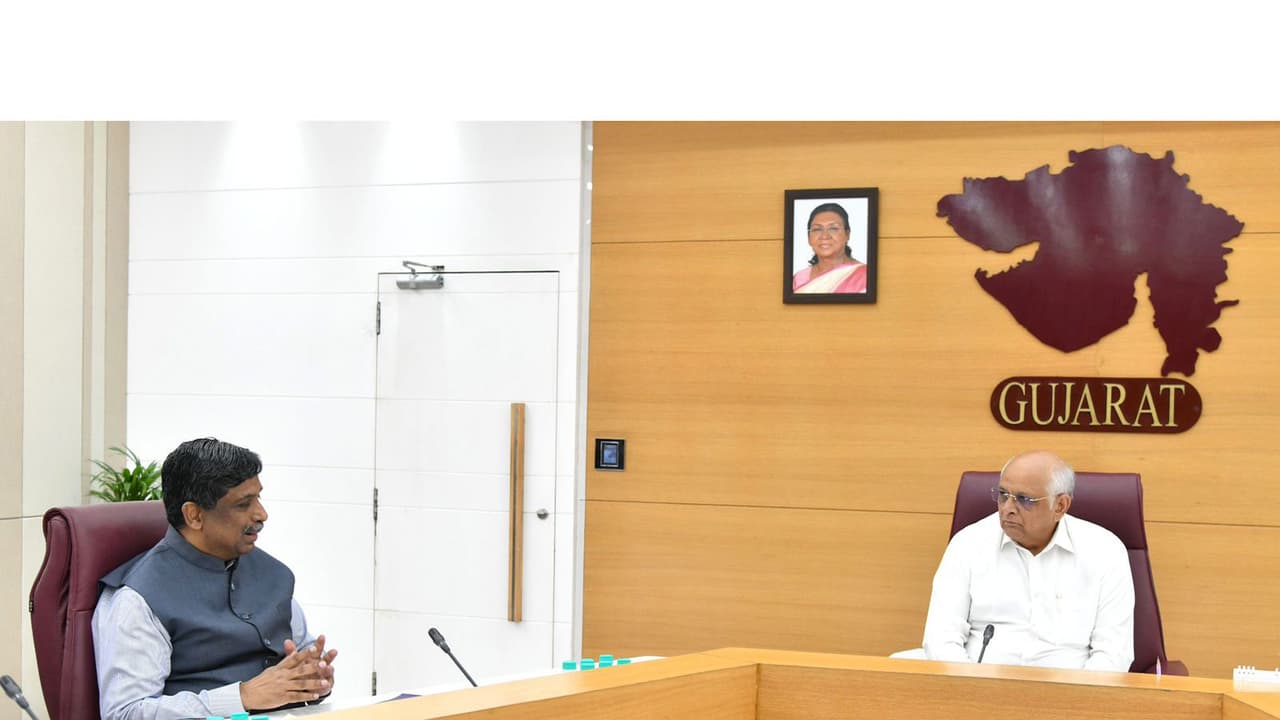
Responding positively to these representations, CM chaired a high-level meeting of senior officials of the Narmada Project and reviewed the available water stock in the project, the press release stated. During the meeting, taking into consideration the irrigation water requirements for farmers’ crops, CM directed that water be released through the Narmada Project canals for irrigation from Thursday, 11 June 2026, ahead of the scheduled date.
The press release further stated that the meeting was attended by the Chairman of the Sardar Sarovar Narmada Nigam Ltd., Mukesh Puri, Principal Secretary of the Water Supply Department, Shahmeena Husain, Additional Principal Secretary to the Chief Minister Vikrant Pandey, Secretary Ajay Kumar, Director (Command Area Development) Sardar Sarovar Narmada Nigam Ltd, Rabadiya, Director (Canal), and Member Secretary of the Water Supply Board Bhagdev.
PM-Kisan Scheme Empowers Farmers
Meanwhile, a new milestone has been achieved in Gujarat’s journey of agricultural transformation and farmer empowerment. According to a press release, since its inception, the Pradhan Mantri Kisan Samman Nidhi Yojana (PM-Kisan) has provided direct financial assistance of more than Rs 23,083 crore to over 69.25 lakh farmer families across the state through 22 instalments, with the funds being transferred directly into their bank accounts. As Narendra Modi completes 12 years of good governance as the Prime Minister of India, this scheme has emerged as a financial safety net for the country’s agricultural sector. At the national level as well, the scheme has achieved unprecedented reach, with more than 11 crore farmers receiving financial assistance exceeding Rs 4.27 lakh crore, enabling the nation’s food providers to become economically empowered and self-reliant. One of the most significant and fundamental features of this scheme is that it leaves no room for middlemen or corruption, with 100 per cent of the assistance being transferred directly to farmers’ accounts through Direct Benefit Transfer (DBT).
The government has made robust use of technology to ensure complete transparency and guarantee that benefits reach genuine farmers, said the release. In this regard, verification of digital land records, known as “land seeding,” was made mandatory from the 12th instalment onwards. Subsequently, Aadhaar seeding with bank accounts and the DBT process became mandatory from the 13th instalment, while e-KYC was made compulsory from the 15th instalment. This three-layer security mechanism has eliminated the role of intermediaries and ensured that the benefits of the scheme reach only genuine farmers. (ANI)
(Except for the headline, this story has not been edited by Asianet Newsable English staff and is published from a syndicated feed.)