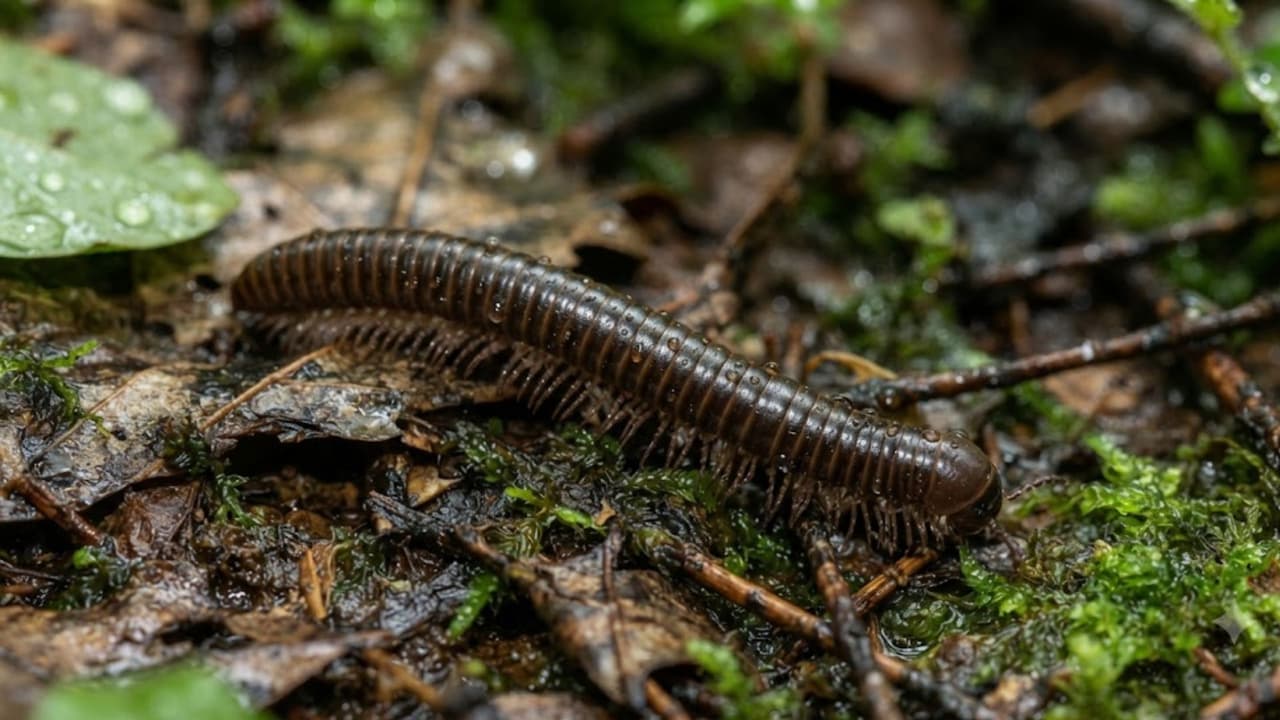
You notice their legs first when you look at this bug. People call it the cyanide millipede in English. The name suggests a thousand legs, but that is not entirely true.
Leg count changes based on the species. Some bugs have hundreds of legs, while others have fewer. Only a few rare species actually cross the thousand-leg mark. These bugs also grow new body segments and legs as they age. So, younger bugs naturally have fewer legs.
This bug never chases or attacks humans. It simply eats fallen leaves, decaying plants, and organic matter on the ground. But the bug uses a special defense trick when it senses danger.
Some millipede species release foul-smelling chemicals from their bodies. These chemicals keep predators away. The liquid can irritate human skin. You might experience burning, redness, or itching if you touch it. The chemical causes even more trouble if it gets into your eyes. You should always keep your distance instead of picking them up.