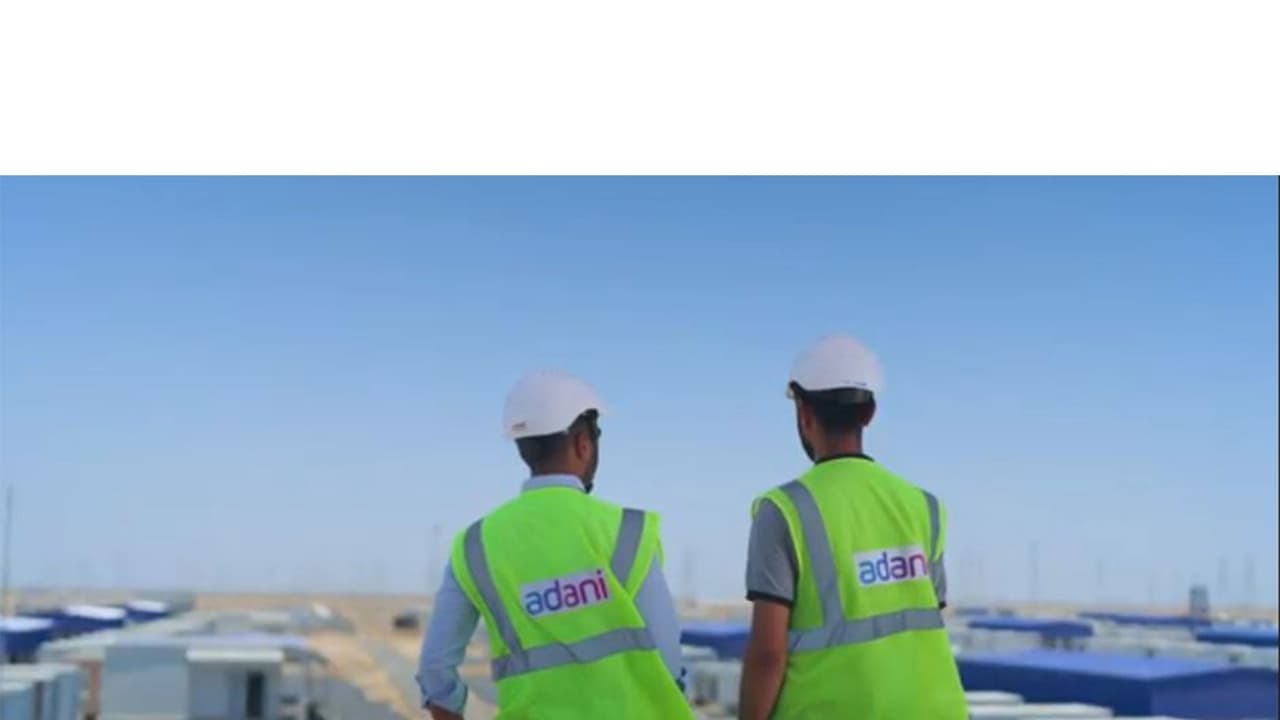
Adani Green Energy Ltd now holds over half of India’s operational Battery Energy Storage System (BESS) capacity, reaching 6.63 GWh. The latest addition in Khavda, Gujarat, makes it the world’s largest single-location BESS installation.
Adani Green Energy Ltd (AGEL) has expanded its operational Battery Energy Storage System (BESS) capacity to 6.63 gigawatt-hours (GWh) from 3.55 GWh in June 2026, accounting for more than half of India’s operational BESS capacity, as the company scales up storage to support the integration of renewable power into the grid.
AGEL said its operational BESS capacity now represents more than 50 per cent of India’s total operational capacity of about 12.6 GWh, based on Central Electricity Authority data as of August 31, 2026, and industry disclosures.
Khavda Site: A Global Benchmark
The latest capacity has been commissioned at Khavda in Gujarat, where AGEL is also developing a 30 GW renewable energy plant across 538 square kilometres. The company said the 6.63 GWh BESS makes Khavda the world’s largest operational battery energy storage installation at a single location.
AGEL achieved the milestone within 14 months of commencing on-site BESS construction at Khavda, with the latest capacity addition commissioned within 10 months of the start of construction.
Powering Millions and Supporting Peak Demand
The company said the BESS can store enough clean energy to power around two million homes a day and support peak electricity demand in cities such as Nagpur, Patna or Vizag for several hours. The storage capacity is also equivalent to more than 1,50,000 mid-sized electric vehicles with 40 kWh battery packs.
Leadership Perspective on Clean Energy
“Reaching 6.63 GWh of operational battery storage in just 14 months is a significant milestone for AGEL and India’s clean energy transition. At this scale, storage can make renewable power firmer, more reliable and dispatchable when the grid needs it,” Sagar Adani, Executive Director, Adani Green Energy, said.
He added that as India’s power demand grows, the company would continue to scale both battery and pumped storage solutions to support a more resilient and lower-carbon grid.
Advanced Technology for Grid Stability
The BESS uses lithium-ion battery technology integrated with an Energy Management System and automated telemetry to manage charging and discharging, optimise performance and support grid services.
According to the company, battery storage can help improve grid stability, manage peak demand, reduce renewable energy curtailment and enable clean power to be dispatched when required.
Ambitious Future Targets
AGEL is on track to add over 10 GWh of BESS capacity in FY27 and is targeting 50 GWh over the next five years. The company is also pursuing pumped storage projects as part of its broader strategy to build firm and dispatchable renewable power capacity. (ANI)
(Except for the headline, this story has not been edited by Asianetnews Editorial staff and is published from a syndicated feed.)