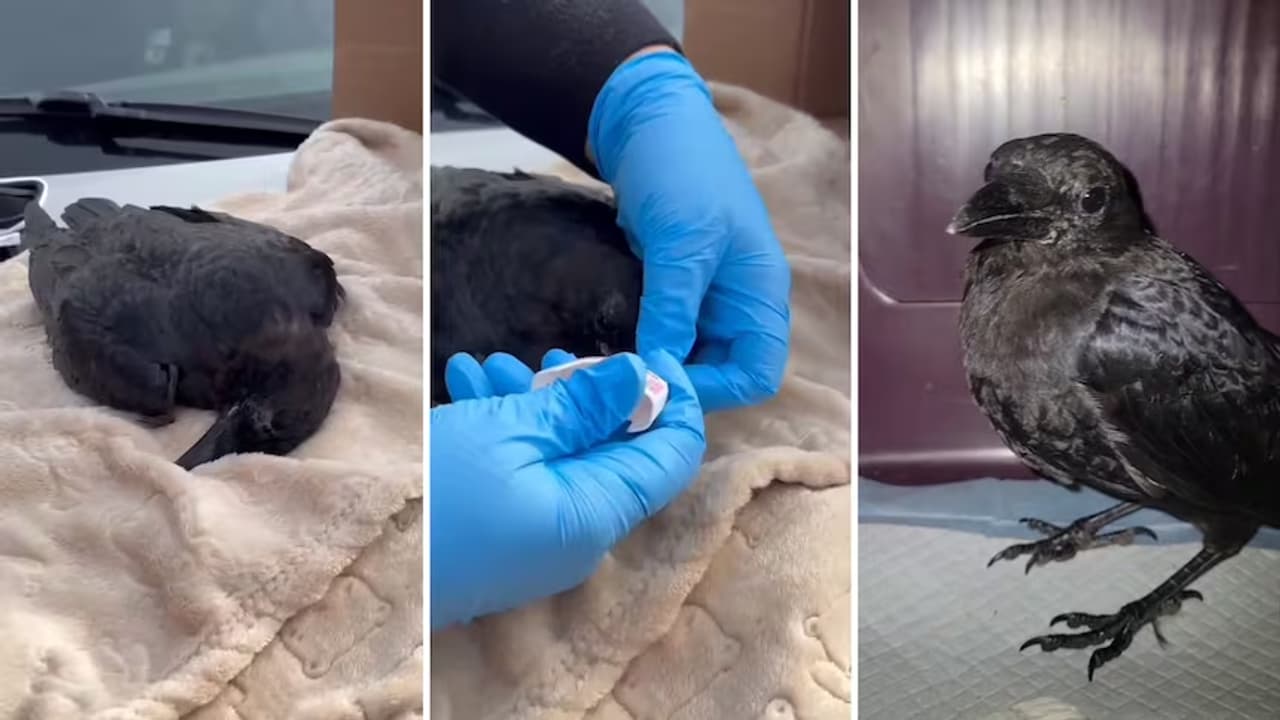
An alarming series of suspected drug overdoses among crows in downtown Prince George, British Columbia, has prompted an animal rescue group to administer nasal naloxone to birds found unresponsive.
An alarming series of suspected drug overdoses among crows in downtown Prince George, British Columbia, has prompted an animal rescue group to administer nasal naloxone to birds found unresponsive. The Good Caws Crow Rescue Society (GCCRS) has shared several videos showing volunteers using nasal naloxone on crows believed to have been exposed to toxic drugs. In the footage, the birds appear unresponsive before gradually becoming alert and eventually regaining the ability to fly.
Naloxone is widely used to reverse or reduce the effects of opioid overdoses in humans. Dayna Slater of GCCRS said the affected crows have been found in an area of downtown Prince George where illicit drug use is known to occur.
“It’s disheartening, it’s scary,” she told CBC Radio West host Sarah Penton. “It’s a whole bunch of factors coming together to make, like, the perfect storm.”
Slayter said the rescue group had previously encountered only one or two suspected drug overdoses among crows each year. This year, however, the number has surged to more than a dozen suspected cases.
“Their wings are spread out, their eyes are closed, their heartbeat slows right down. They’re unresponsive but alive,” she said, describing the condition of the affected birds. She added that some crows have also developed brown liquid foam around their beaks.
While some birds have died, Slayter said most have recovered and were released within 24 hours.
Dr. Kaitlyn Liukaitis of Birchwood Veterinary Clinic has treated some of the affected crows. She said their symptoms are consistent with those seen in cases of toxic drug exposure.
Liukaitis also said she was not surprised that naloxone appeared to help reverse the symptoms, noting that the medication is increasingly used in veterinary care for different animal species.
“It’s always frustrating that, as a human population, we’re so damaging to the environment,” she said.
Toxic Drug Crisis Raises Concern
The incidents come amid growing concerns over the toxicity of illicit drugs across British Columbia, with communities facing repeated warnings about dangerous substances in the drug supply.
Prince George has at times recorded a sharp increase in overdose-related emergency calls, resulting in frequent ambulance and emergency response activity in the downtown area where the affected crows have been found.
Outreach organisations have also warned that political opposition to harm-reduction measures, including supervised consumption services, is making it harder for people struggling with addiction to access safer, prescribed alternatives to street drugs.
Advocates say providing safe indoor spaces for people to access and use drugs could also reduce the amount of drug-related waste discarded outdoors.
Slayter said GCCRS has been working with harm-reduction groups, which have helped identify crows suspected of overdosing. The groups have also helped provide expired naloxone kits for volunteers to use while responding to emergencies involving the birds.
She stressed that she does not believe people are deliberately targeting the crows. Instead, she sees the incidents as another consequence of a wider public health and environmental crisis.
“They live side-by-side with us. They’re in our garbage, they’re in our yards. They’re a direct mirror of the environment that we are living in.”
Slayter believes the birds may be coming into contact with drugs after scavenging through garbage left openly accessible in downtown areas.
Her proposed solution is relatively simple: install more covered garbage bins to prevent birds from accessing potentially dangerous discarded materials.
“A crow doesn’t know the difference between a sandwich bag and a bag that had something in it. And it takes something the size of like a grain of sand to affect a bird,” she said.