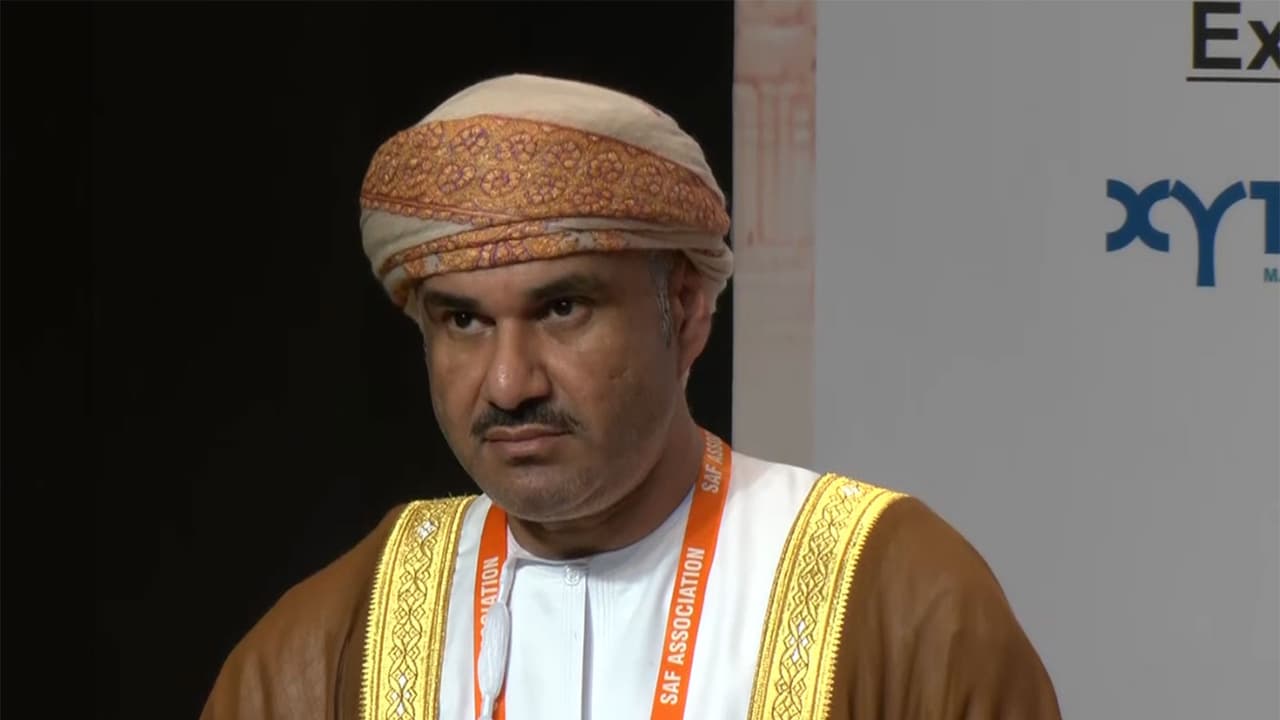
Oman’s Ambassador to India announced the country’s plan to export green hydrogen by 2030, highlighting areas of collaboration with India in renewable energy during the Sustainable Aviation Fuel (SAF) Conclave in Delhi.
Oman’s Green Hydrogen Ambitions
Oman Ambassador to India Issa Saleh Abdullah Alshibani on Monday highlighted Oman’s focus on renewable energy and green hydrogen, saying the country has formulated a policy for green hydrogen and is working towards developing the ability to export it by 2030.
Speaking to ANI on the sidelines of the Sustainable Aviation Fuel (SAF) Conclave in Delhi, Alshibani said, “Well, I think as I mentioned in my speech, Oman also has put a target mission for renewables. And one of them is the green hydrogen. We have put our policy for green hydrogen. Oman is advocating for having the ability to be able to reach exporting in 2030, and I think these are the blend of fuels that the conclave today was looking at and areas of collaboration that we could seek between the two countries.”
India-Oman Bilateral Cooperation
India is also pursuing green hydrogen as part of its clean-energy transition. The Ministry of New and Renewable Energy has said that the ‘National Green Hydrogen Mission’ aims to make India a global hub for the production, use and export of green hydrogen and its derivatives. India and Oman have also identified energy transition as an area for greater bilateral cooperation. The Prime Minister’s Office said in the India-Oman Joint Statement issued during Prime Minister Narendra Modi’s visit to Oman in December 2025 that the two countries noted the synergy between Oman Vision 2040 and India’s Viksit Bharat 2047 goal. The two sides also agreed to strengthen cooperation in areas including new and renewable energy, green hydrogen and green ammonia.
Focus on Sustainable Aviation Fuel (SAF)
On Oman’s plans to introduce Sustainable Aviation Fuel in its aviation sector, Alshibani said policies were being discussed under the country’s Vision 2040 and Air Vision 2040. “Well within Vision 2040 and the Air Vision 2040, there are policies are put in the place in terms of making the sky cleaner and making aviation is more efficient, so there are policies who are under the discussions and collaboration between other countries as well in order to reach to that net-zero target,” he said.
India has also been advancing its SAF ecosystem. The Ministry of Civil Aviation said in July that it had reviewed progress in SAF production, certification and supply-chain development, with stakeholders working to ensure timely availability of SAF from 2027 onwards. The ministry also said the draft SAF policy was in its final stages.
The Union government has set indicative SAF blending targets for international flights at 1 per cent from 2027, 2 per cent from 2028 and 5 per cent from 2030, according to the official press release.
Maritime Security a Shared Priority
On External Affairs Minister S Jaishankar’s recent remarks on maritime security and the importance of Omani waters for India, Alshibani said Oman and India share the principle of ensuring safe passage. “I think safe passage is the motto for our government and the Indian government. We share the same principles that safety and peace and dialogue is really the mechanism really to solve so much of conflicts,” he said.
Earlier on Saturday, External Affairs Minister S Jaishankar raised concerns over attacks on commercial shipping and seafarers in various maritime regions, including the Gulf, Red Sea and Black Sea, during his address at the 81st United Nations General Assembly (UNGA).
Jaishankar said that Indian seafarers, along with others from different countries, have lost their lives in such attacks and termed the targeting of shipping and seafarers as “completely unacceptable”. “New challenges in the maritime domain have added to longstanding ones on land. There have been attacks on commercial shipping and seafarers in the Gulf, and from the Red Sea to the Black Sea. Indian seafarers have lost their lives, as have others from other nations. This is completely unacceptable,” Jaishankar said.
He said India has joined Liberia and 23 other partners in an initiative aimed at building global public opinion against such attacks. “We must ensure that the safety and security of shipping and seafarers is never compromised. Scrupulously observing international law is an integral element of that endeavour,” the External Affairs Minister added.
About the India SAF Conclave
The India SAF Conclave & Awards 2026 is being held from September 28-29 at Bharat Mandapam in New Delhi. According to the event’s official website, the two-day conclave is focused on accelerating the adoption, production and policy development of Sustainable Aviation Fuel in India. It brings together government ministries, airlines, airports, SAF producers, technology companies, investors and global industry participants to discuss policy, production, investment, supply chains and international collaboration aimed at advancing India’s net-zero aviation goals. (ANI)
(Except for the headline, this story has not been edited by Asianetnews Editorial staff and is published from a syndicated feed.)