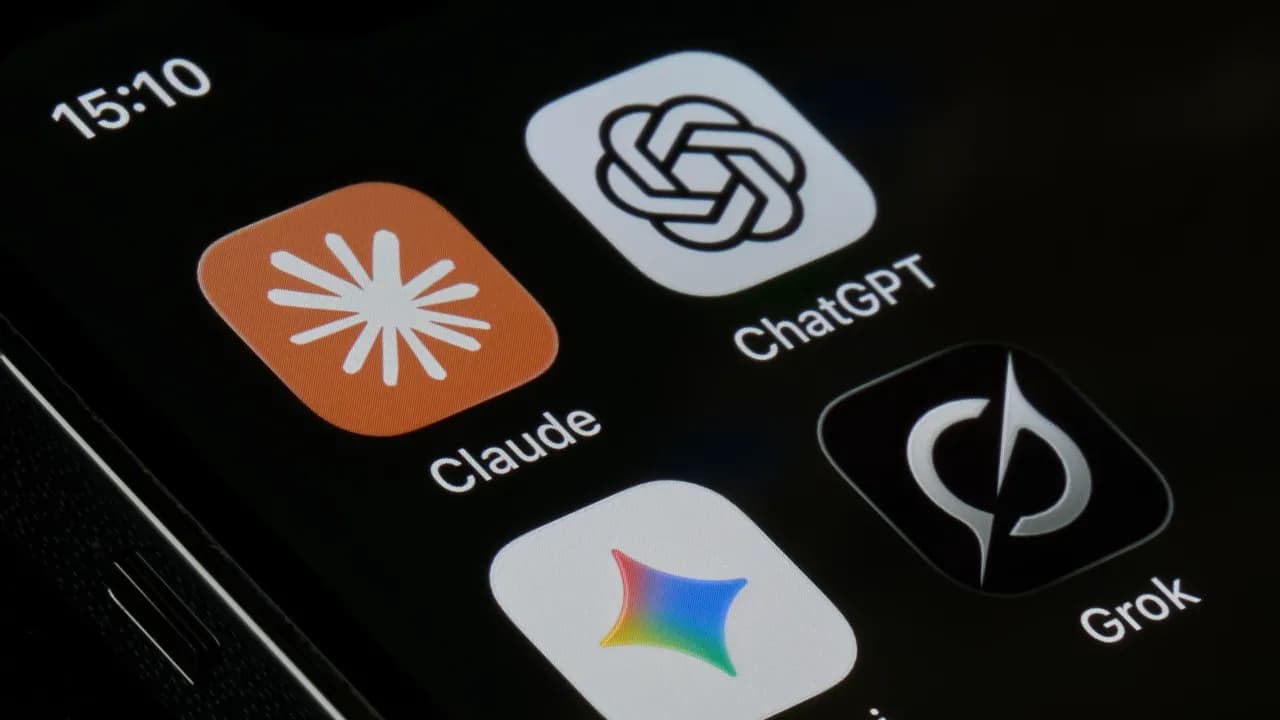
OpenAI faces a rapidly intensifying race across models, agents and AI-powered products.
- OpenAI is promising more than 20 launches at its annual developer conference in San Francisco.
- Meta AI chief scientist Alexandr Wang appeared to take a playful jab at OpenAI with a “Star Wars”-themed post.
- The developer event comes as Meta, Instinct and other AI players accelerate their push into autonomous agents.
OpenAI is turning up the heat ahead of its annual developer conference, teasing more than 20 launches as it prepares to showcase its latest products and tools to developers.
The company posted a short teaser on X ahead of Tuesday’s DevDay 2026 in San Francisco, with the words “1 day. 20+ launches.” followed by “Get ready.” The post does not specify whether the 20-plus count refers entirely to new products or includes features, model updates and developer tools.
‘Bot Wars’ Begin
Alexandr Wang, chief scientist at Meta’s AI division, took a veiled dig at OpenAI. He posted on X a “Star Wars”-inspired graphic showing a fleet of X-wing-like spacecraft flying above a planet and approaching another. The planet at the far end carries a subtle facial expression resembling OpenAI’s angled-backets branding in the teaser.
An X user replied, “Begun, the Bot Wars has,” along with a picture of legendary Jedi master Yoda.
OpenAI Gets Ready For String Of Launches As Competition Intensifies
OpenAI’s developer event comes as competition around consumer AI and autonomous agents intensifies.
Meta’s new Muse AI agent, launched last week, has received strong early reviews for its design and capabilities, with downloads surpassing 3.4 million within weeks of its Sept. 8 launch, according to Sensor Tower estimates cited by TechCrunch.
Meta has also expanded Muse with computer-use capabilities, connectors and plans for AI-glasses integration.
Meanwhile, Agentic AI startup Instinct announced Monday that it raised $1 billion, quadrupling its valuation to $10 billion. The company is developing an AI agent capable of autonomously handling everyday tasks, including bookings and phone calls.
AI Market Getting Crowded
OpenAI has continued to refresh its model lineup ahead of DevDay, most recently launching GPT-6 Astra in September as its most capable model, following the GPT-5.6 family of Sol, Terra and Luna models. The company said on Monday that it has deferred the October release of its GPT-6.1 Astra model after determining that it did not adequately meet the company’s safety standards,
The competitive pressure has intensified nonetheless, with Anthropic launching Claude Opus 5.5 on Sept. 22 and Claude Sonnet 5.5 on Sept. 28, targeting complex agentic work and faster, lower-cost everyday tasks, respectively.
At OpenAI’s last DevDay in 2025, the company unveiled a broad developer push including AgentKit, Apps in ChatGPT, Sora 2 in the API, GPT-5 Pro, Codex upgrades, gpt-realtime-mini and gpt-image-1-mini.
Investor Hails OpenAI Moat
On Monday, David George, a General Partner at a16z, a major investor in OpenAI, posted a blog post arguing that OpenAI’s long-term advantage may depend less on having the best individual model and more on its ability to create new user behavior and distribute AI to a massive audience.
George said that model switching costs are low and that AI companies are increasingly competing on price and performance. That leaves two critical levers: creating new kinds of behavior and distributing AI to lots of users.
He wrote that OpenAI has repeatedly done this through breakthroughs such as ChatGPT’s chat interface, reasoning, tool calling and computer use, adding that OpenAI’s broad consumer and enterprise user base gives it a feedback loop for discovering new AI use cases.
OpenAI’s latest private market valuation is $910.26 billion, according to Nasdaq Private Market.
For updates and corrections, email newsroom[at]stocktwits[dot]com.<