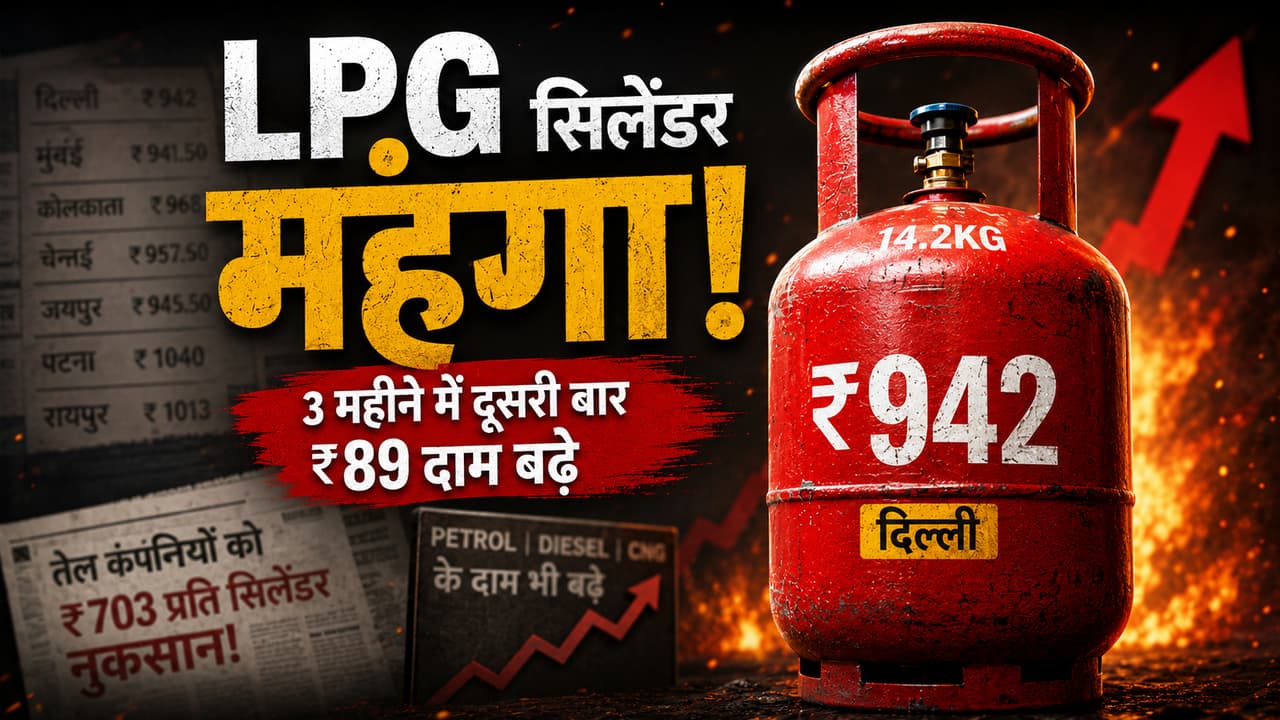
Is the increase of ₹89 in just 3 months a new big warning of inflation, or is there more shock to come? Will the ₹703 per cylinder loss claim drive LPG prices higher in future? Petrol, diesel, CNG and LPG all expensive – is the monthly budget of common families now in big trouble? Is a bigger price shock coming next?
LPG Price Hike: The common people of the country have once again been hit by the whip of inflation, which has broken the backbone of every household’s budget. If you were thinking that everything will be normal this month, then the ground is going to slip under your feet. Without any prior warning, the prices of domestic LPG cylinders have been increased drastically. The new rates have been implemented across the country from 12 midnight tonight. This shock is so big that the fire in the hearth of the middle class has now started burning the pockets.
Which cities are most affected? There was panic from Delhi to Patna!
Government oil companies have increased the prices of domestic LPG (14.2 kg) by ₹29 per cylinder. After this decision there has been an outcry in different parts of the country. The cylinder which was available for ₹ 913 till yesterday in the capital Delhi, has now increased to ₹ 942. At the same time, prices are skyrocketing in Patna, the capital of Bihar, where consumers will now have to pay a huge amount of ₹ 1040 for a cylinder. The new price in Kolkata has become ₹968, in Mumbai ₹941.50 and in Chennai ₹957.50.
‘Surgical strike’ for the second time within 3 months, what is the real game?
The public had not yet recovered from the previous shock when this second attack was launched. You will be surprised to know that this is the second time within the last 3 months that gas prices have been increased. Earlier on March 7, there was a big increase of ₹ 60 in the prices of LPG. If both are added, then within just 90 days the domestic gas cylinder has become costlier by ₹ 89.
Shocking truth: Not only big cylinders, but also the burden on small 5 kg LPG cylinder used by small families and laborers has been increased by ₹ 11, after which its price has crossed ₹ 821.50.
Story behind the scenes: Oil companies were facing a loss of ₹703?
After all, what happened suddenly that the prices had to be increased at midnight? What has been revealed by the sources of news agency PTI is very surprising. The story behind the scenes is that there has been a huge increase in the cost of energy (Global Energy Costs) in the international market. Sources claim that before this increase, government oil companies were incurring a huge loss of about ₹ 703 on selling each domestic cylinder. Oil companies say that this increase of ₹29 is only a ‘partial compensation’, which means that even bigger shocks may be seen in the coming days!
Not just gas… petrol, diesel and CNG also spoiled the game!
LPG becoming expensive is just a beginning, in fact this web of inflation is very deep. Within the last few weeks, the prices of petrol, diesel and CNG have also broken the back of the common man:
- Petrol-Diesel: In the month of May alone, the prices of petrol and diesel have increased by ₹7.50 per liter.
- CNG: CNG, which is considered environment friendly, has also become costlier by about ₹ 6 per kg.
The companies claim that they are still facing losses of ₹11 per liter on petrol and ₹33.6 per liter on diesel and the entire burden of global inflation has not been passed on to the public.
How and who decides the price of your LPG?
The common consumer always wonders how these prices change so suddenly? Five big factors work behind this:
- International Market: What is the price of LPG in the global market?
- Currency War: What is the position of Indian Rupee against US Dollar?
- Logistics Expenses: Import of gas, its transportation, bottling plant expenses and distributor’s commission.
- Taxes and Subsidies: Tax policies of central and state governments.
At present, this new increase has given a severe blow to crores of families of the country and now it remains to be seen whether the international market calms down in the coming days or the public will have to bear more such shocks.