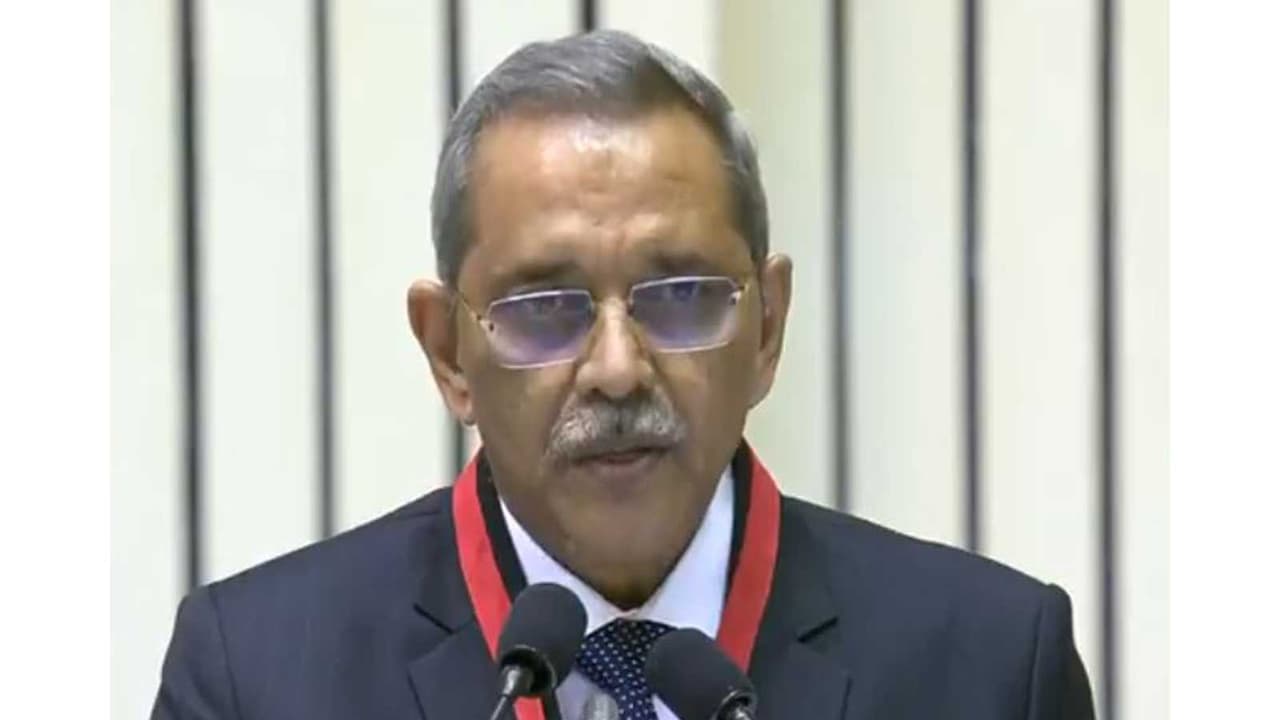
NGT Chairman Justice Prakash Shrivastava called for strengthening environmental laws, institutions, and partnerships to respond to climate change, highlighting the need for inclusive, equitable action for vulnerable communities and future generations.
National Green Tribunal (NGT) Chairman Justice Prakash Shrivastava on Sunday called for strengthening environmental laws, institutions and partnerships to effectively respond to the growing challenges of climate change and environmental degradation.
Addressing the valedictory session of the NGT’s international conference on “The Future of Environment and Climate Dynamics”, Justice Shrivastava said the discussions over the past two days had highlighted the need to look beyond present-day environmental problems and consider what kind of planet should be left for future generations. He said the conference’s theme was not merely about examining the environmental challenges of today, but also about asking a larger question about the kind of planet society wants to leave behind and the legal and institutional architecture required to protect it. Justice Shrivastava said the technical sessions had examined these questions from different but interconnected perspectives.
Climate Justice and Equity
Speaking about the session on climate justice, equity and inclusion, he said climate change does not affect everyone equally, with communities having fewer resources often facing greater risks. “Climate action must, therefore, be inclusive, equitable and attentive to vulnerable communities and future generations,” he said.
Future of Environmental Law and Governance
Referring to the session on the future of environmental law and governance, the NGT Chairman said the discussions covered sustainable and resilient cities, human rights, clean energy and green infrastructure. He said environmental law must remain responsive and forward-looking by embracing technology and innovation, promoting sustainable finance and ensuring a just transition.
Planetary Scale Challenges
Justice Shrivastava said another session examined environmental changes at a planetary scale, including climate change, biodiversity loss, pollution, water scarcity and ecosystem degradation. “These are not separate problems. They are interconnected and do not respect political boundaries,” he said, underlining the need for regional cooperation, transboundary mechanisms and international cooperation.
The Way Forward
The final session focused on the way forward, including modernising forest governance, strengthening community participation and creating clear road maps for implementation. Justice Shrivastava said broad commitments must ultimately be translated into clear priorities, measurable goals and sustainable implementation. “The future of environmental protection will depend not merely on identifying challenges, but on our ability to build laws, institutions and partnerships capable of responding to them,” he said.
The NGT Chairman also acknowledged the contributions of the participants, experts and speakers who took part in the two-day international conference, saying the deliberations had provided a platform for sharing ideas, best practices and approaches to environmental challenges across jurisdictions. (ANI)
(Except for the headline, this story has not been edited by Asianet Newsable English staff and is published from a syndicated feed.)