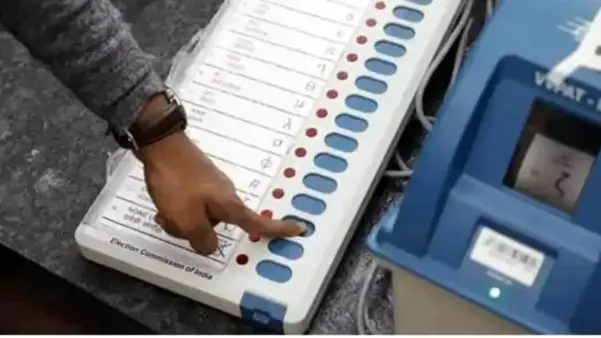
The Gauhati High Court has set November 4 for the upcoming hearing regarding a Public Interest Litigation (PIL) that questions the credibility and legal standing of Electronic Voting Machines (EVMs) intended for the 2026 Assam Assembly elections.
This PIL has been initiated by Ziaur Rahman, a leader from the Assam Jatiya Parishad (AJP), alongside Congress members Guptamani Sharma and Ripun Bora. It raises concerns about the semiconductor technology and microchips utilized in EVMs, including inquiries into their source code and the transparency of their programming.
Additionally, the petition highlights a potential link between the Japanese semiconductor firm Renesas Electronics and Assam’s semiconductor investment plans. Rahman alleges that representatives from this company met with Chief Minister Himanta Biswa Sarma during his trip to Japan in January 2025.
It is important to note that these allegations are part of the petition and have not yet been validated by the High Court.
On September 18, a bench led by Chief Justice Ashutosh Kumar reviewed arguments regarding the PIL’s maintainability. Legal representatives for both the petitioners and the Election Commission of India presented their cases, with the court scheduling November 4 for further discussions on the petition’s admissibility.
Rahman asserts that this PIL is distinct from previous challenges that broadly questioned EVM reliability. Instead, the focus is on the semiconductor components and microchips within the machines, as well as the possibility of independent examination of their programming.
The petitioners have also raised concerns about the lack of publicly accessible information regarding the programming and source code of EVM technology. Rahman claims that the Election Commission has not disclosed the relevant source code for public review.
He referenced a response to a Right to Information (RTI) request, which he claims categorized the source code as national security-related information. This assertion is part of the petitioners’ arguments and remains to be evaluated by the court.
The connection to Japan is another significant aspect of the petition. Rahman pointed out Sarma’s January 2025 visit to Japan, alleging that the Chief Minister met with representatives from the Japanese semiconductor company in Tokyo on January 22. The petitioners have raised questions about this meeting in light of Assam’s initiatives to attract semiconductor investments and foster Japanese collaboration.
Rahman has also questioned the timing of this visit, noting that it occurred after polling in Assam but before the vote counting process. The petitioners believe this warrants further examination; however, the court has not yet made any determinations linking the visit to the operation or security of EVMs.
Another concern raised in the PIL pertains to what the petitioners describe as unusual similarities in polling patterns across various constituencies on polling day. Rahman has claimed that data from specific constituencies revealed identical polling figures in several seats, suggesting that this pattern requires judicial investigation.
During the September 18 hearing, the Election Commission’s legal counsel presented arguments, while the Assam government is anticipated to share its stance in future proceedings. The Japanese company mentioned in the case is also involved in the proceedings.
Currently, the proceedings are focused solely on the maintainability of the PIL. The High Court has yet to make any rulings regarding the petitioners’ claims or the reliability, security, or legal validity of the EVMs used in the elections.
The upcoming hearing on November 4 will concentrate on whether the PIL can advance in court, with additional arguments expected from the involved parties.