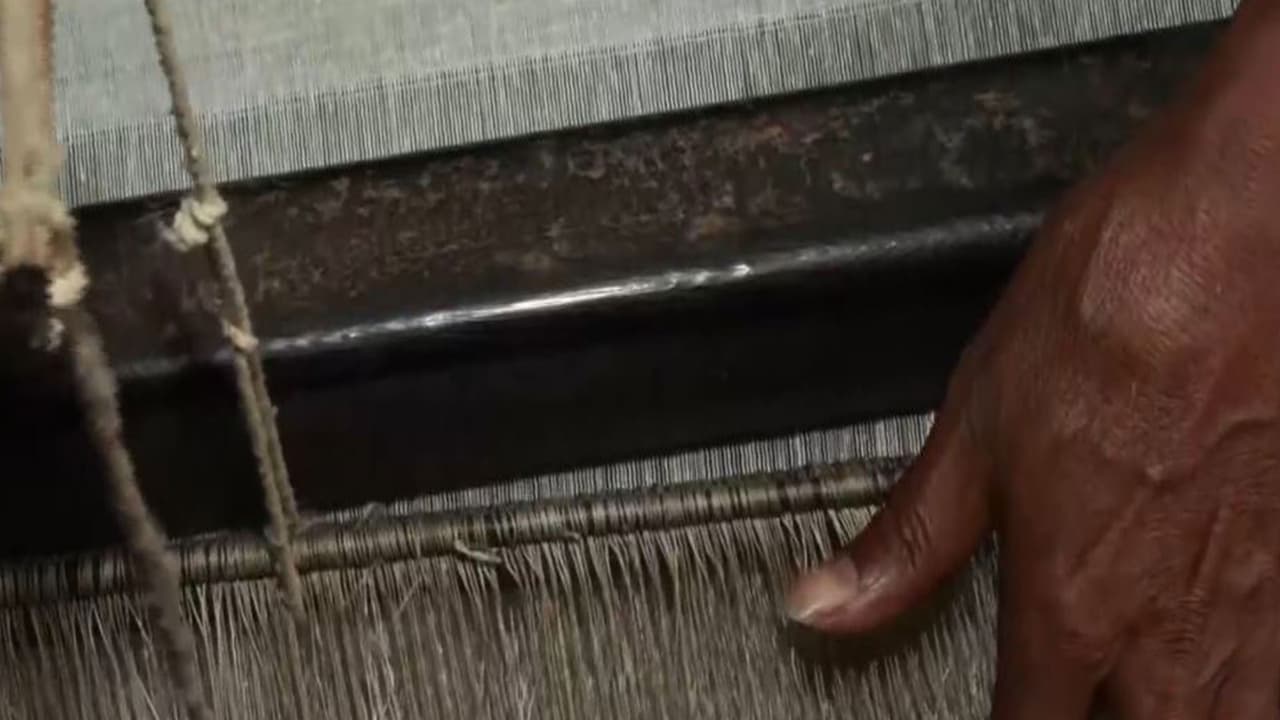
In Chhattisgarh’s Jaspur district, a handloom initiative in Gholeng village is training rural women from Self-Help Groups, transforming traditional weaving skills into an enterprise for income generation and employment through modern technology and market access.
Empowering Women Through Traditional Skills
A new story of change is taking shape in the villages of Jaspur, a remote northern district of Chhattisgarh. A weaving skill preserved in homes for generations is now moving beyond tradition to become a source of income, employment and small-scale enterprise.
At the centre of this transition is the livelihood complex at Gholeng village, where efforts are underway to give traditional skills of local women a new form suited to modern requirements. At Gholeng, around 35 to 40 rural families and women associated with Self-Help Groups are being trained in handloom and textile-related skills. The focus is not limited to training. Production is also being developed alongside it so that the skills acquired by women do not remain confined to certificates, but can translate into products and eventually into income. The women are learning to make shawls, sarees and other utility products while gaining exposure to modern technology, designs and quality standards.
Bridging Tradition with Modern Markets
The Gholeng initiative reflects a larger national shift towards connecting India’s traditional skills with technology, markets and entrepreneurship. Prime Minister Narendra Modi has repeatedly highlighted the potential of the handloom sector as a means of strengthening rural livelihoods and women-led development, while encouraging the preservation of India’s weaving traditions alongside innovation and modern market opportunities.
What sets the initiative at Gholeng apart is the effort to make training the beginning rather than the end of the process. Along with skill development, attention is being given to production and market readiness. Women are learning to use modern technology and machines to produce textiles, including shawls, sarees and other products. They are also being introduced to aspects such as product quality, design and changing market demand.
A Collaborative Effort
The initiative is being taken forward through a collaborative effort involving the Aditya Birla Group, the district administration, Bihan and the Textile Skill Sector Council. The proposed handloom training and production centre seeks to provide traditional weaving families with modern machinery and technical support while improving product quality, design, testing and access to markets.
Beyond Training: Creating Sustainable Livelihoods
For rural skill programmes, one of the biggest challenges is what happens after training. Gholeng is attempting to address that gap precisely. Learning to make a textile product is only the first step. The larger questions are what products consumers want, what designs are likely to sell, how quality can be maintained and how the finished product can reach customers. That is why the initiative seeks to connect training with production and market access. Better designs and consistent quality could help local products move beyond nearby village markets and reach a wider consumer base. For Jashpur, this could open a new avenue for taking its traditional skills beyond the local marketplace.
Handloom in India is more than a way of producing fabric. It supports millions of livelihoods and carries a significant part of the country’s cultural identity. According to the Union government, more than 3.5 million handloom weavers and allied workers are associated with the sector, with women accounting for more than 72 per cent of the workforce. On National Handloom Day, PM Modi has highlighted India’s weaving traditions and the skills of its artisans as national strengths, while calling for greater support for the handloom sector and wider adoption of Indian handloom products.
State-Level Push for Handloom and Women’s Enterprise
The emphasis on bringing together heritage and technology, creativity and entrepreneurship finds a local expression in Gholeng, where traditional skills are being prepared for a new economic environment. The Jashpur initiative is also part of a broader effort in Chhattisgarh to give the state’s handloom traditions a stronger market identity. On National Handloom Day, Chhattisgarh Chief Minister Vishnu Deo Sai launched ‘Koshal Fab’, a premium handloom brand of the Chhattisgarh State Handloom Federation. Along with the brand, its logo and catalogue were unveiled and a Handloom Inventory Management Software was introduced. The state is seeking to take Chhattisgarh’s kosa and traditional handloom products to national and international markets through contemporary designs, branding and stronger market linkages. For a state whose rural economy is closely linked to local resources and traditional skills, the move represents an effort to look at handloom not merely as cultural heritage, but also as an avenue for employment and enterprise.
Women are at the heart of the Gholeng initiative. If women from Self-Help Groups continue to participate in production after completing their training, the effort could create opportunities for group-based enterprises. Collective production can make it easier to organise work, maintain quality, procure inputs and reach markets. Training local youth in textiles can also expand opportunities for employment and self-employment within the district. One of the most significant possibilities is that employment could increasingly be created within villages rather than requiring people to leave them in search of work. For a woman, the ability to acquire a skill, produce from within her community and take that product to market can mean more than additional income. It can strengthen her role in household economic decisions and create greater confidence in her ability to earn.
The Role of Small Enterprises in Economic Growth
The growing emphasis on local skills and small enterprises is particularly relevant to Chhattisgarh’s evolving economic landscape. In NITI Aayog’s Investment Friendliness Index 2026, Chhattisgarh scored 47.5 points, ranking ninth among larger states and 12th among the 36 states and Union Territories. The report identified the state’s natural resource potential and environmental strength among its key advantages. Yet an economy is not built only through large investments and major industries. Small enterprises, women-led groups, artisans and locally produced goods form an equally important part of the economic ecosystem. Jashpur’s emerging textile opportunity illustrates this possibility: traditional skills and local resources can be combined with modern training, design, production and market access to create new income opportunities.
A New Model for Rural Economy
The significance of what is happening at Gholeng will ultimately not be measured simply by the number of machines installed or people trained. The real measure will be whether a woman’s newly acquired skill increases her family’s income, whether a young person can build a livelihood in the district, and whether a product made in Jashpur finds customers beyond the region.
In that sense, Jashpur’s story carries a message that extends beyond the district. Across India’s remote villages, traditional skills have survived for generations. When those skills are connected with modern technology, training, design, digital systems and markets, a cultural inheritance can become the foundation of a new rural economy. At Gholeng, the loom is therefore doing more than weaving fabric. It is bringing together skill, confidence and economic opportunity, one thread at a time. (ANI)
(Except for the headline, this story has not been edited by Asianet Newsable English staff and is published from a syndicated feed.)