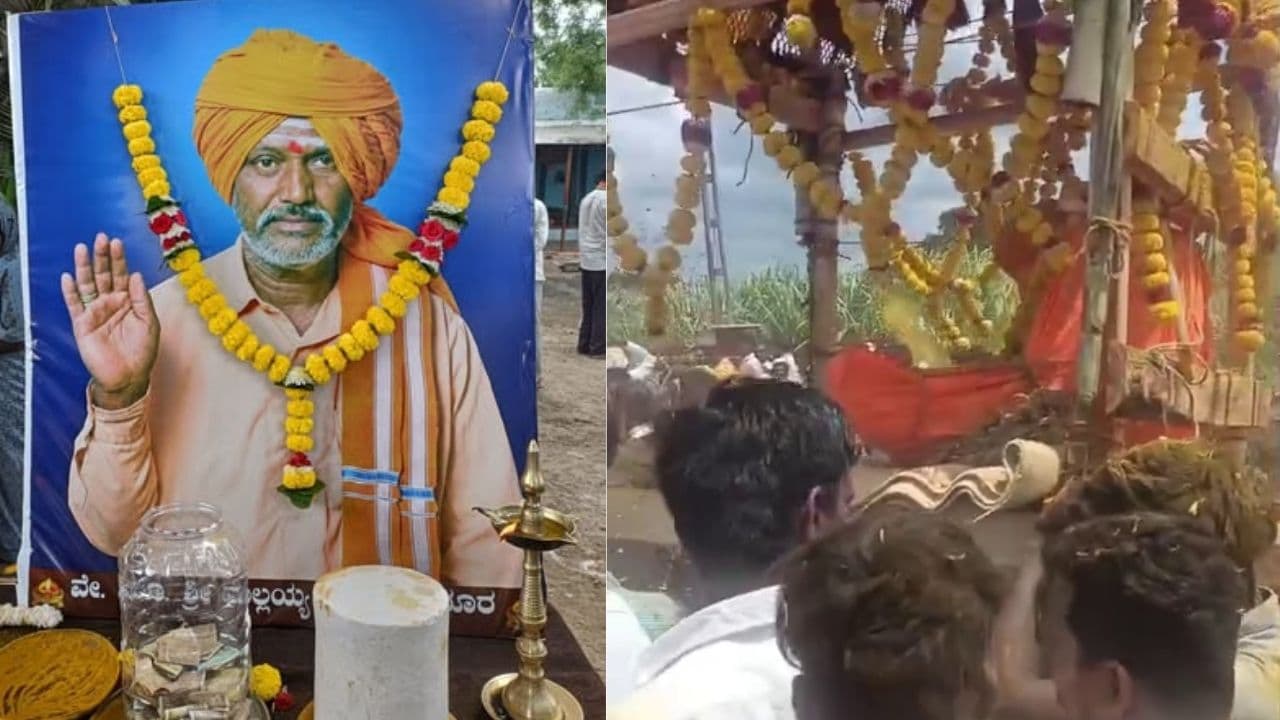
<p>A Swamiji’s body in Vijayapura was reportedly found undecayed after eight months when devotees opened the grave. The body was taken out in a procession and later re-cremated, with devotees describing the incident as miraculous.</p><img><p>A strange and surprising incident took place recently in Managuli town of Vijayapura district.</p><p>Halumatha Gurupeeth Mallaiah Saroor Mutya, who had been suffering from ill health, passed away on December 31, 2025.</p><p>His last rites were performed on January 1, 2026, near Chowki Mutt in the town.</p><img><p>According to the account, Mallaiah Saroor Mutya, who had visited the body of a devotee, later conveyed an instruction through what was described as a divine voice.</p><p>“My body is still in the tomb. Take it out and re-cremate it next to the gadduge of the Biralingeshwara Temple during the month of Shravan,” the instruction said.</p><img><p>The villagers took out a procession and performed the re-cremation. According to the account, when devotees dug up the grave following the divine command, they found that the body had not decomposed and remained intact even after eight months.</p><p>The devotees then removed the body from the grave and took it in a grand procession through the town before performing the re-cremation.</p><img><p>When a body is buried in a moist, oxygen-deprived environment, the fats in the body can undergo chemical changes and turn into a waxy substance called adipocere. This process is known as saponification.</p><p>The waxy substance can coat the tissues and slow down decomposition by limiting bacterial activity, which may help preserve the body for an extended period.</p><img><p>In extremely dry environments, where the temperature and humidity inside a grave are very low, the water content in the body can gradually dry up.</p><p>With very little moisture, bacterial activity is reduced, slowing down decomposition and potentially preserving the body in a mummy-like state.</p><img><p>If the soil at a burial site is highly acidic or alkaline, or contains high levels of natural minerals such as salt and borax, these conditions can inhibit the growth and activity of certain microorganisms.</p><p>Traditional materials such as camphor, sandalwood powder, ash, turmeric, salt and certain herbs used during cremation or burial may also have antimicrobial properties.</p><p>These substances can potentially slow down microbial activity and the decomposition process.</p>