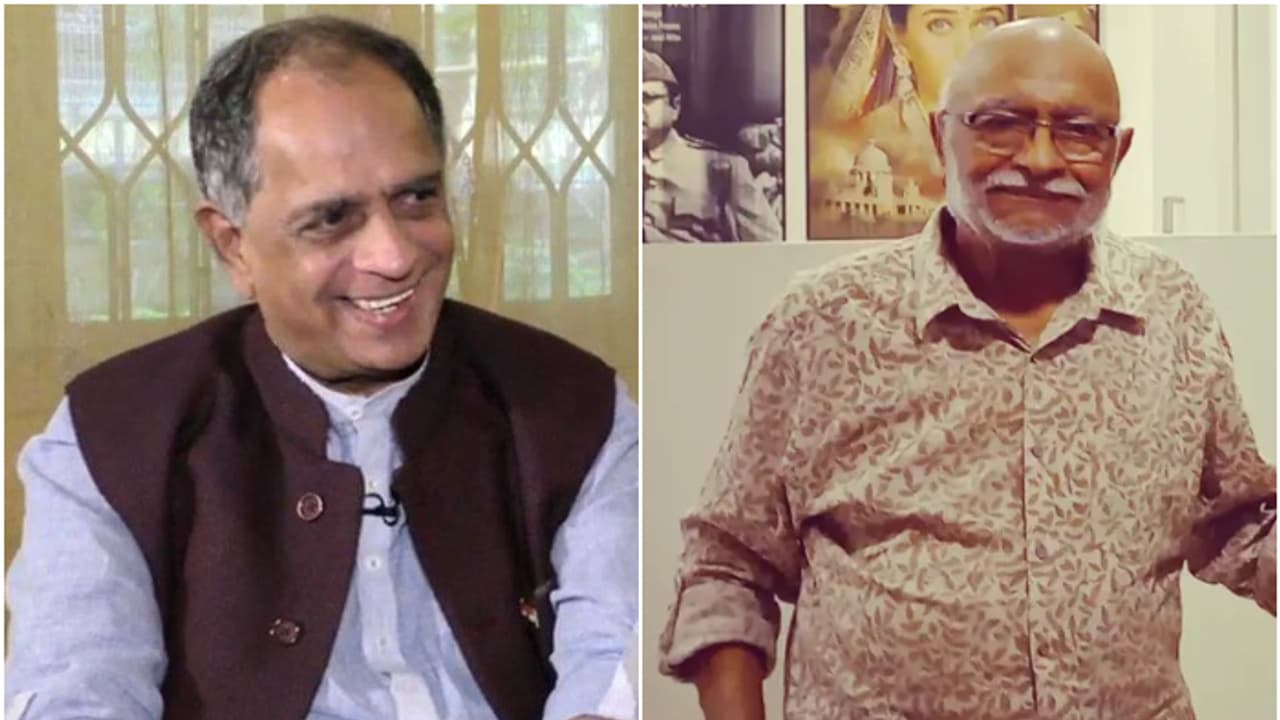
The passing of veteran producer and former CBFC chief Pahlaj Nihalani has reignited discussions about one of Indian cinema’s most recognisable surnames. While many wonder if Pahlaj Nihalani and acclaimed filmmaker Govind Nihalani are related, their biggest distinction lies not in family ties but in the vastly different cinematic worlds they represented. One championed mainstream commercial entertainment, while the other became a leading voice of India’s parallel cinema movement.
Are Pahlaj Nihalani And Govind Nihalani Related?
Although both belong to the Indian film industry and share the Nihalani surname, Pahlaj Nihalani and Govind Nihalani built their careers independently and became known for entirely different approaches to filmmaking. Over the decades, their names came to symbolize two contrasting schools of Indian cinema.
Pahlaj Nihalani: The Face Of Commercial Bollywood And Censorship Debates
Pahlaj Nihalani entered Bollywood as a producer with the 1982 film Hathkadi. He later backed successful commercial entertainers such as Mitti Aur Sona, Shola Aur Shabnam, Aankhen and Andaz. His films were designed for the masses, relying on star power, catchy music, comedy and larger-than-life storytelling.
While his productions performed strongly at the box office, they rarely found recognition in award circuits. Ironically, one of his most controversial productions was Andaz (1994), starring Anil Kapoor, Juhi Chawla and Karisma Kapoor. The film’s songs became widely discussed for their double-meaning lyrics and suggestive picturisation.
Years later, Nihalani would find himself at the centre of national debates after becoming Chairman of the Central Board of Film Certification (CBFC). His tenure was marked by strict censorship decisions that frequently drew criticism from filmmakers and audiences alike.
Under his watch, films such as Fifty Shades of Grey were denied release, while The Battle for Banaras, a documentary chronicling the electoral contest between Narendra Modi and Arvind Kejriwal during the 2014 Lok Sabha elections, also faced hurdles. Acclaimed films such as Masaan and Margarita with a Straw underwent intense scrutiny before release.
Nihalani also became known for objecting to language and terminology in films. Apart from censoring expletives, he reportedly ordered the muting of words such as “lesbian,” questioned the use of “Bombay” instead of Mumbai, and sparked widespread debate after objecting to the word “rakhail” (mistress) in Suraj Barjatya’s family drama Prem Ratan Dhan Payo.
For supporters, he was safeguarding cultural values. For critics, he represented excessive moral policing in cinema.
Govind Nihalani: The Master Of Parallel Cinema
If Pahlaj represented mainstream Bollywood, Govind Nihalani stood at the opposite end of the cinematic spectrum.
One of India’s most respected filmmakers and cinematographers, Govind became synonymous with socially conscious storytelling. His films tackled difficult themes such as caste oppression, political violence, communal tensions and systemic corruption.
His landmark films include the powerful drama Aakrosh, the police-crime classic Ardh Satya, and the acclaimed television epic Tamas. These works challenged audiences to confront uncomfortable realities rather than escape into fantasy.
Unlike commercial entertainers, Govind’s films focused on realism, nuanced performances and complex social commentary. His cinema was less concerned with box-office collections and more interested in provoking thought and debate.
Two Nihalanis, Two Different Legacies
The contrast between the two filmmakers perfectly reflects the diversity of Indian cinema.
Pahlaj Nihalani’s legacy is tied to commercial blockbusters, mass entertainment and one of the most debated periods in CBFC history. Govind Nihalani’s legacy rests on artistic excellence, political storytelling and films that continue to be studied as landmarks of Indian parallel cinema.
One built films around stars, songs and spectacle. The other built narratives around social realities and human conflict.
As the film industry remembers Pahlaj Nihalani following his passing, it also serves as a reminder that the Nihalani name occupies two very different chapters in Indian cinema history—one defined by mainstream entertainment and censorship controversies, the other by fearless storytelling and cinematic realism.