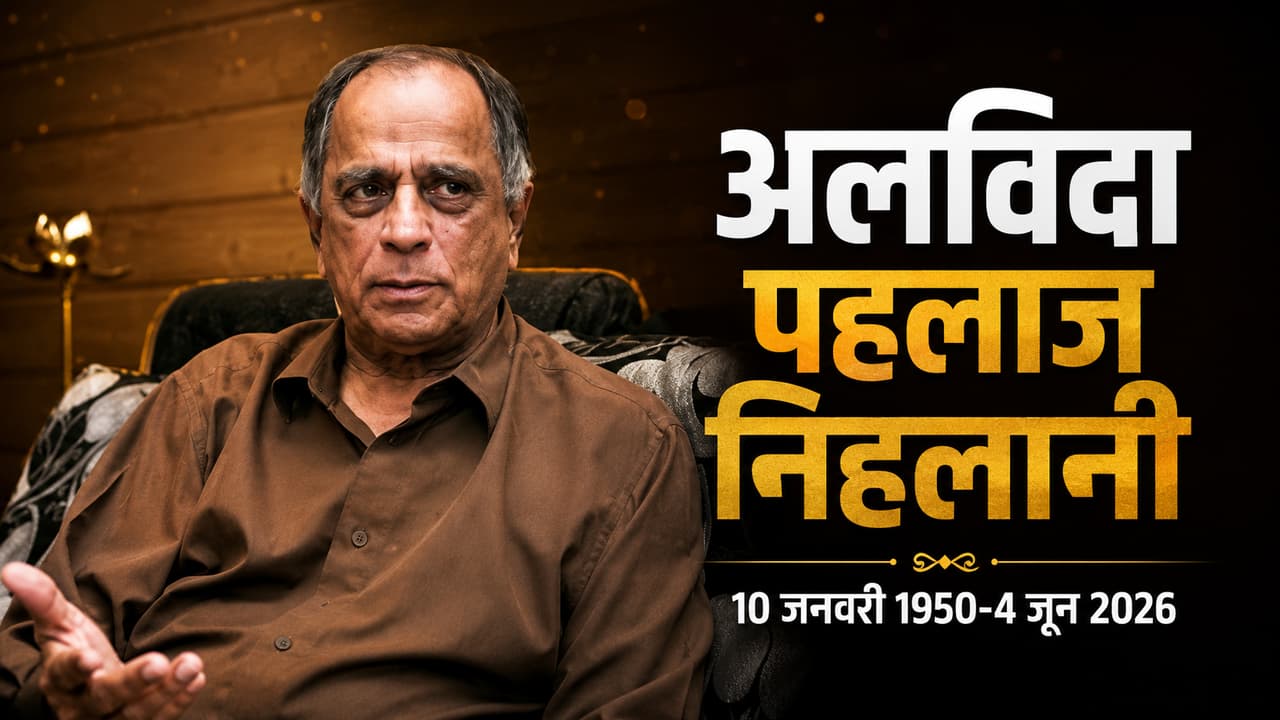
How did veteran film producer Pahlaj Nihalani die? How old was former CBFC chairman Pahlaj Nihalani? How was Pahlaj Nihalani’s tenure as CBFC Chairman? Which are those films of Pahlaj Nihalani for which he will always be remembered?
Another big name has departed from the Indian film industry forever. Renowned filmmaker and former CBFC chairman Pahlaj Nihalani has passed away at the age of 76. It is being told that he was suffering from serious liver related problems. In his long career, he produced many popular and successful films and created a distinct identity in Bollywood. His tenure as CBFC chief was also in the news, where many controversies arose regarding the censorship and decisions of films. There is a wave of mourning in the film world due to his demise.
How did Pahlaj Nihalani die?
It is being told that Pahlaj Nihalani was suffering from liver related problems for a long time. He died during treatment. As soon as the news of his demise came out, there was a wave of mourning in the film industry. Many film personalities and fans paid tribute to him and remembered his contribution.
Pahlaj Nihalani’s film journey and contribution
Pahlaj Nihalani gave many memorable films in Hindi cinema as a producer. Films like Aankhen, Andaz, Talaash, Rangeela Raja and Julie 2 established him as a commercial filmmaker. His career spanned several decades and he entertained audiences through films of different genres. A special flavor of mass entertainment was seen in his films, which included him among the leading producers of his era.
Controversial tenure as CBFC chairman
From 2015 to 2017, Pahlaj Nihalani was the Chairman of the Central Board of Film Certification (CBFC). During this period, his tenure was very popular and full of controversies. Many times there were conflicts between the film industry and the board regarding the cut and certification of films. His decisions were constantly debated, due to which he remained in the headlines for a long time. However, he described his decisions as being in line with regulations and supported a strict censorship policy.