Supreme Court to Hear Plea on NEET Protest FIRs
New Delhi: The Supreme Court has agreed to consider a petition from the Centre aimed at dismissing the FIRs filed against students involved in protests over the NEET exam paper leak.
A bench led by Chief Justice Surya Kant, along with Justices Joymalya Bagchi and V Mohana, acknowledged the urgent request made by Solicitor General Tushar Mehta for a prompt hearing.
As the session was concluding, Mehta expressed, “We wish to file an interlocutory application regarding the protest aimed at quashing the FIRs… We are invoking Article 142 of the Constitution.”
The court indicated that it would not oppose reconciliation efforts among the parties and scheduled the hearing for Tuesday.
This development is particularly noteworthy as the Cockroach Janta Party (CJP) has organized a protest march in Delhi, accusing the government of not fulfilling commitments made on July 25 to end their 36-day protest against examination irregularities.
The CJP plans to hold the march on Teachers’ Day, led by families of students who tragically took their own lives following the NEET exam cancellation and subsequent re-test, as well as those who faced police brutality during the July protests.
Previously, the Supreme Court established a high-powered inquiry committee, chaired by former Justice R Subhash Reddy, to investigate allegations, including police misconduct against students during the nationwide NEET-UG protests.
On August 3, the court clarified that the term “criminal antecedents” in its ruling regarding the release of student protesters applied only to those accused of serious crimes, allowing states to dismiss or withdraw FIRs against other students as per legal provisions.
This clarification followed the Centre’s assurance that it would not pursue FIRs against students involved in the NEET protests, including the July 20 march to Parliament, provided they had no criminal records.
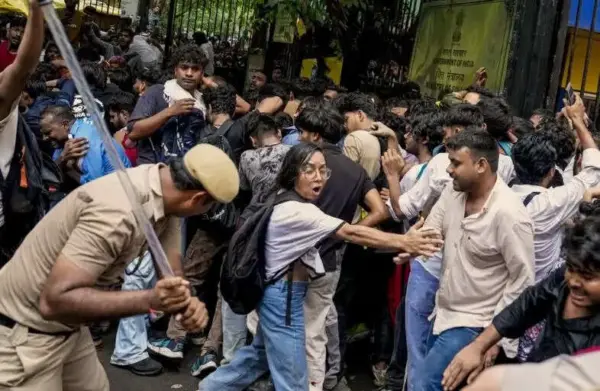
The CJP’s July 20 march in Delhi resulted in confrontations between protesters and law enforcement, who resorted to using batons and tear gas to disperse crowds attempting to approach Parliament.
The student-led protests, which expanded to multiple cities, were primarily focused on demanding the resignation of the then Union Education Minister Dharmendra Pradhan.
The protests, which commenced at Jantar Mantar on June 20, concluded on July 25 after Pradhan resigned and the government agreed to the CJP’s other demands.