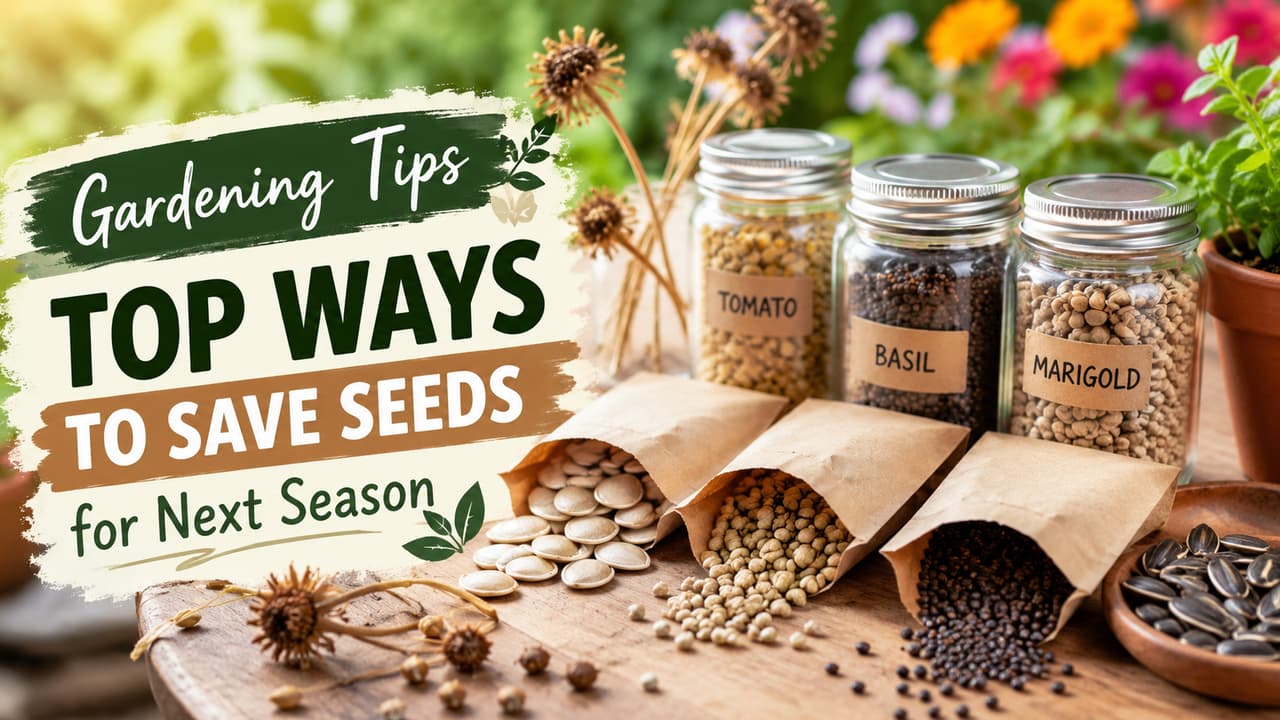
Saving seeds from your favourite plants is an easy, budget-friendly gardening habit. With proper harvesting, drying and storage, you can preserve quality seeds and enjoy healthy plants season after season.
Saving seeds is one of the simplest ways to make your garden more sustainable and reduce the need to buy new seed packets every season. Whether you grow vegetables, herbs or flowers, collecting seeds from healthy plants can help you create a personal seed collection for future gardening.
Choose the Right Plants
Start by selecting seeds from your healthiest and strongest plants. Avoid collecting seeds from plants that are diseased, weak or showing signs of pest damage. If possible, choose plants that produced plenty of healthy flowers, fruits or vegetables, as their seeds are more likely to give good results.
Allow fruits and seed pods to mature fully on the plant before harvesting. For example, tomatoes should be fully ripe, while beans and peas should be allowed to dry on the plant. Flower seeds can generally be collected once the blooms have faded and the seed heads have become dry.
Clean and Dry the Seeds
Once collected, remove any remaining fruit pulp, plant material or dirt from the seeds. Some seeds, such as tomato seeds, benefit from a short fermentation process before being washed and dried.
Spread the cleaned seeds in a single layer on a dry plate, tray or sheet of paper. Keep them in a cool, dry and well-ventilated place away from direct sunlight. Make sure the seeds are completely dry before storing them, as excess moisture can encourage mould.
Store Seeds Properly
Store completely dry seeds in airtight paper envelopes, glass jars or small containers. Label each packet with the plant name and collection date so you know what you have saved.
Keep your seed collection somewhere cool, dark and dry. Avoid humid areas such as kitchens or bathrooms. Properly stored seeds can remain viable for months or even several years, depending on the plant.
Saving seeds not only saves money but also makes gardening more rewarding. With a little care, your garden can provide seeds for many future growing seasons.