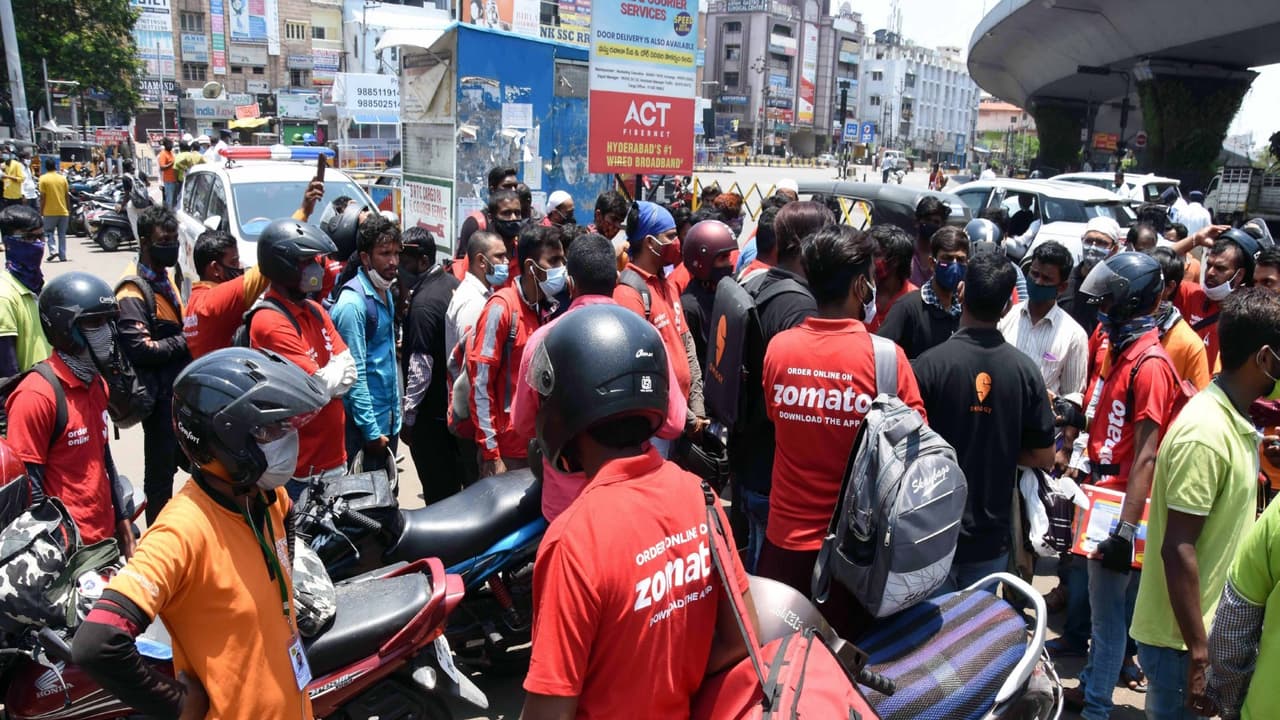
A Bernstein report suggests new entrants like Rapido and Flipkart in India’s food delivery market could lower prices, increase choice, and expand services beyond major cities by targeting lower-value orders and using low-commission models.
The entry of new players into India’s food delivery market could translate into lower prices, greater choice and wider access for consumers, as increased competition pushes platforms to explore new business models and expand beyond the country’s major cities, according to a report by global brokerage Bernstein.
The report said recent moves by new entrants, including Rapido and Flipkart, have the potential to broaden the addressable market for food delivery by targeting lower-value orders and consumers outside the top metropolitan centres. “Food delivery still caters to a small subset of India,” the report noted, adding that food delivery accounts for just over 15 per cent of the country’s food services market despite the strong growth witnessed in recent years. It highlighted that annual transacting customers across Zomato and Swiggy remain around 85-95 million, suggesting significant headroom for market expansion.
Focus on Lower-Value Orders and Smaller Cities
According to Bernstein, one of the biggest consumer benefits from new entrants could come through lower average order values (AOV) and improved penetration in smaller cities. The report said the “incremental market at the lower AOV-end seems to be the explicit focus for the no/low commission model being piloted by Rapido,” while Flipkart is also expected to pursue a lower commission structure. The brokerage said digitally enabling lower-value food deliveries outside India’s top 20 cities could help organise a much larger segment of the food services market, improving access for consumers who have so far remained underserved.
The Cost Structure Challenge
However, Bernstein cautioned that any meaningful reduction in prices for consumers would depend on whether new platforms can sustainably reduce delivery and operating costs. “To summarize, from this INR 132/order of cost structure, we think obvious opportunities to significantly change the business model are limited,” the report said. Nevertheless, it estimated that potential savings in delivery expenses, indirect costs and profitability expectations could “release INR 20-30/order to be distributed between the restaurant and the customer.”
Intensifying Competition and Future Outlook
The report added that while such savings may eventually benefit consumers through lower prices, existing market leaders Zomato and Swiggy are also likely to replicate any structurally successful innovations introduced by challengers. In the near term, Bernstein expects competition to intensify as new platforms use aggressive incentives to attract customers. It said consumers are likely to benefit from promotional offers and discounts funded by new entrants, although these may not be sustainable over the long run. (ANI)
(Except for the headline, this story has not been edited by Asianet Newsable English staff and is published from a syndicated feed.)