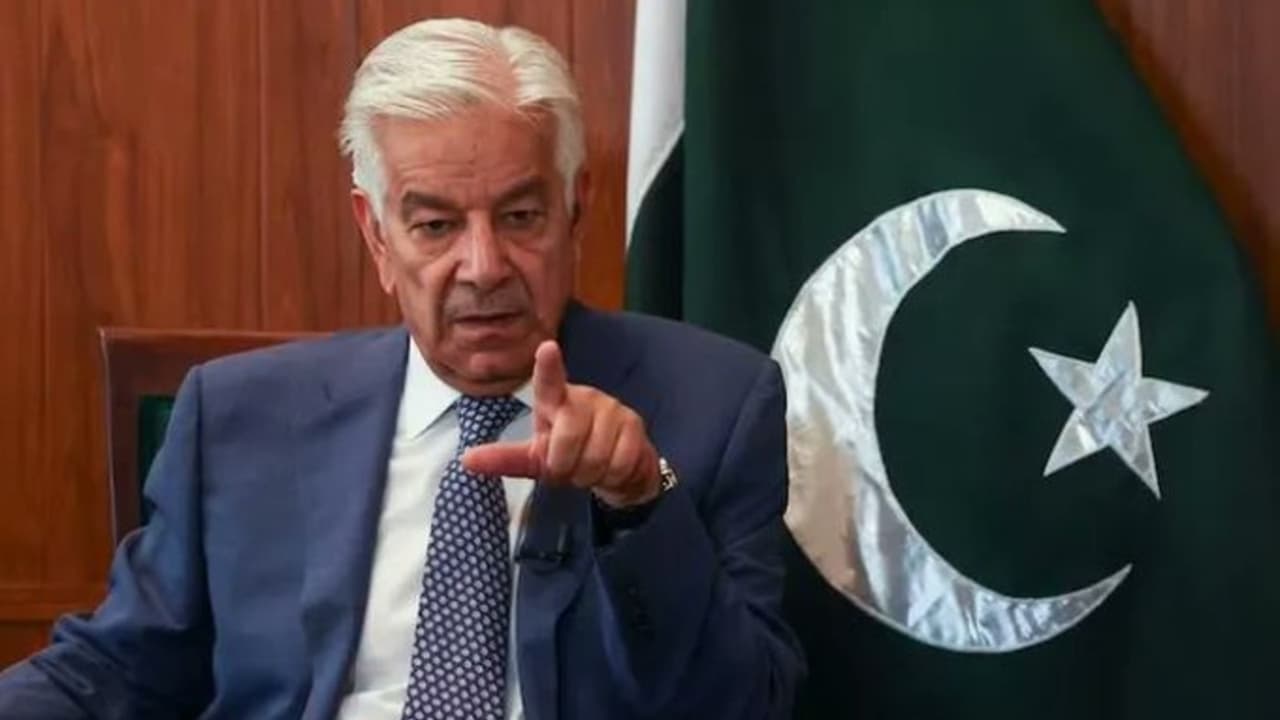
Pakistan’s Defense Minister Khawaja Asif has justified the action taken against protesters in PoK. He has eliminated the possibility of talks with the protesters by calling them enemies of the country like India.
Islamabad: Pakistan’s Defense Minister Khawaja Asif has justified the action taken in Pakistan Occupied Kashmir (PoK). He has described PoK protesters as enemies of the country like India. In an interview given to a local TV channel, the Pak Defense Minister said that now there will be no talks with the protesters. Khawaja Asif said, “We look at the protesters and India from the same perspective. They are also our enemies like India. There is no scope for talks with them now because they are the enemies of Pakistan.”
Recently, violence broke out in PoK after the election process started. Pakistani police and security forces opened fire on the protesters. According to reports, about 20 people died and more than 50 were injured in this firing. The Pakistani government has instructed the police to deal with anyone who appeals to boycott the elections. After this, this major action took place in PoK, in which many people lost their lives. Now this statement of the Defense Minister has come out justifying this. Earlier, even during ‘Operation Sindoor’, Khwaja Asif had given many controversial statements against India. Many protesters, including the Joint Awami Action Committee, are demanding that the 12 seats reserved for Kashmiri refugees in the PoK elections be cancelled.
Why are demonstrations taking place in PoK? Know 10 latest updates
1 – The biggest controversy over 12 reserved seats
The protesters are demanding that 12 seats in the PoK Assembly, which are reserved for Kashmiri refugees settled in Pakistan, be abolished. They allege that Islamabad influences local politics through these seats.
2 – JAAC is leading the movement
The protests are being led by Joint Awami Action Committee (JAAC). This organization is demanding electoral reforms, local rights and changes in government structure.
3 – Appeal to boycott elections
JAAC appealed to boycott the elections in many areas. He says that elections are not fair in the current system.
4 – Violent clash between security forces and protesters
Violent clashes took place between police and protesters at many places before and during the elections. The number of casualties varies in different reports, but several deaths and dozens of injuries have been confirmed.
5 – Elections affected in many districts
Due to deteriorating security situation, voting had to be postponed in some districts and security forces were deployed in large numbers.
6 – Pakistan’s strict stance on JAAC
The Pakistan administration has described JAAC as a banned organization and alleged that violent elements have joined the movement. On the other hand, JAAC describes itself as a peaceful people’s movement. The claims of both the sides are different.
7 – Controversial statement of Khwaja Asif
Pakistan’s Defense Minister Khawaja Asif described the protesters as enemies of Pakistan like India and said that there is no scope for talks with them now.
8 – Concern of human rights organizations
Several international human rights organizations have called for an independent investigation into the shootings, internet shutdowns and crackdown on protesters.
9 – Demand for intervention from UN and OIC
JAAC has written letters to the United Nations Human Rights Council (UNHRC) and OIC, accusing Pakistan of human rights violations and demanding international intervention.
10 – Movement is not limited to elections only
Apart from reserved seats, the protesters are also raising demands like greater political autonomy, local rights over resources, reduction in government privileges and administrative reforms.
What is the whole PoK controversy?
At present, the biggest dispute in PoK is about 12 reserved assembly seats. The protesters say that through these seats, the federal government of Pakistan maintains influence over the politics of the region, while the Pakistan government calls this system a part of legitimate representation. This difference of opinion has now turned into a major political and security crisis.