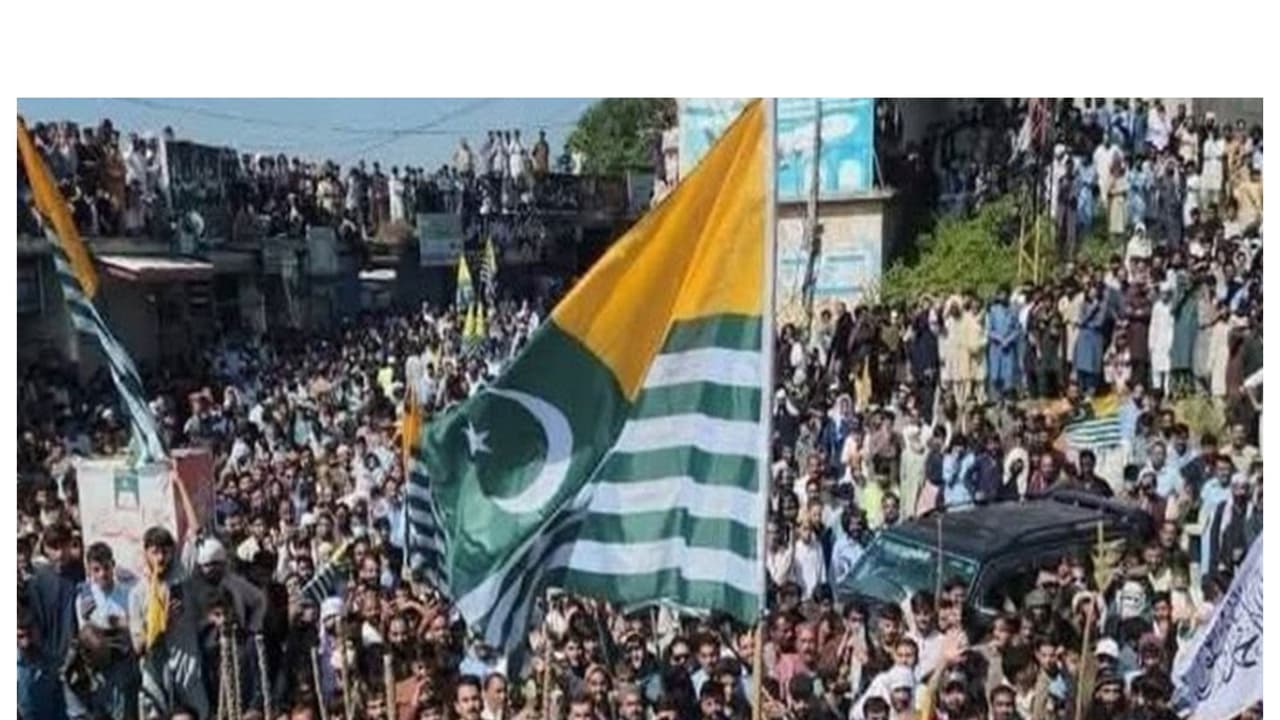
PoJK’s Joint Awami Action Committee has accused the media of misreporting the Rawalakot violence. The committee claimed that 67 protesters had died in firing by Pakistani security forces, and that they would continue their struggle.
The Joint Awami Action Committee (JAAC) has accused sections of the media of misrepresenting the deadly incidents in Rawalakot following the recent violence in Pakistan-occupied Jammu and Kashmir (PoJK). In several posts on Twitter, the committee rejected reports that protesters had tried to force their way into the city, calling these claims false.
Claim of death of 67 people
“Shameless media is saying that Joint Action Committee attempted to forcibly enter Rawalkot,” the group wrote, adding that Rawalkot belongs to its people. The Committee alleged that Pakistani security forces killed peaceful, unarmed civilians by shelling and firing during the operation. In another post, JAAC claimed that the number of people killed between June 5 and July 28 had risen to 67.
Describing the dead as “martyrs”, the committee shared a poem vowing to continue their struggle while taking an “oath to defend” their motherland despite the bloodshed. However, this death toll has not been independently confirmed.
The committee also shared an emotional post on the impact of violence, saying that only after experiencing such loss firsthand have people understood the pain of families who have suffered similar tragedies in the past. The post described the emotional and psychological impact on the survivors, stating that although they are physically alive, they are struggling to understand this massive loss.
Allegations of electoral rigging and repression
The Joint Awami Action Committee has accused authorities of suppressing peaceful protests and undermining the democratic process through alleged electoral irregularities. Pakistani officials have not publicly responded to the committee’s latest social media allegations.
The movement has alleged large-scale election rigging, political interference and systematic suppression of democratic rights in Pakistan-occupied Jammu and Kashmir (PoJK). Protest leaders claim the electoral process was manipulated to influence the results, subverting the will of the people and undermining democratic institutions. They have also accused authorities of restricting political dissent through arrests, intimidation and heavy security deployment.
Clashes and violence during the long march
Recent demonstrations, particularly in Rawalakot, became symbolic of a larger tension when thousands of protesters participating in the Awami Huqoq Long March attempted to continue their march towards Muzaffarabad. The protesters alleged that Pakistani security forces resorted to indiscriminate firing and use of excessive force to disperse the crowd, resulting in several deaths and injuries.
The violence has intensified criticism of Islamabad’s handling of dissent in PoJK, with activists accusing authorities of responding to political demands with force rather than dialogue. Pakistani officials have not publicly responded to these allegations.
(Except for the headline, this story has not been edited by Asianetnews Editorial staff and is published from a syndicated feed.)