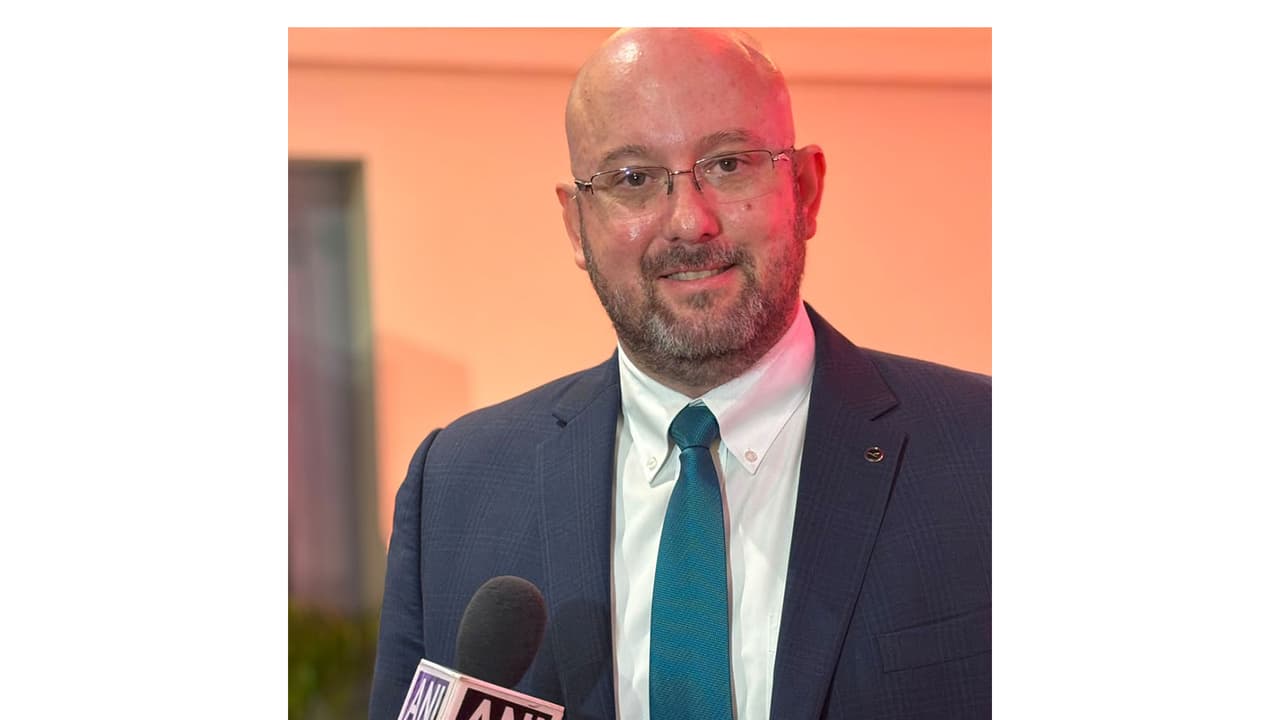
Lufthansa’s India operations are less affected by West Asia tensions than its Gulf operations, but airspace restrictions have led to longer flights and higher costs, a senior official said, adding that India remains a key strategic market.
Expansion and Focus on Indian Market
Markette was speaking on the sidelines of the Travel Destination Germany Press Conference 2026 in New Delhi, where Lufthansa Group highlighted Germany’s tourism potential and its plans to strengthen tourism and business ties with India. He said India remains a key strategic market for the airline and that the group is focused on making travel for Indian passengers more seamless, comfortable and convenient.
“We have a number of expansions that we’re looking at in terms of flight frequencies, bringing bigger aircraft, bringing newer aircraft. We are upgrading our Mumbai-Munich flight to an A380. We will be launching a brand new flight from Zurich to Bangalore at the end of October, and expansion will continue as we go,” he said.
Collaboration with Air India
On Lufthansa’s partnership with Air India, Markette said the collaboration was in progress. “It’s progressing very healthily. I can’t really say much more than that, but we are working on common objectives, and I’m confident that it will be successful,” he said.
Future Growth and Business Plans
Markette said the Indian aviation sector is witnessing exciting growth and that Lufthansa Group is keen to be part of the country’s aviation expansion. On Lufthansa’s business plans in India, he said the airline would continue to increase capacity, introduce new products and expand its presence, but declined to disclose financial projections for the current fiscal year.
“I can’t give you any numbers. I can tell you that overall we are expanding our presence, we are growing the number of seats, we are bringing our new products, and we are making the Lufthansa Group more accessible and more attractive to our Indian customers,” he said.
Addressing Industry Challenges
Volatile Fuel Prices
Replying to another ANI question on volatile crude oil prices, Markette said Lufthansa mitigates part of the impact through fuel hedging, although higher jet fuel prices remain a major challenge for the aviation industry. “Lufthansa does hedge our jet fuel. So to an extent we are hedged, meaning somewhat protected from these price increases. But clearly the jet fuel prices are a significant impact on the industry, and they will continue to have an impact,” he said.
He added that fuel price volatility extends beyond aviation. “Increasing oil prices do not only affect our industry, but they affect the price of a loaf of bread as well,” he said, adding that while Lufthansa does not buy fuel on a day-to-day basis because of hedging arrangements, rising prices continue to pose a challenge for airlines.
Sustainability and SAF
On sustainability, Markette said Sustainable Aviation Fuel (SAF) remains central to Lufthansa Group’s long-term decarbonisation strategy, although limited global availability continues to be a major constraint. “SAF is a big topic for us. The European Union has mandates on sustainable aviation fuel, and Lufthansa is making a number of initiatives to also grow the use of SAF. One of our biggest challenges is the availability of SAF, which is still very limited on a global scale,” he said.
Markette said Lufthansa remains committed to achieving carbon neutrality by 2050 and expects SAF adoption to increase as more producers come online globally. (ANI)
(Except for the headline, this story has not been edited by Asianetnews Editorial staff and is published from a syndicated feed.)