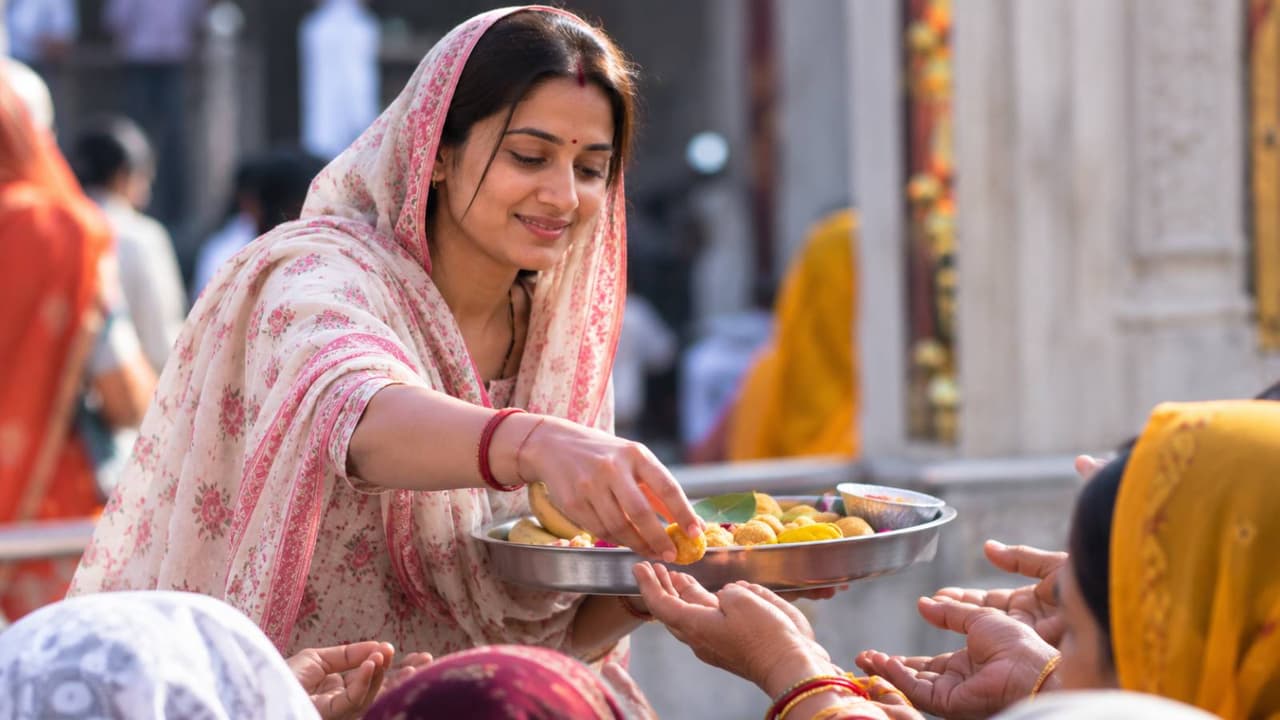
Why Prasad is Distributed: Prasad is considered very sacred in Hindu religion. Prasad is considered a symbol of God’s grace. There are many rules and traditions related to Prasad.
Importance of Prasad: It is a religious tradition to distribute Prasad after visiting the temple or after completing the puja at home. Many people think of it as just sweets or food, but from a religious perspective, the meaning of Prasad is much bigger than this. Prasad is considered a symbol of reverence, gratitude, equality and blessings of God. Let us know why Prasad is distributed? What is the thinking behind this?
What is Prasad?
The word ‘Prasad’ comes from the Sanskrit ‘Prasad’, which means grace, favor, happiness or blessing of God. During the puja, fruits, sweets, panchamrit, kheer or other food items are offered to the Lord. According to religious belief, after offering the same material becomes Prasad and is distributed among the people.
Why is Prasad distributed?
1. Symbol of God’s blessing
According to religious belief, the item offered to God is returned in the form of Prasad. It is considered a symbol of God’s grace and blessings. For example, if laddus are offered in the temple, then later the same laddus are distributed equally among all the devotees. Its purpose is that God’s grace is equal for everyone.
2. Message of equality
The biggest feature of distributing Prasad is that it is not distributed on the basis of caste, religion, richness-poverty or social status. Every person coming to the temple receives the Prasad equally. This tradition gives the message of equality and brotherhood in the society.
3. Medium of expressing gratitude
When a person’s wish is fulfilled, he makes offerings to God to thank him. After this he shares his happiness by distributing the same Prasad among the people.
4. The spirit of sharing
Prasad teaches us that happiness and resources should be shared with others. The spirit of charity, service and sharing has been given great importance in religious traditions.
Does Prasad also have social significance?
Yes. Prasad in temples, gurudwaras and religious functions gives people an opportunity to sit together and eat together. For example, the langar of Gurudwaras and the collective offerings found in many temples are considered good examples of social equality and service.
What is the psychological side of Prasad?
– Social bonding increases by distributing Prasad.
– Eating together creates a sense of belonging among people.
Taking prasad after puja is a positive emotional experience.
What things should be kept in mind while accepting Prasad?
– Accept the Prasad respectfully.
– Avoid taking more prasad than required.
– Take care of cleanliness.
– Do not waste Prasad.
Some important things related to Prasad…
– In Bhagavad Gita (Chapters 3 and 9), food offered with devotion to God is considered sacred and the importance of accepting Prasad has been explained.
– The kitchen of Jagannath Puri temple is counted among the largest temple kitchens in the world, where Mahaprasad is prepared for thousands of devotees every day.
– Langar and Prasad are served to lakhs of devotees every day at the Golden Temple (Amritsar), which is one of the largest free community meal systems in the world.
Content Source: Srimad Bhagavad Gita, Skanda Purana, Padma Purana, Sri Jagannath Temple Tradition, Shirdi Sai Sansthan, Official information about Sri Harmandir Sahib (Golden Temple), IGNCA published on Indian Culture.