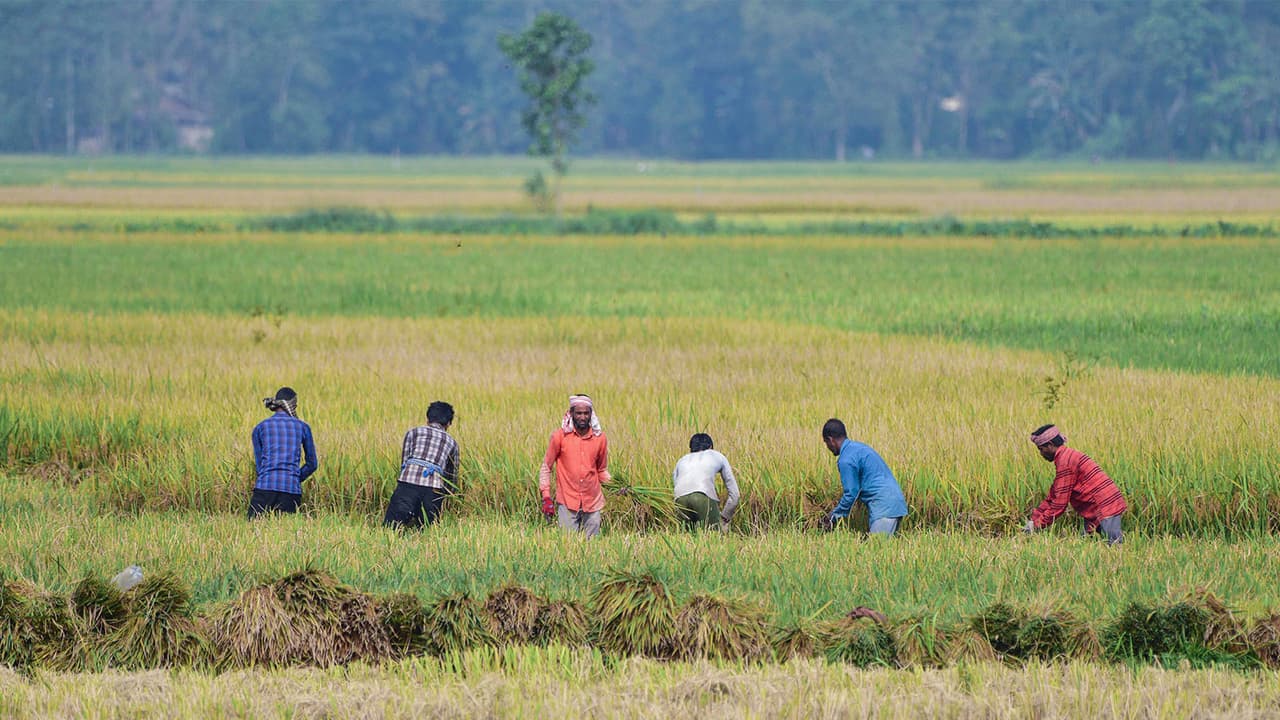
RBI’s Annual Report 2025-26 notes that India’s farm outlook for 2026-27 depends on the monsoon, with El Nino posing a risk. However, structural improvements, a positive IOD, and government initiatives are expected to provide support.
The Reserve Bank of India (RBI) has said that the outlook for India’s agriculture sector in 2026-27 remains dependent on the progress and distribution of the south-west monsoon, while warning that the possibility of El Nino conditions poses downside risks to farm output. In its Annual Report 2025-26, the RBI said that although weather-related risks remain, the agriculture sector is expected to benefit from improved irrigation, technological advancements, government support measures and targeted policy initiatives announced in the Union Budget 2026-27.
“The outlook for the agriculture sector in 2026-27 remains contingent upon the progress and distribution of the south-west monsoon. The likelihood of El Nino conditions poses downside risks to agriculture output,” the RBI said in the report. The central bank, however, noted that weather conditions may not be entirely adverse, as “the rain-inducing positive Indian Ocean Dipole (IOD) conditions are likely to emerge towards the latter part of the monsoon season, which may partly offset adverse impacts.”
Structural Improvements Moderate Rainfall Impact
According to the report, Indian agriculture has become less vulnerable to rainfall fluctuations over the years due to structural improvements in the sector. “While the monsoon remains critical for Indian agriculture, the sensitivity of agricultural production to rainfall variability has moderated over time with rising irrigation intensity, improved crop management practices, and technological advancements,” the RBI said.
Geopolitical Risks and Input Costs
The RBI also flagged risks arising from ongoing geopolitical tensions, saying they could affect the availability and prices of key agricultural inputs, particularly fertilisers. “While the ongoing geopolitical tensions are likely to exert pressure on the availability and prices of key inputs, particularly fertilisers, the government’s continued efforts in ensuring adequate availability of fertiliser and other key inputs through diversified sources and buffer management are expected to mitigate these potential concerns,” the report said.
Union Budget to Support Agricultural Growth
The central bank highlighted several measures announced in the Union Budget 2026-27 that are expected to support agricultural growth. These include initiatives aimed at crop diversification, promotion of high-value crops, improving the commercial viability of fisheries and aquaculture, and wider adoption of technology in farming.
The RBI specifically referred to the proposed launch of Bharat-VISTAAR (Virtually Integrated System to Access Agricultural Resources), a multilingual platform that integrates digital agricultural infrastructure with artificial intelligence-based advisory systems. According to the report, these measures “would support strong and sustainable growth in the agriculture and allied sectors.”
Broader Economic Outlook
The observations form part of the RBI’s assessment of the domestic economy for 2026-27, where it projected India’s real GDP growth at 6.9 per cent while cautioning that a prolonged West Asia conflict could pose downside risks to the broader growth outlook. (ANI)
(Except for the headline, this story has not been edited by Asianet Newsable English staff and is published from a syndicated feed.)