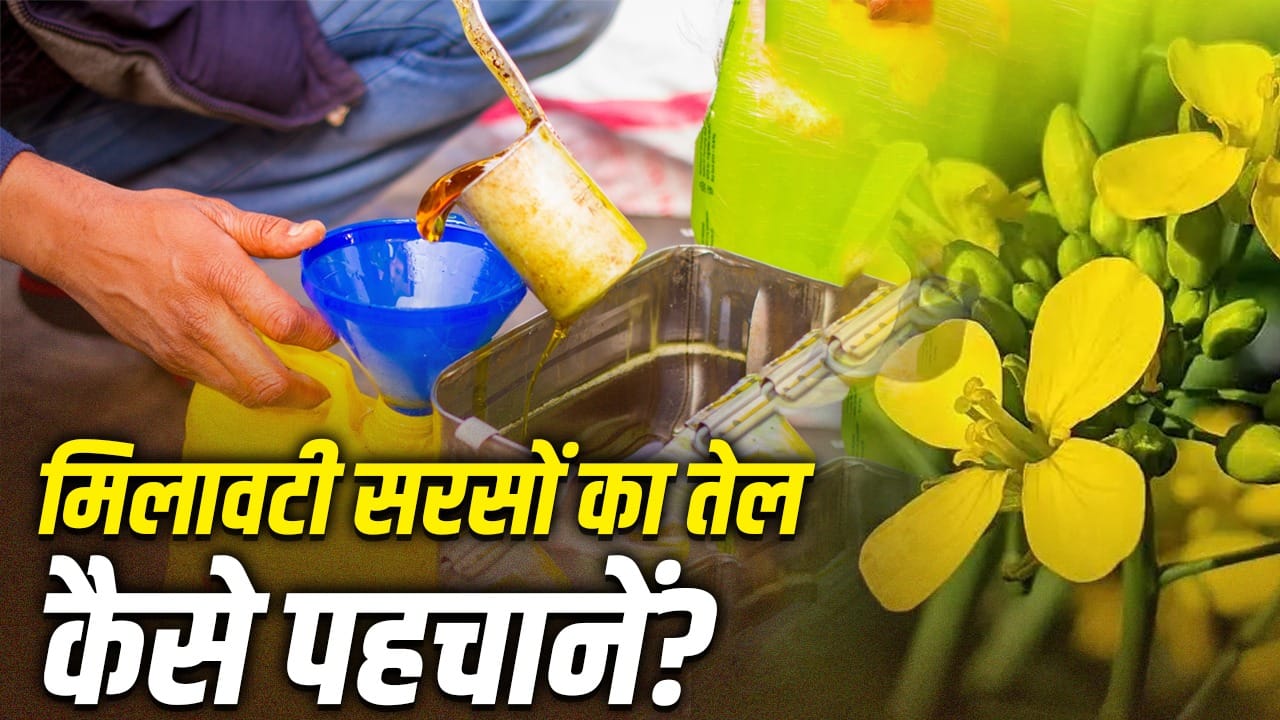
How to identify adulterated mustard oilImage Credit source: Getty Images
The richness of mustard oil makes it best for Indian cooking. No matter how much fitness freak people have become and the trend of using olive oil in cooking has also increased, but even today, mustard oil is used in the kitchen of almost every Indian for cooking. Oil not only enhances the taste of your food, but it is directly related to your health. Whether it is adding flavor and spice to daily vegetables or making pickles, mustard oil is used in our daily routine in our kitchen. Because of this, adulteration in it can cause great harm to your health, but you can easily identify the adulteration done in it.
It has become very difficult to get complete purity of anything available in the market. People do adulteration for profit and this is directly playing with health. We ourselves should be aware of this so that we can avoid eating as many adulterated things as possible.
What things are adulterated?
Mustard oil is mixed with palm oil, arizmon and some cheap mineral oils. To make it look thick and yellow, Metnil Yellow color is also added which can be dangerous. This can cause you serious problems. So let us know how to identify genuine and adulterated mustard oil.
How to identify palm oil?
Keep the mustard oil in a bowl or any container and keep it in the freezer. Take it out after at least 30 minutes. If a white or creamy layer has accumulated in it, it may be adulterated with palm oil or poor quality ghee. Pure mustard oil never freezes nor does its color change when kept in the freezer.

Getty Images
How to identify synthetic color?
Take a few drops of mustard oil in your hands and rub it. If yellow color is visible on the palm, i.e. yellowness starts appearing in the skin, then chemical colors have been adulterated in it. Even if the color is not visible on the palm, apply oil and wash your hands with soap. If yellow color is seen leaving then the oil is adulterated.
Identify by taste and aroma
The aroma of pure mustard oil is very strong. Its aroma is pungent which is called Dhans. If you do not feel the smell of pure oil when you smell the oil, then there is a possibility of adulteration in it. Similarly, if a strange smell is felt while heating the oil, then it has been adulterated. One should avoid eating such oil.
Also read: Neither Kashmir nor Himachal, this place is the stronghold of litchi in India, it is easy to reach here
Keep these things in mind
If you are buying mustard oil, keep in mind the brand. Buy it from certified brand only. One should avoid buying loose mustard oil that is open outside. There is a greater possibility of adulteration in this. Even if there is a new local brand, you should avoid buying its oil unless you are sure of its purity. Also check whether its packet or bottle has the label of Kachhi Ghani or cold-press and is FSSAI certified or not. It is not written anywhere on the packet that this is a blended oil.