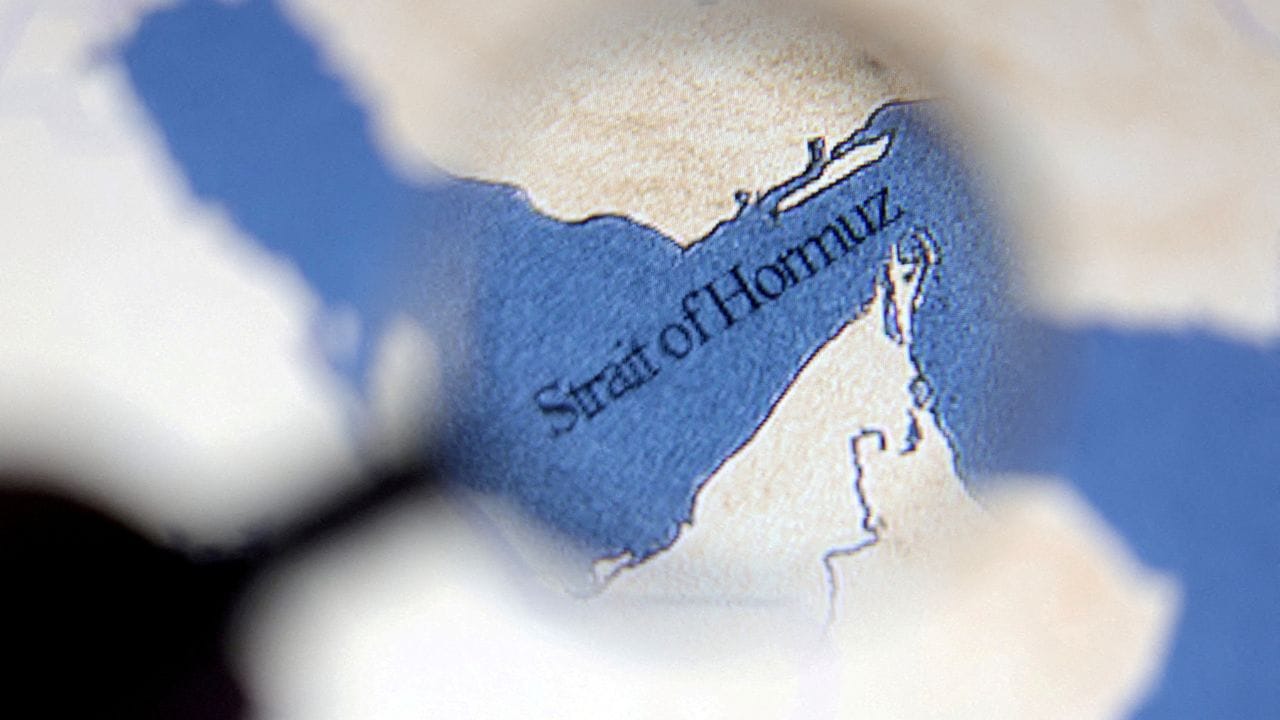
New Delhi: For years, the world has treated the Strait of Hormuz as a pressure point. But today, that pressure point has become a chokehold. At a time when economies across Europe, Asia and Africa are already struggling with inflation, supply chain disruptions and slowing growth, Iran’s increasingly aggressive posture in the Persian Gulf has pushed the global energy market into another dangerous spiral.
Nearly one-fifth of the world’s oil supply passes through the Strait of Hormuz every day. This narrow waterway is not just a regional route it is the artery of the global economy. When Iran threatens to close it, delay shipments, harass commercial vessels or impose unilateral “tolls,” the consequences are not limited to the Gulf. The shockwaves are felt at petrol pumps in India, factories in Germany, airlines in Southeast Asia and food markets in Africa. Iran’s leadership knows this very well. And that is exactly what makes its current behaviour so reckless.
The latest round of tensions did not emerge overnight. During ceasefire discussions with the United States and other mediators, Iran reportedly attached multiple conditions that made meaningful progress nearly impossible. Instead of using diplomacy to calm already volatile markets, Tehran doubled down on confrontation. Even during recent discussions within the BRICS framework, where many developing nations were hoping for stability and economic cooperation, Iran continued projecting defiance rather than flexibility.
A nation has every right to defend its sovereignty. But there is a difference between defending national interests and holding the world economy hostage.
The biggest victims of this crisis are not Western governments or multinational oil corporations. They are ordinary people. Every rise in crude oil prices immediately affects transportation costs, electricity bills, fertiliser production and food prices. In countries like India, where millions still depend on affordable fuel for daily survival, global oil shocks directly translate into household suffering. Vegetable prices rise. Bus fares increase. Small businesses struggle. Fishermen pay more for diesel. Farmers spend more on irrigation and transport.
The irony is that many developing countries that maintained balanced relations with Iran are now being punished by Tehran’s brinkmanship. Iran’s repeated hints about imposing tolls on vessels crossing the Strait of Hormuz are especially alarming. International maritime law does not permit any single country to arbitrarily weaponise one of the world’s most critical trade corridors. The Strait functions under internationally recognised transit passage rights, ensuring uninterrupted movement for global shipping. If every coastal nation began imposing political tolls or restrictions on strategic waterways, global commerce would collapse into chaos.
If Iran can treat Hormuz like a geopolitical toll booth, what stops similar behaviour elsewhere? Could armed groups in the Red Sea begin charging “security fees” to commercial ships? Could tensions around the Strait of Malacca disrupt Asian trade routes next? Nearly 30 per cent of global trade passes through Malacca. Any normalisation of coercive maritime politics would endanger the very foundation of international trade.
Iran’s defenders often argue that Western sanctions and military pressure pushed Tehran into a corner. There is truth in the fact that Iran has faced years of isolation and confrontation. But hardship does not justify destabilising the global commons. Many nations face geopolitical pressure without threatening vital international shipping lanes. The answer to economic isolation cannot be economic blackmail.
What is equally troubling is the mixed messaging from Iran itself. On one hand, Iranian officials speak of regional stability and cooperation. On the other hand, state-linked rhetoric repeatedly invokes the possibility of disruption in Hormuz whenever tensions escalate. Markets react instantly because they understand one simple fact: Iran possesses both the geographic leverage and the willingness to use uncertainty as a strategic weapon.
Oil traders begin stockpiling. Insurance premiums for cargo ships rise sharply. Shipping companies reroute vessels. Governments scramble for emergency reserves. Currency markets become volatile. Investors pull back from already fragile economies. The result is not merely an energy crisis it becomes a full-scale financial anxiety cycle.
At multiple stages, diplomacy could have reduced tensions. Constructive participation in ceasefire negotiations could have reassured markets. Clear commitments to protect maritime freedom could have stabilised shipping routes. Instead, Iran chose maximalist posturing at a moment when the world desperately needed restraint.
There is also a deeper strategic miscalculation here. By continuously projecting unpredictability, Iran risks alienating even those countries that traditionally avoided taking sides against it. Nations in Asia and the Global South want stable energy supplies, not ideological standoffs in shipping lanes. They may sympathise with Iran’s grievances, but they cannot support actions that directly damage their own economies.
The global economy today is interconnected in ways never seen before. A disruption in the Gulf does not remain in the Gulf. It reaches supermarkets in Jakarta, textile factories in Bangladesh and manufacturing hubs in Europe within days. That is why responsible state behaviour matters.
Iran is not solely responsible for every geopolitical tension in the Middle East. Global powers, regional rivalries and decades of conflict have all contributed to instability. But in the present crisis, Tehran’s actions have undeniably intensified uncertainty and magnified economic pain across the world.
The world does not expect Iran to surrender its national interests. But it does expect Iran to act like a responsible stakeholder in the international system. Closing vital trade routes, threatening shipping access and leveraging global energy dependence as a political tool is not resistance. It is recklessness.