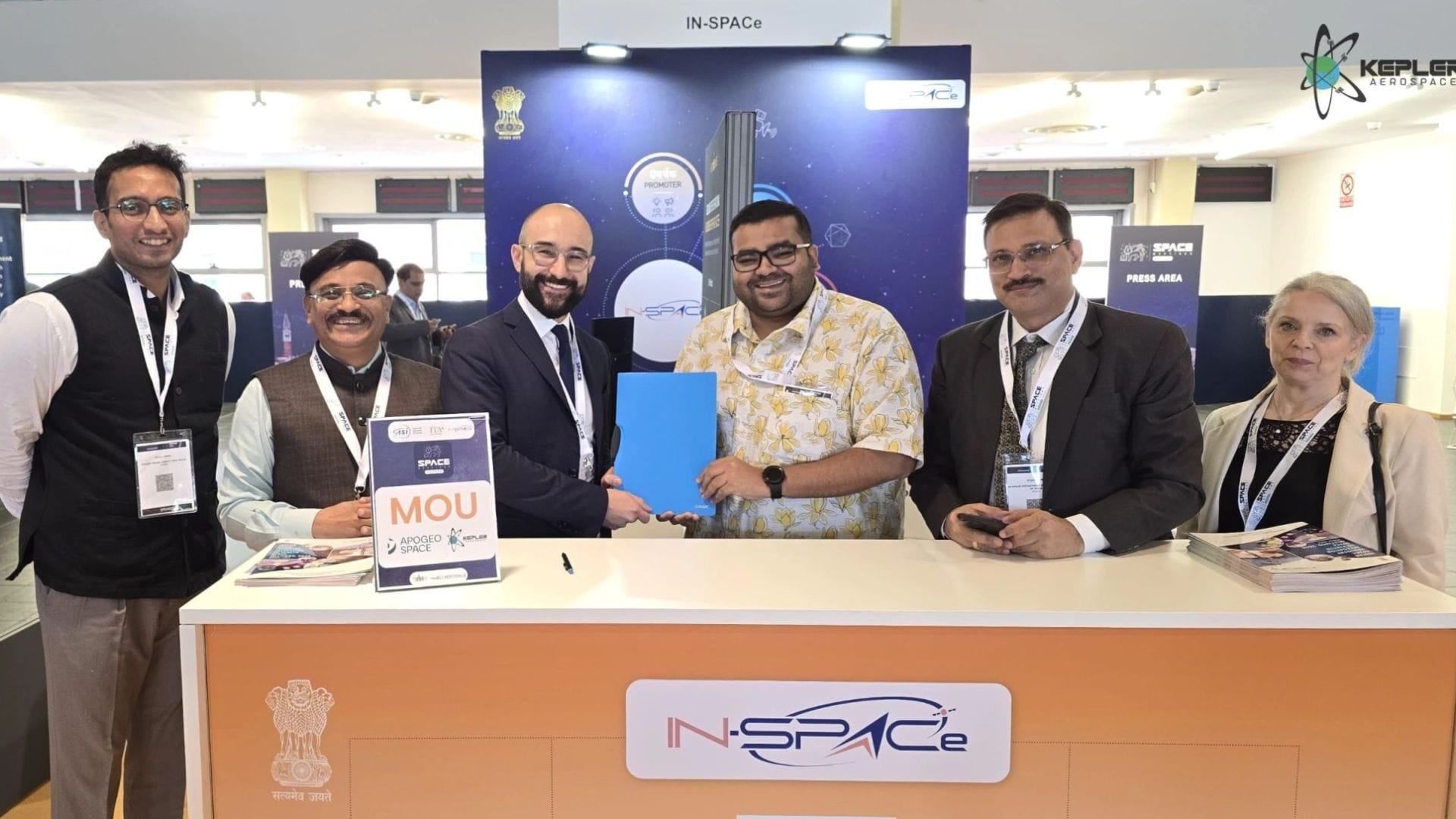
New Delhi: Indian New Space Startup Kepler Aerospace has signed a framework agreement with Italy’s Apogeo Space during the Space Meetings Venteo event in Venice, Italy, advancing shared use of ground infrastructure, and cross-border satellite operations. The pact integrates Apogeo Space’s Italian ground station into Kepler’s Unified Command and Control (KUCC) platform. This expands Kepler’s Ground Station as a Service (GSaaS) network to a target of nearly 50 nations worldwide, spanning multiple frequency bands. The deal is expected to improve orbital coverage, data downlink reliability and operational cadence for small satellite missions.
Apogeo Space gains preferential access to Kepler’s existing global network, increasing flexibility for its own programmes and client missions. The agreement covers technical collaboration on CubeSat platforms, satellite subsystems, payloads and joint mission operations. Both companies operate in the rapidly growing small satellite sector, where responsive ground support is critical for frequent launches and data-intensive applications such as Earth observation and communications. The integration is expected to reduce mission downtime, improve the overall resilience of constellations, and get the most out of scientific payloads.
Strengthening India-Italy Collaboration in Space
The partnership is supported by Indian and Italian institutions including IN-SPACe, the single window clearing agency for all commercial space operations from India, the Italian Trade Agency and the Italian Space Agency (ASI). The collaboration reflects growing commercial ties between India and Italy in the space domain. Kepler has developed an integrated GSaaS model to serve domestic and international customers with lower latency and higher availability of ground stations for satellites. Apogeo contributes European ground assets that complement Kepler’s footprint. The collaboration is expected to facilitate technology exchange and more resilient mission architecture, enabling operators in both regions to respond faster to market demands, in a competitive global small sat industry.