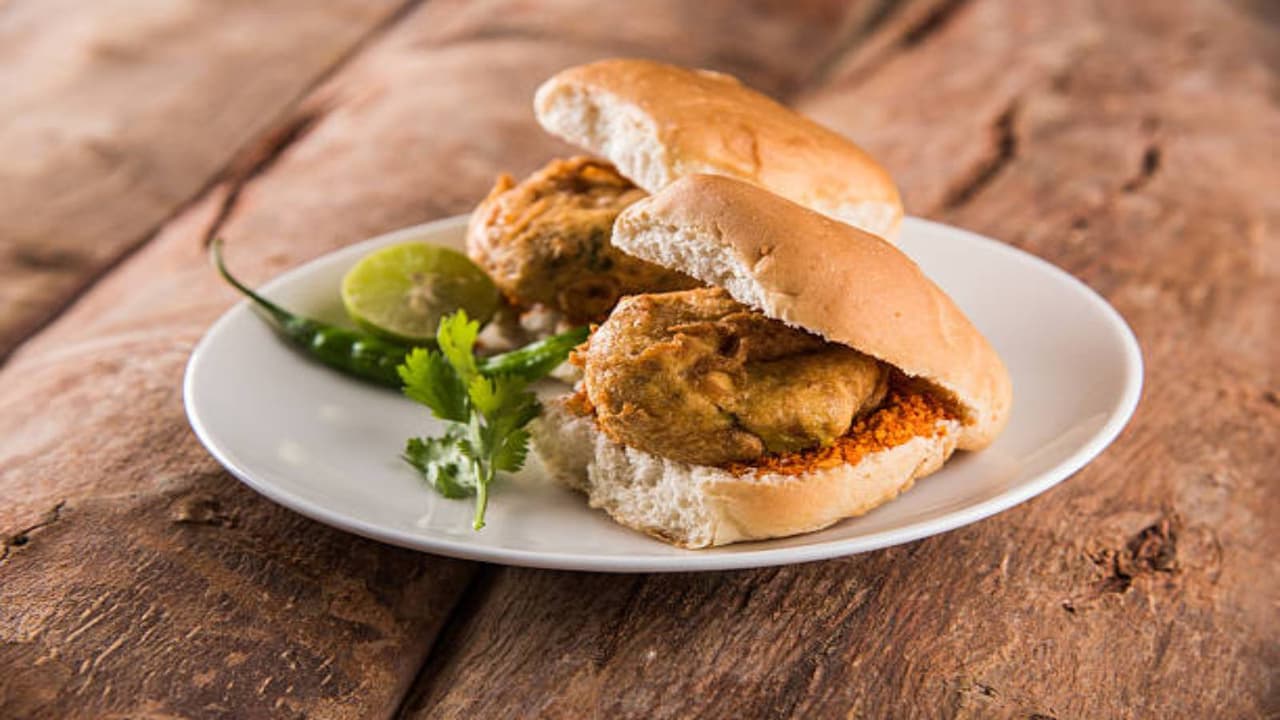
Discover the story of vada pav, Mumbai’s beloved street snack. From its 1960s origins for mill workers to its rise as Maharashtra’s cultural symbol, this potato fritter sandwich reflects India’s street food heritage.
Vada pav is one of Mumbai’s most famous street foods, often described in English as a “potato fritter sandwich” or “Indian burger.” Affordable and filling, it has become a symbol of the city’s fast-paced lifestyle and culinary identity.
The dish was created in the 1960s by street vendors as a quick snack for textile mill workers. At the time, workers needed food that was inexpensive, portable, and energising. Combining a spicy potato fritter with a soft bread bun gave birth to vada pav, which quickly became the city’s most popular street snack.
Today, vada pav is sold at roadside stalls, restaurants, and even global Indian cafés. Its cultural importance is highlighted by the celebration of World Vada Pav Day on August 23.
What Defines Vada Pav
The vada, or potato fritter, is the heart of the dish. Mashed potatoes are mixed with onions, garlic, ginger, mustard seeds, curry leaves, chillies, turmeric, and spices. This mixture is coated in gram flour batter and deep-fried until crisp and golden, producing a crunchy exterior with a soft inside.
The pav, a small bread roll introduced to India by the Portuguese, is lightly toasted with butter before serving. Chutneys complete the dish: spicy green coriander-mint, sweet tamarind, and dry garlic chutney add tangy, smoky, and spicy flavors. A fried green chilli is often served on the side for extra heat.
Over time, creative versions have appeared, including cheese vada pav, schezwan vada pav, butter vada pav, paneer vada pav, and grilled vada pav. Despite these variations, the classic remains the most loved.