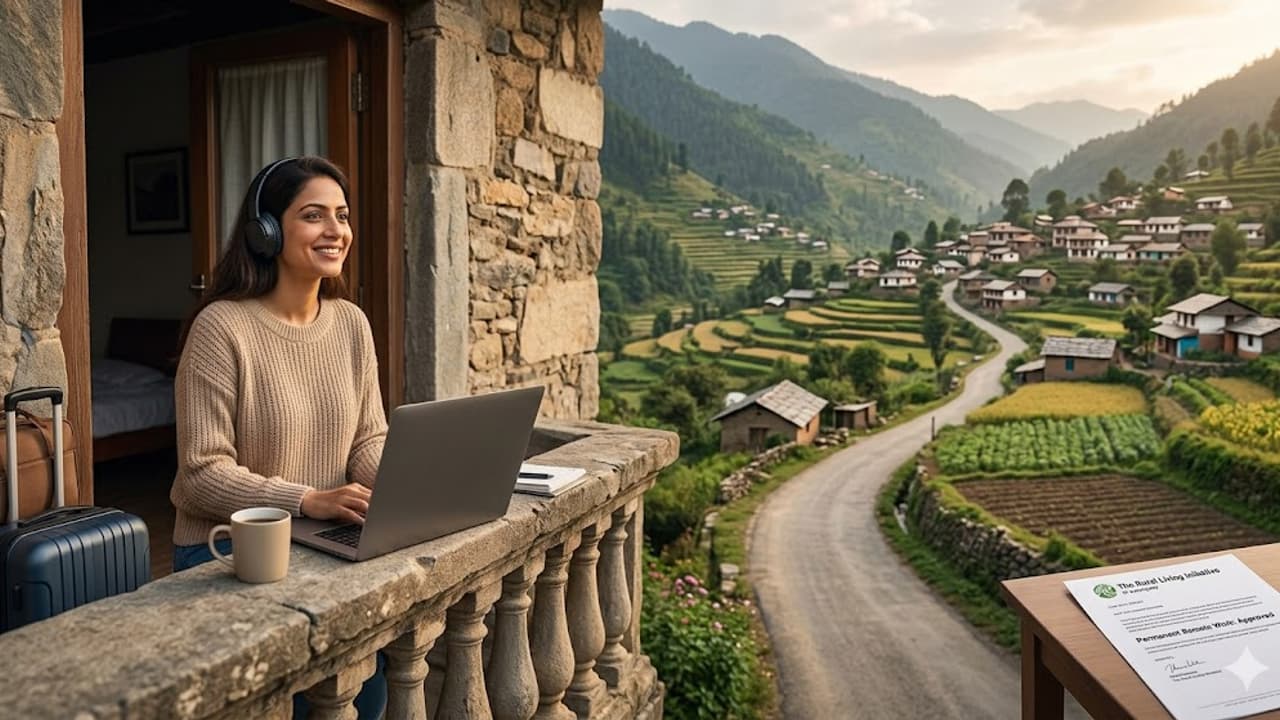
The growth of work from home (WFH) and hybrid work models has made this trend stronger. Many companies now allow employees to work remotely.
One software engineer from Bengaluru left a high-paying job of around ₹2.5 lakh per month. She chose freelance work instead. Now she travels using a budget plan and works from different places.
She said that even though her corporate job gave comfort and money, she felt empty inside. After moving to a simpler life, she feels more active and happy. She believes money is important, but peace is also important.
Another couple Preeti and Lovepreet left city life to settle in Ramgarh, Uttarakhand, fulfilling their dream of living in the hills. Lovepreet, once employed at an MNC, felt trapped in a hectic 9-5 routine and desired a healthier, calmer lifestyle.
After visiting Shimla in 2006, he developed a deep love for the mountains, quit his job in 2008 and began freelancing, according to The Better India report. In 2012, they bought land and built a home in Ramgarh. Today, they run the YouTube channel Punjabi Trekker and grow their own fruits and vegetables, enjoying improved health and daily happiness.
Other major reasons why people are moving back to smaller towns and hill areas:
Lower cost of living: Housing, rent, groceries, transport and daily services are often cheaper. People can maintain a similar lifestyle with less financial pressure.
Better work-life balance: Smaller towns usually have shorter commutes and less traffic. This saves time and allows more family and personal time.
Desire for home ownership: Buying or building a house is more affordable in smaller towns. Many families prefer owning property instead of paying high metro rents.
Family responsibilities: Some people return to care for aging parents or to live close to extended family. Cultural values strongly influence this decision.
Business opportunities: Tier-2 and hill regions are growing economically. New demand exists for cafés, tourism services, education centers, local brands, homestays, and small manufacturing units.
Government incentives and infrastructure growth: Some states promote investment in smaller cities through tax benefits, startup support, improved roads, rail links, and development projects.
Digital business growth: E-commerce, online freelancing, content creation and small-scale digital services allow entrepreneurs to operate from anywhere without needing a metro presence.
Safety and slower pace of life: Lower crime rates in some smaller towns and a calmer lifestyle can appeal to families with children or elderly members.
Education preferences: Some parents prefer smaller schools with lower student-teacher ratios, believing they offer more attention to children.
Lifestyle change and personal goals: After years in high-pressure corporate environments, some individuals intentionally choose a simpler lifestyle focused on health, hobbies or entrepreneurship.