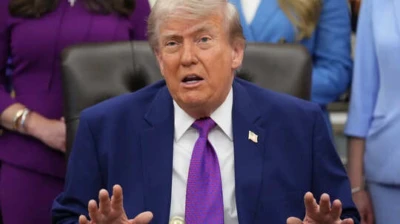
President Donald Trump announced on Monday his intention to suspend the federal gasoline tax to alleviate the financial burden on Americans facing escalating fuel prices linked to the ongoing conflict in Iran.
However, Trump cannot implement this suspension independently; it requires congressional approval for any changes to the federal tax structure.
Lawmakers Seek Gas Tax Relief
Bipartisan support in Congress has emerged for a temporary suspension of the gas tax, as lawmakers argue that it would provide essential relief to families and businesses dependent on vehicles for daily activities.
The average national gas price stood at $4.52 per gallon as of Monday, a significant increase of 50% compared to the average price of just under $3 per gallon prior to the onset of the conflict with Iran.
Federal Gas Tax and Its Uses
The current federal gasoline tax is set at 18.4 cents per gallon, while the tax on diesel fuel is 24.4 cents per gallon. This revenue is critical, generating over $23 billion annually for federal highway and public transit initiatives.
When asked about the duration for which the tax should be suspended, Trump responded, “Until it’s appropriate.” He acknowledged that while the tax constitutes a minor percentage of the total gas price, “it’s still money.”
Administration’s Measures and Congressional Reactions
In response to rising gas prices, the Trump administration has released millions of barrels from the U.S. Strategic Petroleum Reserve and has temporarily lifted sanctions on certain oil shipments from Russia and Iran that were already en route.
Senator Josh Hawley, a Republican from Missouri, has indicated plans to introduce legislation aimed at suspending the gas tax. Similarly, Representative Anna Paulina Luna, a Republican from Florida, has expressed her intention to propose a bill in alignment with Trump’s statements.
The recent spike in gas prices has raised concerns among some Republicans regarding potential repercussions for the party in the upcoming midterm elections. Trump has previously stated that the increased fuel prices are a necessary sacrifice to prevent Iran from acquiring nuclear capabilities.
Legislative Proposals and State Actions
Legislative proposals to suspend the federal gas tax include a bill from Democratic Senators Richard Blumenthal of Connecticut and Mark Kelly of Arizona, which aims to halt the tax until October 1. Similar proposals have been introduced in the House by Democratic Representative Chris Pappas of New Hampshire.
Blumenthal emphasized the impact of Trump’s policies, stating, “Trump’s war of choice with Iran is driving up gas prices across the country – and Americans shouldn’t have to bear the additional economic burden of Trump’s reckless decision making.”
Several states, including Indiana and Georgia, have recently enacted temporary suspensions of their gas taxes to mitigate high prices, while Kentucky and Utah have reduced their state taxes. Other states are currently considering similar measures.
Concerns from Industry Groups
The gasoline tax serves as the largest source of revenue for federal highway and public transit programs. Industry representatives warn that suspending the tax could exacerbate the federal deficit and jeopardize long-term investments in infrastructure.
Despite proposed measures to offset lost revenue from the Highway Trust Fund using general funds, the American Road & Transportation Builders Association cautions that many retailers may not fully pass on the tax savings to consumers. They argue that gas taxes are just one aspect of a complex pricing system influenced by global oil prices and various factors.