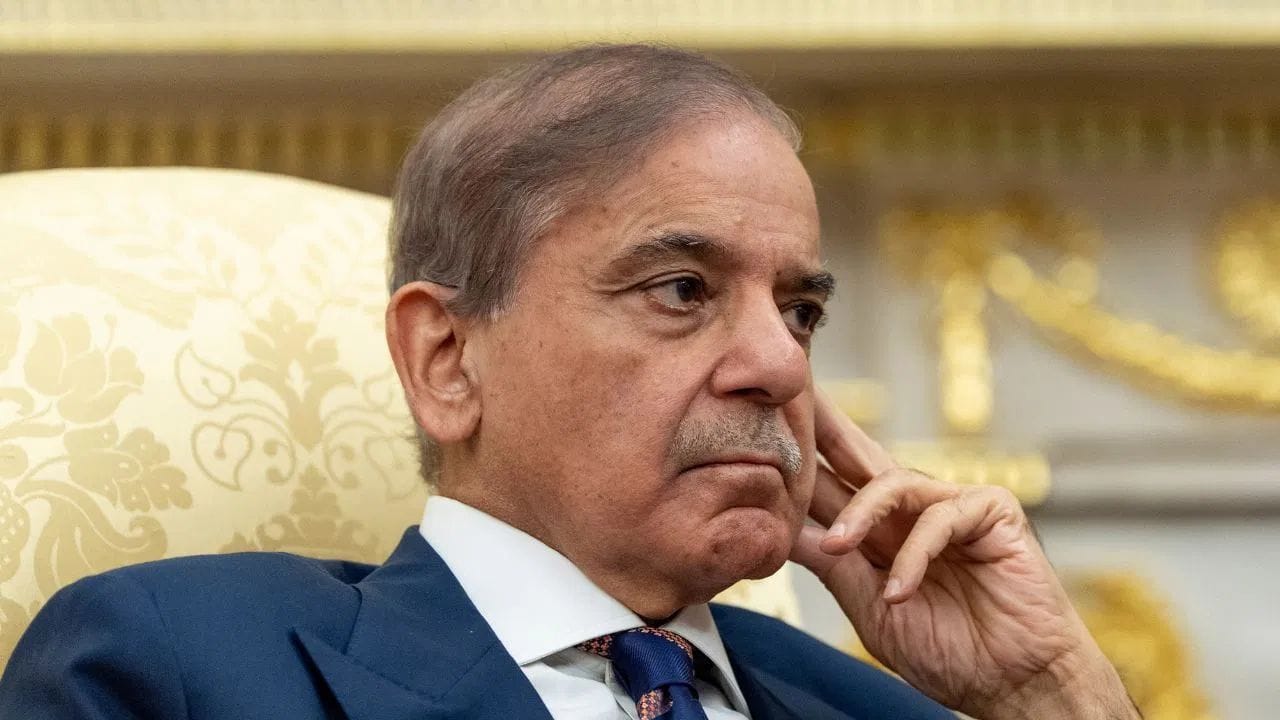
According to a report, Pakistan’s inflation may reach beyond 11 percent.
The condition of Pakistan’s economy is already not good. Now the prices of crude oil have worsened his condition. According to a report by Dawn, Pakistan’s economy is likely to remain under constant pressure. If global oil prices continue to rise amid the ongoing crisis in the Middle East, inflation rates may reach double digits. Topline Securities Limited, in its latest “Pakistan Strategy” report released on Saturday, has presented a sobering assessment of the impact of rising energy costs and regional instability on the country’s economy and stock market. The brokerage firm described the situation as “long-term and volatile,” and warned that any prospects for improvement depend on an immediate and peaceful resolution to the conflict.
Inflation may reach 11 percent
This report states that under the current circumstances, the average inflation during the next year may remain between 9 to 10 percent, while the figures for the fourth quarter of fiscal year 2026 are expected to be more than 11 percent. These estimates are based on oil prices of $100 per barrel. Every $10 increase in oil prices increases inflation by approximately 50 basis points. If oil prices rise to $120 per barrel, the annual inflation rate could reach 11 percent, potentially forcing the State Bank of Pakistan to raise interest rates more aggressively.
There may be a decrease in growth rate
The pace of economic growth is expected to slow down due to rising inflationary pressure. Topline Securities has reduced its GDP forecast for FY2027 to between 2.5 to 3.0 percent from the earlier estimate of 4.0 percent. The growth rate for fiscal year 2026 is estimated to be 3.5 to 4.0 percent, but the industrial sector still remains at risk. The growth rate of this sector may fall from about 4 percent to only 1 percent. According to Dawn, if the government fails to maintain tight controls on imports, the current account deficit could exceed $8 billion in FY 2027, which will further increase the pressure on foreign exchange reserves. The fiscal deficit for FY2026 is expected to be between 4.0 to 4.5 percent of GDP, which is higher than the targets set by the International Monetary Fund (IMF).
impact on stock market
The Pakistan Stock Exchange has been one of the worst performing markets globally, highlighting how dependent the country is on imports for its energy needs. Petroleum imports are estimated to reach $15 billion in fiscal year 2026, while Pakistan imports about 85 percent of its energy requirements. Due to this dependence, a 15 percent decline was recorded in the stock market during the first quarter of the year. The economic outlook is also being impacted by an estimated 3.5 percent decline in remittances (money coming from abroad). The money coming from the Gulf Cooperation Council region is expected to decline by 10 percent. Exports are also expected to decline by 4 percent.
Currency will decline
In terms of currency, the Pakistani rupee is expected to weaken to 298 against the US dollar by fiscal year 2027. Due to the ongoing conflict, the fall in the value of rupee may be more than the historical average, which will increase the pressure on supply and demand. ‘Dawn’ said that although domestic research companies may increase production in the future to reduce dependence on imports of liquefied natural gas, the near-term outlook will be affected by high interest rates, rising urea prices and increasing dependence on emergency administrative measures to prevent a deep economic crisis.