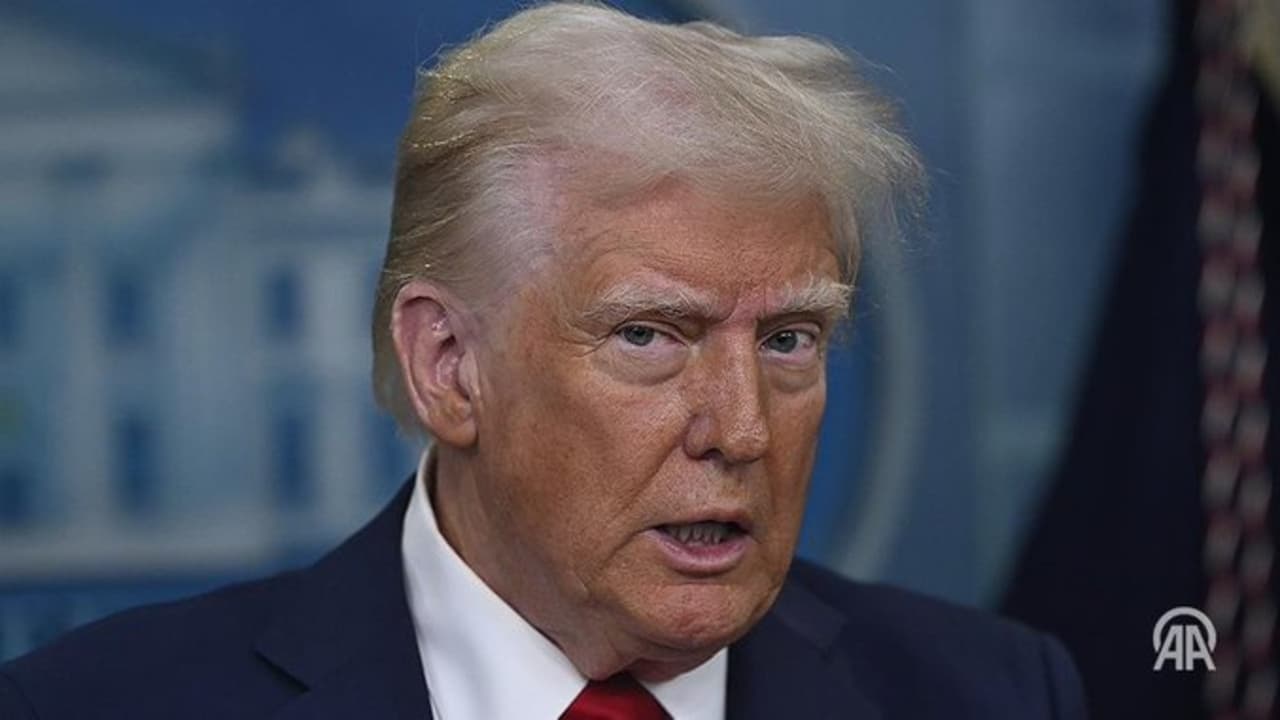
The Trump administration faces a constitutional debate over its military actions in Iran. As a 60-day deadline under the War Powers Resolution expires, the administration claims it is “not at war” due to a ceasefire. Officials argue this “pauses” the legal clock, avoiding the need for congressional approval.
The United States is facing a major constitutional and political debate after the Donald Trump administration claimed it is “not at war” with Iran, even as a key 60-day legal deadline under the War Powers Resolution expires on May 1, 2026.
At the centre of the controversy is a long-standing US law that requires a president to either seek congressional approval or withdraw forces within 60 days of initiating military action abroad. In the case of the Iran conflict, that deadline has now been reached, putting the administration under pressure to justify its next move.
However, the Trump administration has adopted a striking position to bypass the requirement. Officials argue that the US is no longer engaged in active hostilities with Iran due to a ceasefire that has been in place since early April. US Defence Secretary Pete Hegseth told lawmakers that the ceasefire effectively pauses the legal countdown, stating it “pauses” the 60-day clock tied to congressional authorisation.
US ‘not at war’
Backing this stance, officials have repeatedly insisted that the United States is “not at war” with Iran. The administration’s argument hinges on the absence of active combat operations, with no direct exchange of fire reported since the ceasefire began weeks ago.
This interpretation is crucial because it allows the White House to avoid seeking immediate approval from Congress—something that could trigger a politically contentious vote. The administration maintains that once hostilities have effectively “terminated,” the War Powers Resolution does not apply in the same way.
Also Read: US-Iran ceasefire can break ‘any second’, says Israeli expert Steinberg
Yet, this position has sparked sharp criticism from lawmakers and constitutional experts. Many Democrats argue that the administration is exploiting a legal loophole to sidestep congressional oversight. They contend that the broader military posture—including naval deployments and continued strategic pressure—still constitutes involvement in the conflict.
The debate has intensified because, despite the ceasefire, tensions with Iran remain high. The US continues to maintain a presence in the region, including strategic operations linked to the Strait of Hormuz, a critical global oil route. Critics argue that such actions blur the line between peace and ongoing conflict.
Adding to the complexity, Congress itself remains divided. Attempts to pass resolutions either forcing a withdrawal or requiring formal authorisation have failed narrowly, reflecting deep partisan splits. A recent Senate vote rejecting a measure to curb Trump’s war powers underscores how contentious the issue has become.
The administration’s stance also reflects shifting messaging around the conflict. While earlier statements from President Trump described aggressive military actions and pressure on Iran, recent comments have downplayed the situation, avoiding the term “war” altogether. This evolving narrative has raised further questions about transparency and legal accountability.
Also Read: Lebanon-Israel Truce Part of Iran-US Deal, Claims Iranian Ministry
Meanwhile, analysts warn that the situation could set a significant precedent for future US military engagements. If a ceasefire can be used to “pause” or reset the War Powers clock, it may expand presidential authority in ways that weaken congressional oversight.
The stakes are not just legal but also geopolitical. The Iran conflict has already contributed to rising global energy prices and increased instability in West Asia. While the ceasefire has reduced immediate military tensions, the underlying conflict remains unresolved, with both sides continuing to posture strategically.
As the May 1 deadline passes, the Trump administration appears unlikely to seek formal approval from Congress, betting instead on its interpretation of the law. Whether this position holds up under political and legal scrutiny remains to be seen.
In the coming weeks, the issue could escalate into a broader constitutional confrontation between the executive and legislative branches. For now, the administration’s claim that the US is “not at war” has shifted the debate from the battlefield to Washington, where questions of power, legality, and accountability are taking centre stage.