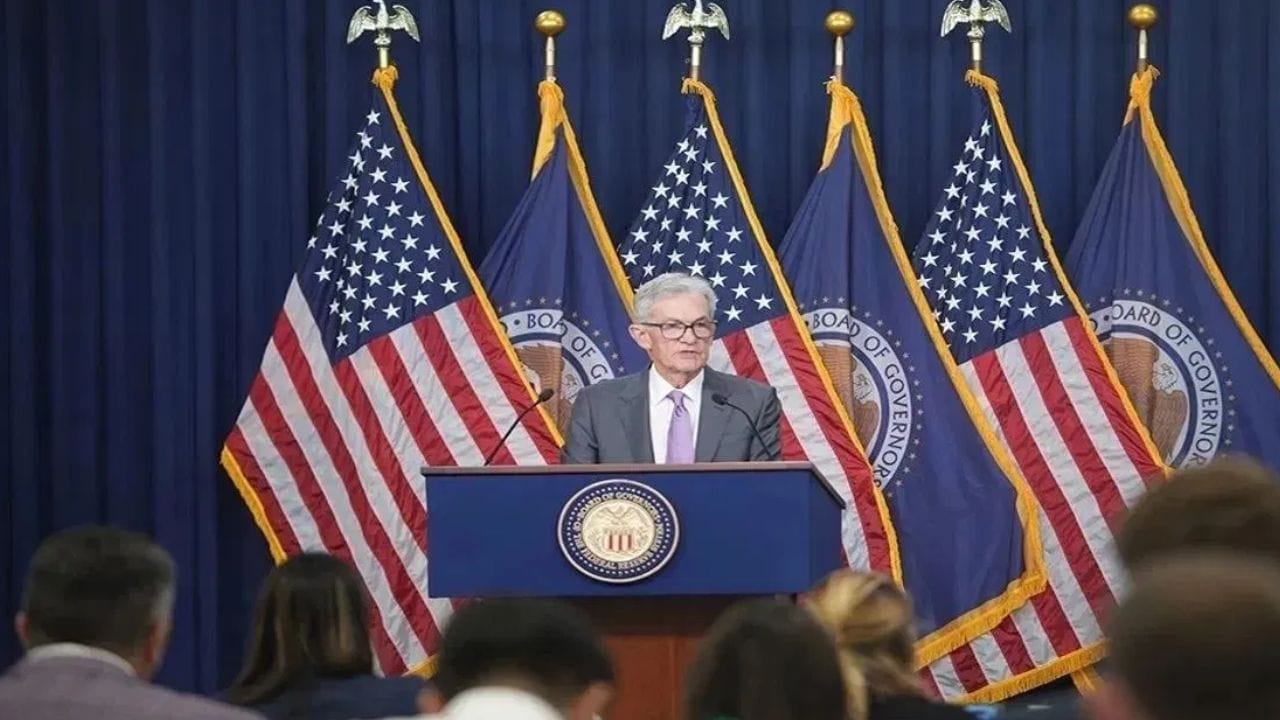
US Fed did not cut interest rates
After nearly three and a half decades, many differences were seen in the meeting of the Federal Reserve, the Central Bank of America. This meeting was not an ordinary one. That too when there is geopolitical tension all over the world. America is directly involved in this tension. Due to which oil prices remain sky high. The prices of petrol and diesel have increased significantly in America. Inflation is continuously increasing. On the other hand, this was also the last meeting of Fed Chairman Jerome Powell, who was in direct competition with US President Donald Trump. His tenure is now virtually over. In the June meeting, Kevin Warsh will not only be a part of this meeting but will also announce his first policy.
If we talk about today, the way voices of disagreement and dissatisfaction were heard and visible in the Fed’s policy meeting. This was seen for the first time in 34 years. Due to which the policy rate was put on hold for the third consecutive time. This means that in the current situation the Federal Open Market Committee voted in favor of keeping the benchmark funds rates in the range of 3.5%-3.75%. The markets were already assuming 100 percent probability that there would be no change in the rates.
Biggest difference of opinion after 34 years
The meeting took a dramatic turn when a large group of officials started opposing the message that there could be further rate cuts in future. Amid expectations of a general vote to keep benchmark funds rates steady, the Federal Open Market Committee was split 8-4, with officials giving varying reasons for their votes. The special thing is that the last time four committee members expressed disagreement was in October 1992.
Which members expressed their importance
Governor Stephen Miron, as he has always done since joining the central bank in September 2025, dissented in favor of a quarter percentage point cut in rates. The remaining three “no” votes came from regional presidents – Beth Hammack of Cleveland, Neel Kashkari of Minneapolis and Lori Logan of Dallas. He said he agreed with the decision to keep rates steady, but “do not support incorporating an easing bias into the statement at this time.”
What was the objection to?
These three officials had objection to the statement that all types of risks will be assessed before any change in interest rates in the coming days. This means that the next step could be towards cutting rates. Hammack, Kashkari and Logan, along with many other Fed officials, have warned of the dangers of persistent inflation. Rising prices indicate higher rates for the Fed, whereas the Fed has been pursuing a policy of softening rates since the end of 2025.
There will be no change in interest rates till 2027?
In a statement issued after the meeting, the committee said that inflation has increased, which is due in part to the recent increase in global energy prices. The markets were fully expecting that there would be no change in rates, and in fact they are expecting no change for the rest of this year and even into 2027. At its March meeting, Fed officials indicated that they expected to cut rates once this year and again in 2027, which would bring the funds rate down to its expected neutral level of about 3.1 percent. After three consecutive cuts last year, this was the third consecutive meeting in which the committee decided not to make any change in the rates.
Powell’s 8 year tenure
For most of his eight-year tenure as chair, Powell has managed to maintain a strong consensus among the committee, even as the Fed has faced difficulties controlling inflation and facing intense political pressure from the White House. However, policymakers face an economic environment where inflation remains well above the Fed’s 2 percent target, as President Donald Trump’s tariffs and rising energy prices make policy even more difficult.
Normally, Fed officials ignore temporary price spikes caused by either of these factors, but this time the duration of the price spike has raised concerns about the long-term impact on consumers.
On the other hand, concerns about an under-recruiting and under-layoff labor market have subsided. Non-farm payrolls rose by a better-than-expected 178,000 in March, while the unemployment rate fell to 4.3 percent. For April, payroll processing firm ADP reported that average weekly private payrolls increased by nearly 40,000, further indicating that the employment situation is healthy, if not very strong.