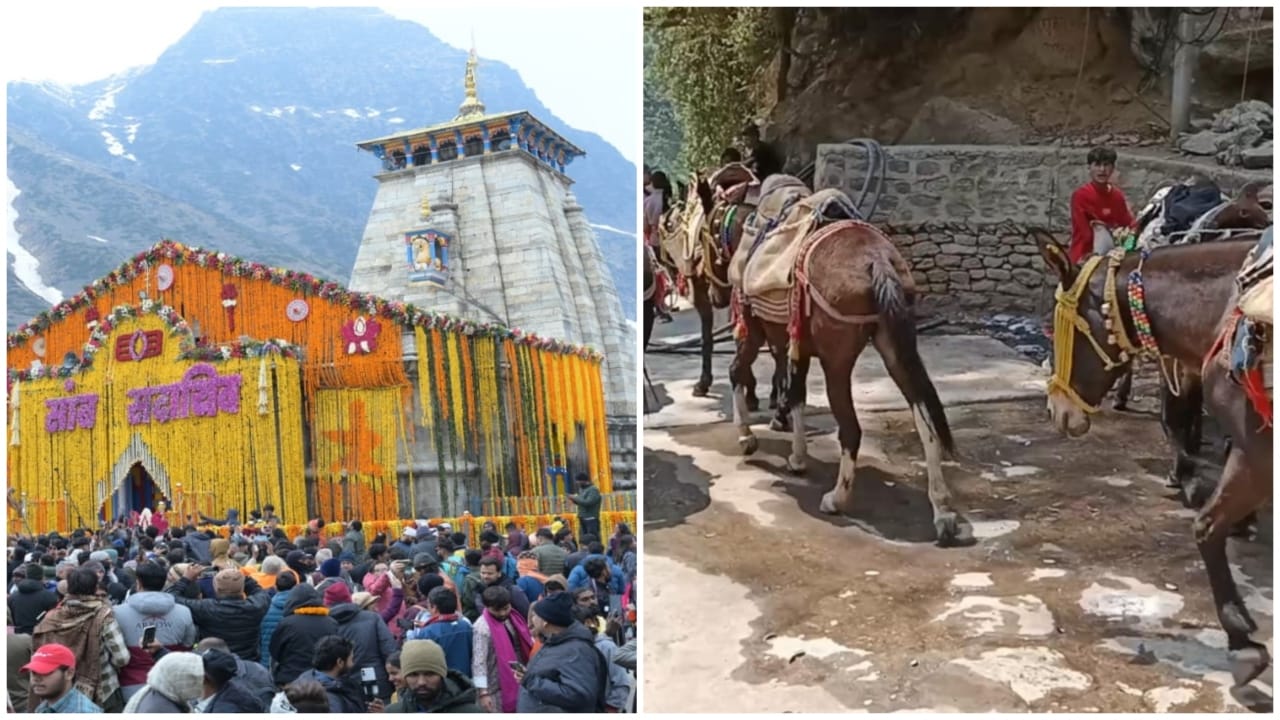
Kedarnath: The revered Kedarnath Yatra has already set new records this year, with more than 150,000 devotees reaching the shrine within just five days of its opening. Pilgrims are arriving by foot, helicopter, palanquins, and also by using horses and mules, which remain an essential part of travel in the rugged Himalayan terrain.
To ensure the journey is safe and organized, the district administration under DM Vishal Mishra has directed the Animal Husbandry Department to keep strict watch on the operation of horses and mules. According to Chief Veterinary Officer Dr. Ashish Rawat, this year 8,300 horses and mules underwent fitness tests, while 7,359 animals were digitally registered. Only these registered animals are being allowed for pilgrim transport and goods carriage.
Special arrangements have been made along the route
So far, nearly 19,000 pilgrims have used horse and mule services. To safeguard animal health, special arrangements have been made along the route. At six locations, continuous hot water supply is available, while at 13 other points, geysers provide warm water for the animals. This is crucial in the cold mountain climate, helping maintain their strength and well-being.
A task force has been formed to monitor the animals along the yatra route. The team conducts regular checks and ensures that no unlicensed or uninsured animals are used. Strict action is being taken against violations, with three FIRs already registered against unauthorized operators.
Dedicated checking point at Bhimbali
Veterinary hospitals are operating at Sonprayag, Gaurikund, Badi Lincholi, and Rudra Point, while a dedicated checking point at Bhimbali ensures thorough examination of animals and verification of documents. At Gaurikund, detailed health checks and document inspections are being carried out before animals are allowed to proceed.
These measures are part of the state government’s SOP, designed to protect both pilgrims and animals. By enforcing fitness tests, registrations, and veterinary care, the administration is ensuring that the Kedarnath Yatra remains smooth, safe, and humane.
Organized system reduces delays
Pilgrims have welcomed these steps, noting that the organized system reduces delays and ensures reliable transport. The initiative also reflects a balance between devotee convenience and animal welfare, making the yatra more sustainable.