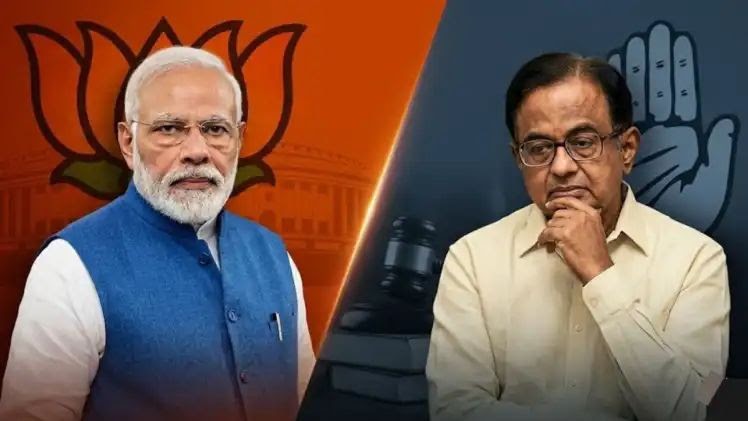
The Bharatiya Janata Party (BJP) led by Prime Minister Narendra Modi is different from any other party in the country – be it past or present. Its goal is not just to win elections as many times as possible, but to win elections and remain in power forever.
In this sense, BJP is similar to the Communist Party of China (CPC). The CPC gained power through a fierce war against the Japanese invaders and a civil war against the Kuomintang (KMT) in 1949 following the surrender of Japan in the year 1945. The CPC has remained in power ever since.
Mao Zedong declared one-party rule in China in the year 1949, while India in the year 1947. Britain achieved independence from India and took steps towards writing a secular, democratic and republican constitution. The Constitution of India, adopted in 1950, has provisions for a multi-party system, regular elections and peaceful transfer of power between the Center and the states. This only China The biggest difference between India and
BJP and RSS
Initially the Jana Sangh, and later the Bharatiya Jana Sangh and the Bharatiya Janata Party in its present form placed faith in the Constitution of the country. It was nurtured as a democratic party and established politically on the right. It wanted to be different from the Indian National Congress, which was in the leftist camp. The BJP remained a democratic party for years under the leadership of Syama Prasad Mukherjee, Deendayal Upadhyay, Atal Bihari Vajpayee and Lal Krishna Advani. However, the RSS, the political guru of the BJP, had and still has a different view about the country’s governance system and political structure: the RSS believes that India should be a country with one language, one culture, one political party and, as far as possible, one religion.
Prime Minister and de facto leader of the BJP, Narendra Modi, is a thinker who accepts the RSS’s vision of India, but at the same time understands that the RSS’s goals can be achieved not through electoral victory alone, but through well-planned actions. The constitutional, legislative and administrative steps taken by the Modi government since 2014 should be seen in this perspective. Modi’s strong support for the Citizenship (Amendment) Act and the Uniform Civil Code, the enactment of the Jammu and Kashmir Reorganization Act, the creative interpretation of the provisions of Article 73, Article 162 and Parts 11, 12 and 14 of the Constitution, and the determined effort to implement One Nation One Election (ONO) are all planned steps towards the establishment of a so-called developed India.
hope and despair
Narendra Modi was influential from the year 2014 to 2024. He was confident that the people of the country would give his party more than 400 seats in the 2024 Lok Sabha elections, but he got a huge blow – the public gave him only 240 seats, which is less than the simple majority of 543 seats. Since then all their efforts have been focused on regaining the lost ground before the year 2029.
Suppose the BJP had succeeded in passing the Constitution (131st Amendment) Bill, 2026, then under the guise of reservation of seats for women, this Bill would have led to delimitation and arbitrary demarcation of constituencies. The new laws and their implementation would have made the southern states irrelevant in the governance of the country. Apart from this, BJP could have easily passed other constitutional amendments in the Parliament by applying pressure, including the bill to implement ‘One Nation One Election’.
By the 2024 Lok Sabha elections, the BJP believed it had a working formula to win the elections – a tight organizational structure in the nine Hindi-speaking states, the districts of Gujarat and Jammu, a capable party in the Hindi-speaking states of Maharashtra and Punjab, money power, Governors who complied with instructions, an intimidating bureaucratic machinery, compliant investigative agencies with the power to search, seize, arrest and prosecute, a stranglehold on the media, the tacit support of the Election Commission and a restrained judiciary. But the obstacles to absolute power were the southern states, West Bengal and the unity of the opposition. That is why the idea of ’one nation one election’ was put forward.
One Nation One Election Bill must be defeated
I fear that if the ‘One Nation One Election’ Bill is passed, the opposition alliance may disintegrate. Regional and state level parties form opposition alliance with Congress. There are differences among themselves and they contest elections against each other in the state assembly and local bodies. Besides, they also have the potential to form a coalition in the Lok Sabha elections, as they did in the year 2024.
These parties will have to put aside their differences and come together and form an alliance that will give them the best chance of defeating the BJP in the Lok Sabha elections. However, if the ‘One Nation One Election’ Bill is passed, it will entail simultaneous elections for the Lok Sabha, state assemblies and ultimately local bodies. Holding simultaneous elections will weaken the opposition alliance. Therefore, BJP considers passing this bill as an important part of its larger strategy.
The lesson from the 2024 Lok Sabha elections is that despite several parties forming opposition alliances, they could not defeat the BJP, which emerged as the largest party with 240 seats. Mutual cooperation can expand the opposition alliance and become a big challenge for the BJP. Ultimately, the two big alliances in the Lok Sabha elections will prevent the BJP’s monopoly at the Centre, create space for political alternatives and uphold the country’s secular, democratic and republican Constitution.
Did Trump-Pakistan proximity change the equation? New crisis on India-US relations
It’s a strange world. So strange that the country which carried out such a heinous terrorist attack in Pahalgam last year that it was on the verge of war, has today been made the messenger of peace by Donald Trump. I have some friends in Mumbai and Delhi who say that Pakistan has played its cards very cleverly and we have lost our high place in the world meetings. When I listen to his words, I feel very sad because my own opinion is that the fault lies not with us but with America, which is again forgiving every crime of its old friend.