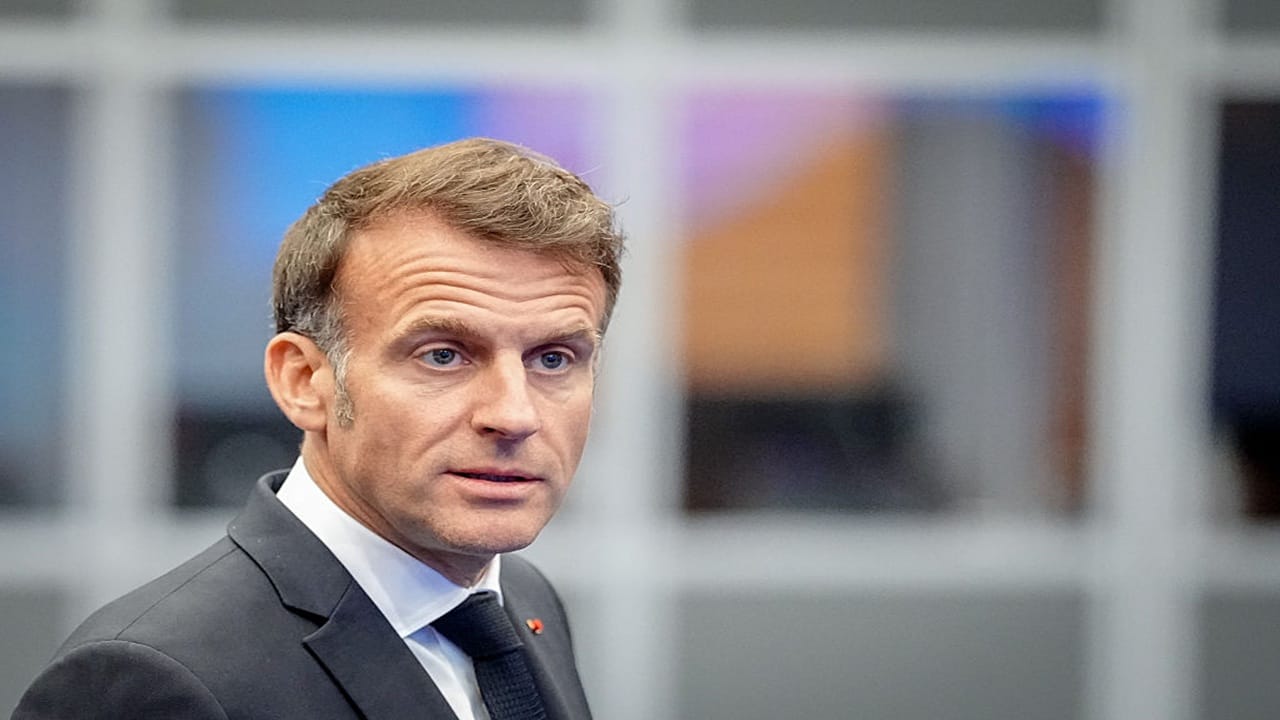
New Delhi: French President Emmanuel Macron has said the European Union’s mutual defence clause is “not just words”, stressing that Europe is beginning to take its own security more seriously at a time of growing global uncertainty. Speaking during a visit to Athens, Macron pointed to recent coordinated European support for Cyprus as proof of its practicality.
Athens visit and Cyprus support
Macron’s remarks came during his trip to Greece, where he met Prime Minister Kyriakos Mitsotakis and renewed defence cooperation between the two countries. During the visit, France and Greece reaffirmed their strategic defence ties, including commitments to assist each other in case of external threats.
Macron also signed agreements covering areas like nuclear and scientific cooperation, signalling a wider effort to build long-term security and technological collaboration.
As an example of EU cooperation on military matters, Macron cited the recent assistance provided to Cyprus after a drone attack on a British airbase on the island. Several EU countries stepped in with military support during the incident, which he described as a turning point in showing that European solidarity can translate into real action on the ground.
What are EU mutual defence clauses?
The EU’s mutual defence clause, Article 42.7 of the bloc’s treaty, requires member states to aid a fellow member if it is attacked. While similar in principle to NATO’s Article 5, it has historically been less developed and rarely used. In fact, it has only been formally invoked once, by France after the 2015 Paris attacks.
However, recent geopolitical tensions and concerns about the reliability of US support within NATO, following particularly after the worrying rhetoric of US President Donald Trump on this matter, has pushed EU leaders to take the clause more seriously. Discussions are now reportedly underway to create a clear “blueprint” or handbook that would define how the clause should be implemented in real-world situations.