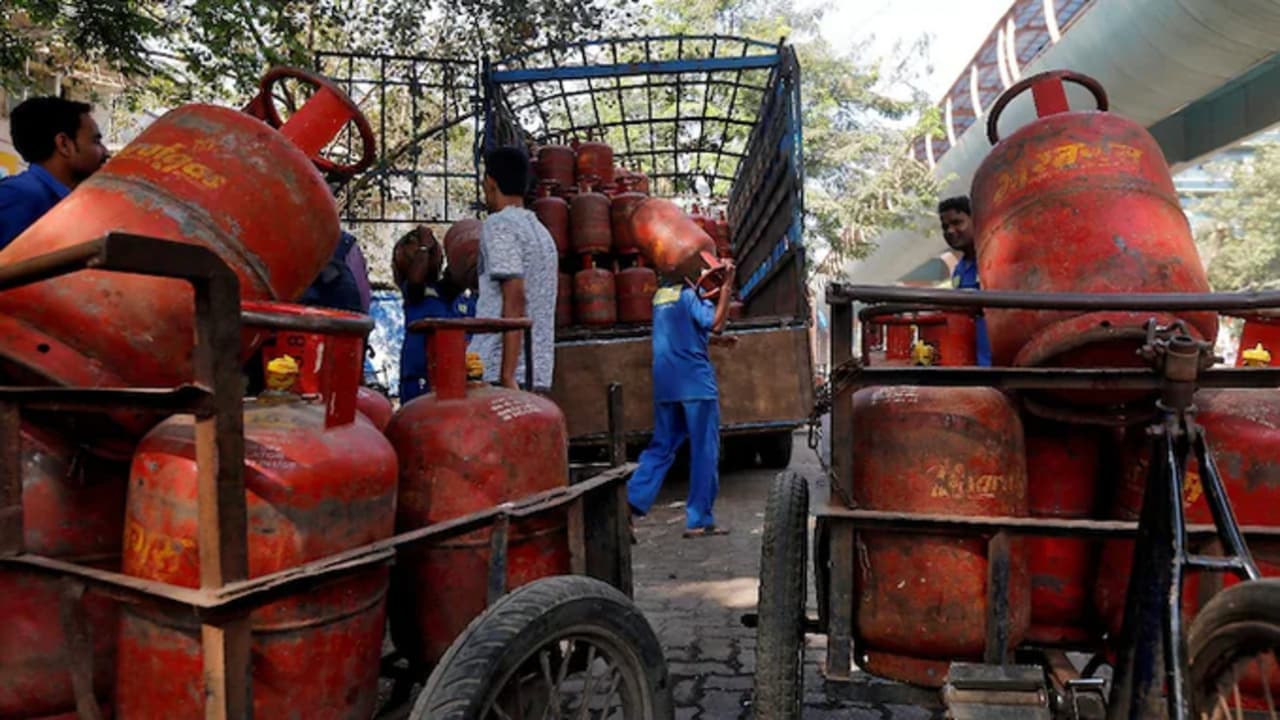
LPG consumption India: A decline of 13% was recorded in LPG consumption in India in March 2026. Middle East tensions and supply disruptions impacted domestic and commercial users. Know the whole matter, government strategy and its impact on the energy sector.
March 2026 proved to be an unusual month for India’s energy sector. This time there was a sudden decline in the consumption of cooking gas (LPG), which is usually continuously increasing. The data shows that this is not just a normal fluctuation, but a direct impact of global geopolitical tensions, which has again exposed India’s delicate dependence on energy supplies.
12.8% decline in LPG consumption in March
According to the latest data from the Petroleum Planning and Analysis Cell (PPAC) of the Oil Ministry, the total consumption of LPG in the country declined to 2.379 million tonnes in March 2026, which is 12.8% less than 2.729 million tonnes in March last year. The decline comes at a time when India imports about 60% of its total LPG requirement, and the bulk of it comes through the strategically important Strait of Hormuz.
Also read: Women’s Reservation Bill: Why the Women’s Reservation Bill failed in the Lok Sabha, preparations were made to implement it in 2029
Middle East tension became the main reason
The attacks on Iran by the US and Israel and the subsequent retaliation by Tehran increased instability throughout the Middle East. Its biggest impact was on supply routes, especially the Strait of Hormuz which was almost disrupted. Gas supplies from Saudi Arabia and the United Arab Emirates were also disrupted, forcing India to prioritize its domestic distribution system.
Government strategy: Priority to domestic users
In view of the supply pressure, the government took an important decision-
- LPG supply reduced in commercial sectors like hotels, restaurants and industries
- To ensure availability of gas for domestic kitchens
Although the government claims that the needs of domestic consumers are being met, the figures present a different picture.
Big decline in domestic and commercial sales
According to PPAC data:
- Domestic LPG cylinder sales declined by 8.1% (2.219 million tonnes)
- Huge decline of about 48% in non-domestic users
- Historic decline of 75.5% in wholesale LPG sales
This clearly indicates that the biggest impact of the crisis was on hotels, industry and big consumers.
Efforts to compensate for the shortage by increasing domestic production
To fill the supply gap, the government directed refineries to divert petrochemical feedstock toward LPG production. Its effect was also visible:
- Domestic LPG production increased to 1.4 million tonnes in March (1.1 million tonnes last year)
Throughout the financial year 2025-26:
- Total production increased to 13.1 million tonnes
- Whereas in the last two years it was 12.8 million tonnes
Still 6% growth in annual consumption
Despite the March decline, LPG consumption for the full fiscal year 2025-26 grew by 6% to 33.212 million tonnes. This is a sign of continuously growing demand, largely due to the government’s policies to promote clean fuel, especially in rural areas, the expansion of LPG as an alternative to wood and coal.
Condition of other fuels: Petrol and diesel prices rise, ATF halted
- Petrol sales: up 7.6% to 3.78 million tonnes
- Diesel consumption: up 8.1% to 8.727 million tonnes
- ATF (jet fuel): almost constant (807,000 tons)
ATF demand remained subdued due to airspace constraints and impact on flights, while road transport fuels remained bullish.
Industrial fuels fall, bitumen increases
- Naphtha: 9.9% decline
- Fuel oil: 1.4% decline
- Bitumen (road construction): up 3% to 8.84 million tonnes
This trend shows that while some industries have slowed down, infrastructure activities are continuing.
Will India have to rethink energy imports?
According to energy experts, this incident is a warning for India.
- excessive import dependence
- limited strategic storage
- and direct impact of global tensions
All these factors have shown that energy security has now become not just an economic but also a strategic issue. The decline in LPG consumption in March 2026 is not just a game of statistics, but it highlights the deep connection between global politics and India’s energy policy.
While the government has taken steps like increasing production and prioritizing for immediate relief, diversification of energy sources and increasing domestic production capacity is now becoming imperative for a long-term solution.
Also read: Women’s Reservation Bill: Shock to Modi government in Lok Sabha, Kejriwal said – ‘Countdown has started’