Actor-turned-politician Kangana Ranaut hailed the Nari Shakti Vandan Amendment Bill as ‘historic’, lauding PM Modi. She asserted it’s a crucial step to correct inequalities and highlighted societal barriers faced by women entering politics.
Lauding Prime Minister Narendra Modi’s vision, actor-turned-politician Kangana Ranaut termed the Nari Shakti Vandan Amendment Bill, 2026, as “historic”.
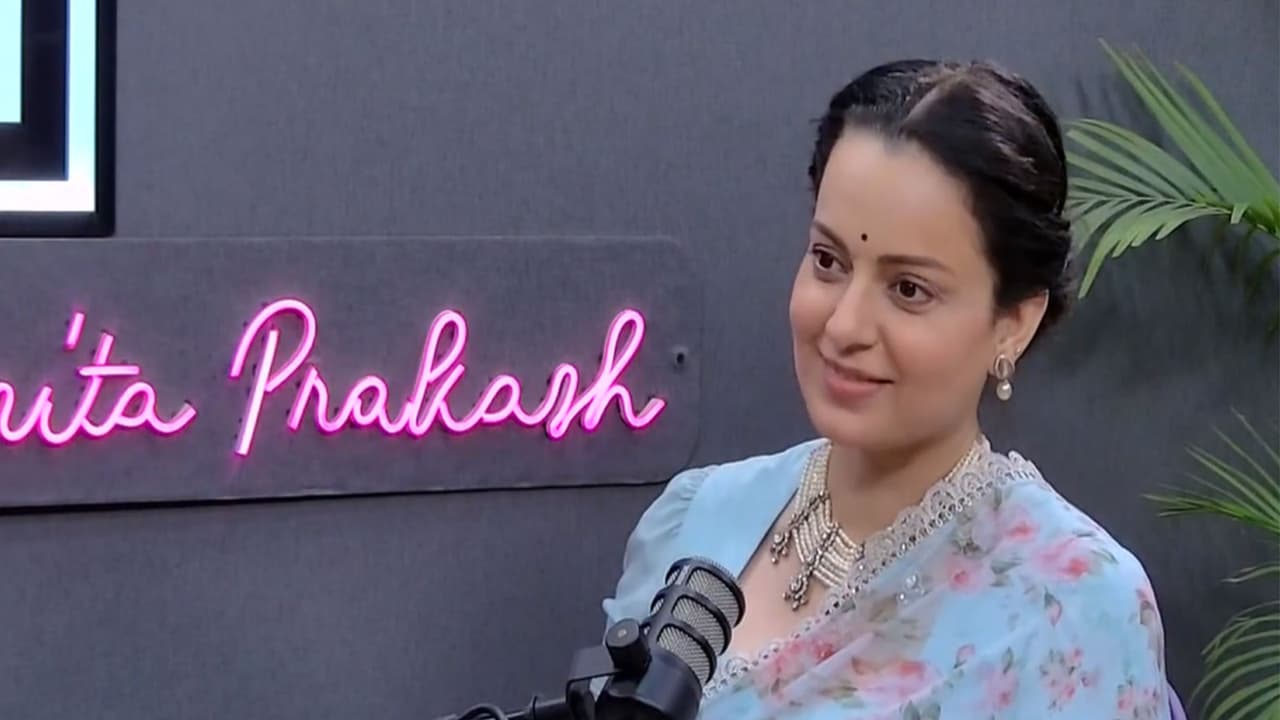
In a conversation with ANI, Ranaut spoke about the ongoing debate around the bill. BJP MP from Mandi constituency asserted that the measure is a crucial step towards correcting deep-rooted structural inequalities.
A ‘Big Victory’ For Women
“The greatest time for women to be alive and we have to celebrate this,” adding, “I am so thrilled to be alive and to be witnessing this that I think all the women all across, it’s just such a big victory for all of us that in Himachal we have 68 MLAs and we have one woman MLA so how women have looked at.”
Ranaut continued, “Even today, if you open the newspaper and read someone has poisoned his daughter or even killed her, the mother, just because they are woman, somewhere down the line, they are always made to feel inferior. They are always made to feel they don’t deserve to be alive.”
Social Barriers and Underrepresentation
She also highlighted the current stark underrepresentation of women in legislative bodies. “Merit can only emerge when equal opportunity is provided. If women are not even present in adequate numbers, how will merit be judged?”
Lok Sabha MP added.
Ranaut also underlined the social barriers that discourage women from entering public life, particularly in rural areas. She noted that women stepping out for public work have long faced stigma, questions about safety, mobility, and even marriage prospects. “These are realities that have limited their participation.”
“So, if you look at it that way, the women who have to leave the house, how difficult it is. I also remember when a lady from a village used to go to a rally, our mothers, our aunts used to circle around her saying, ‘you went to a rally, you are very brave, how did you go, what happened there, kisi ne tumhe cheda to nahi ya tumhe dhakke to nahi lage’ (did anyone tease you, or did you get pushed?)..It used to be a very strange thing for them. For all women, that woman used to be a different type of woman.”
So what do you think, that in this career, in the leadership career, said Ranaut while questioning, “Do women have fair participation? “Women do not have fair participation,” she stressed.
Ranaut said women have faced societal stereotypes since the beginning when considering a move into politics. “When you were in school or college, or I was there, did we ever think that I should become a politician? We never thought, because maybe we were never allowed to think that way. Ye bhaga daudi ka kaam aur raat ko kahi rehna pade jana pade aur aesi ladki jo prachar kare uske saath shaadi kaun karega (Who will marry a girl, who has to run here and there for political campaigns).”
Leadership, Policy, and PM Modi’s Vision
Addressing the argument that more women in decision-making roles would automatically lead to better outcomes for women, she urged a broader perspective. “When you see a woman, you should see her as a leader.”
However, she maintained that greater representation would help bring diverse lived experiences into policymaking. “Policies must reflect societal changes, and women’s participation will ensure that happens.”
She emphasised that this approach is not new for Prime Minister Narendra Modi, noting that even during his tenure in Gujarat, he consistently advocated against female foeticide and worked to raise awareness on the issue. Highlighting PM Modi’s thought process, she said his efforts have long reflected a deep sensitivity towards women’s rights and dignity.
Support for Delimitation Exercise
Ranaut also backed the linkage of the bill with the delimitation exercise, calling it a “constitutional necessity”. She called the delimitation process important and much needed.
“There is no doubt that there should be a delimitation…women are connected to this. Because if we don’t give them? What will happen to women? What is their representation? What is the balance? We will only know that when we do the delimitation.”
Citing her constituency, she highlighted logistical challenges due to vast geographical distances, arguing that delimitation would ensure better governance and representation.
“The opposition’s logic is incomplete. It is incomplete in a constitutional way. It is incomplete in a political way. Because if we want to bring women’s balance, then we have to find out about them. Because we want to apply it as soon as possible. That’s why the census of 2011, the population census, we want to do it according to that,” she said.
The Constitution (One Hundred and Thirty-First Amendment) Bill, 2026, The Union Territories Laws (Amendment) Bill, 2026 and The Delimitation Bill, 2026 were introduced and taken up for consideration and passing in the Lok Sabha earlier in the day.
PM Modi sought unanimous support for the bills. Opposition parties have raised strong concerns over the Delimitation Bill. (ANI)
(Except for the headline, this story has not been edited by Asianet Newsable English staff and is published from a syndicated feed.)