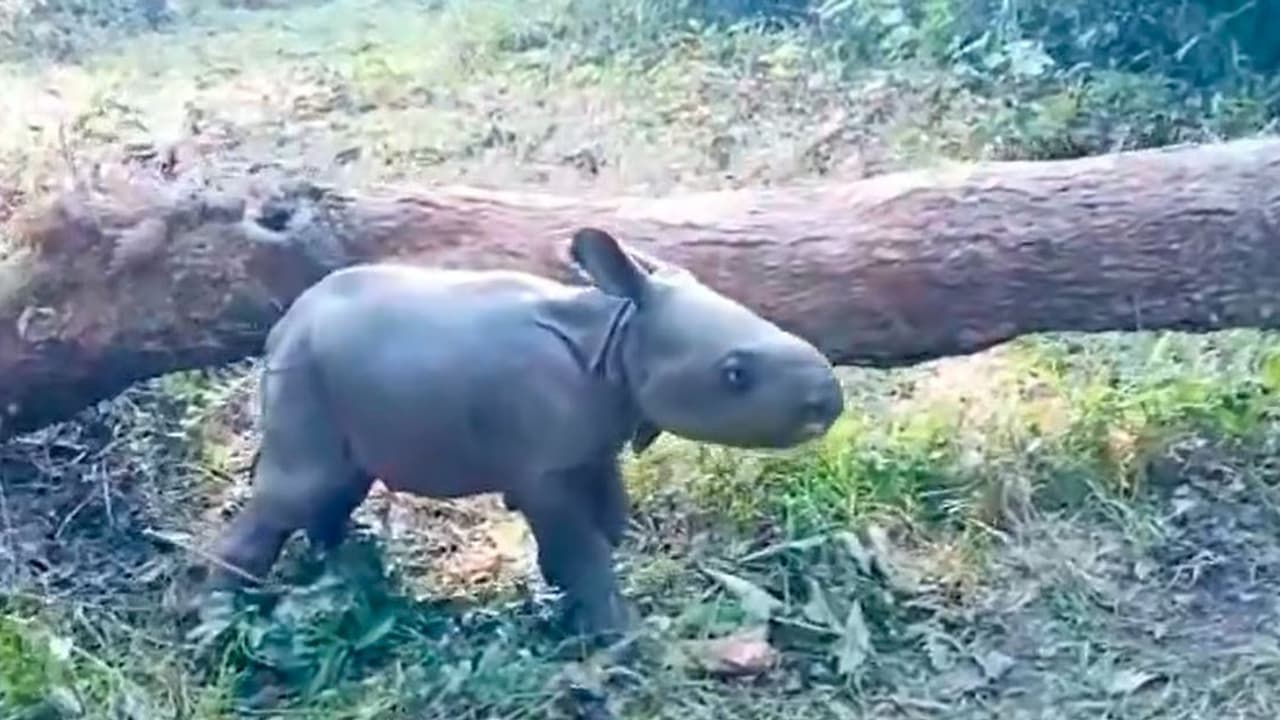
IFS officer shares viral video of one-day-old rhino baby. In this the child is taking his first steps with the mother. The video, shot from a safe distance, is part of monitoring each rhino as part of a conservation programme.
The world of nature and wild animals is really amazing. We often see things that surprise us. Wildlife photographers and Indian Forest Service (IFS) officials often post such videos and pictures on social media. Similarly, IFS officer Parveen Kaswan has shared a video of a one-day-old rhino baby. This video is now going viral on social media.
Rare video went viral on social media
When a mother rhinoceros is with her young child, she is very alert. If someone tries to come near the child, she may even attack. So, the video of this one day old baby was shot with great care while sitting on a trained elephant. Officer Parveen Kaswan himself has given this information.
“If you’ve never seen what a day-old baby rhino looks like… every rhino in our national park is recorded and monitored,” he wrote in the post. More than 7 million (70 lakh) people have watched this video so far. In the viral video, the baby rhinoceros is seen taking his first steps with his mother. This video was recorded when the Forest Department team was on its daily patrol.
It is not easy to get to the baby rhinoceros
This video has been shot from a safe distance while sitting on an elephant. Parveen Kaswan told that here every new child is kept under special watch so that the record of their population can be maintained. This data helps in their long-term conservation plan. After the video went viral, many people asked questions in the comments. In response, Parveen Kaswan said that one has to be very careful while going near the mother rhinoceros. Even when forest officials record rhinos, they have to strictly follow several protocols like maintaining a safe distance.
He also told that even though rhinos may look peaceful, they can be very aggressive regarding the safety of their children. A few years ago, rhinos were on the verge of extinction due to large-scale hunting. Their horns were smuggled to China via Myanmar. But due to the strict action and efforts of the Forest Department, their numbers are now increasing again.
Scroll to load tweet…