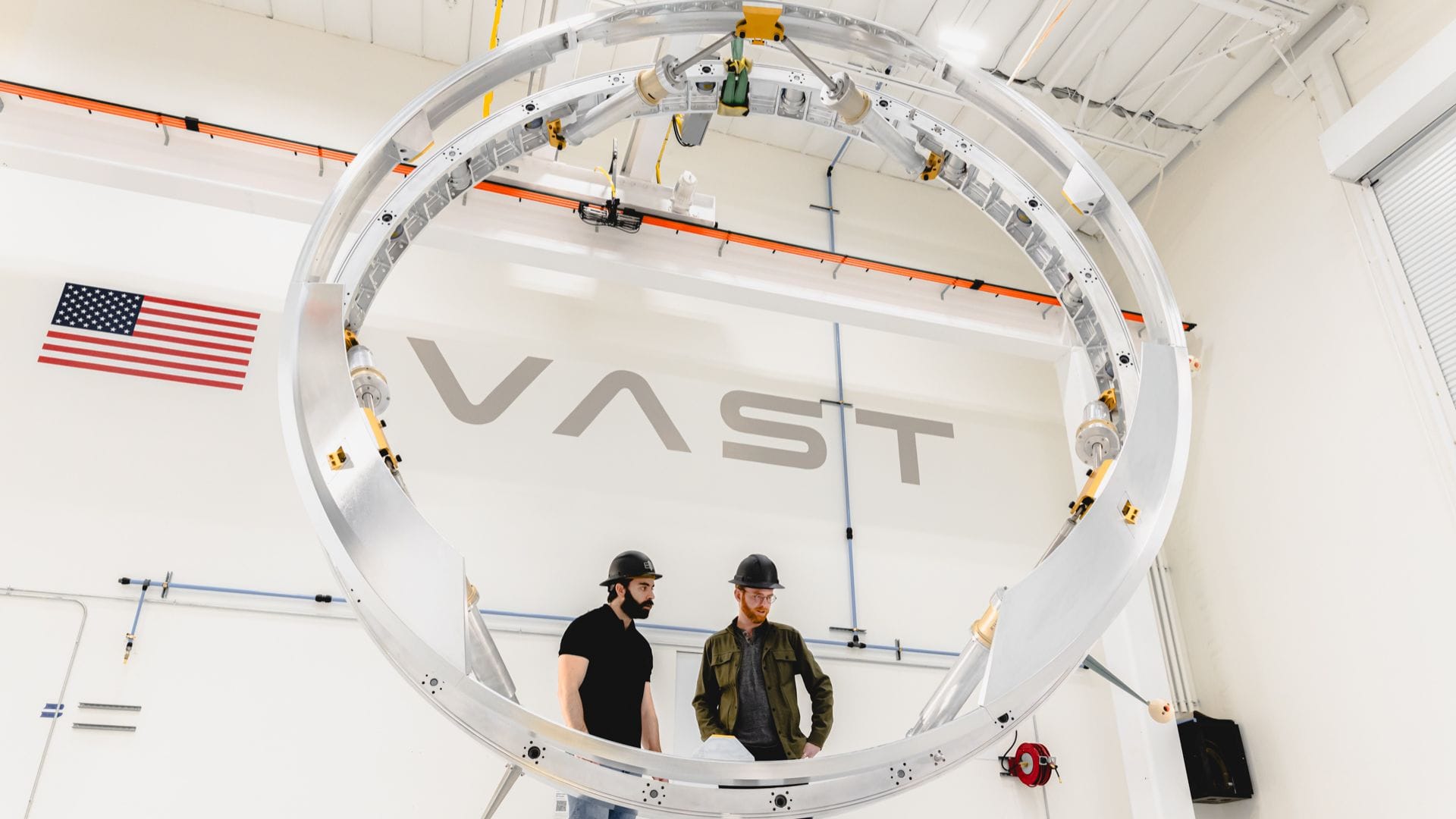
New Delhi: The American New Space Startup Vast, which aims to deploy the first commercial space station, Haven-1 has revealed the Large Docking Adapter that it is developing for future space stations. Humanity’s ambitions in the space domain is increasing, with future commercial orbital complexes expected to use larger, more massive modules, as well as a newer generation of spaceships with more capacity for crew. The Large Docking Adapter is engineered to support the increased structural demands, while allowing varying types of modules and devices to dock together. Vast is open-sourcing the interface in May 2026, with the aim of encouraging industry-wide collaboration, and accelerate the development of compatible space hardware.
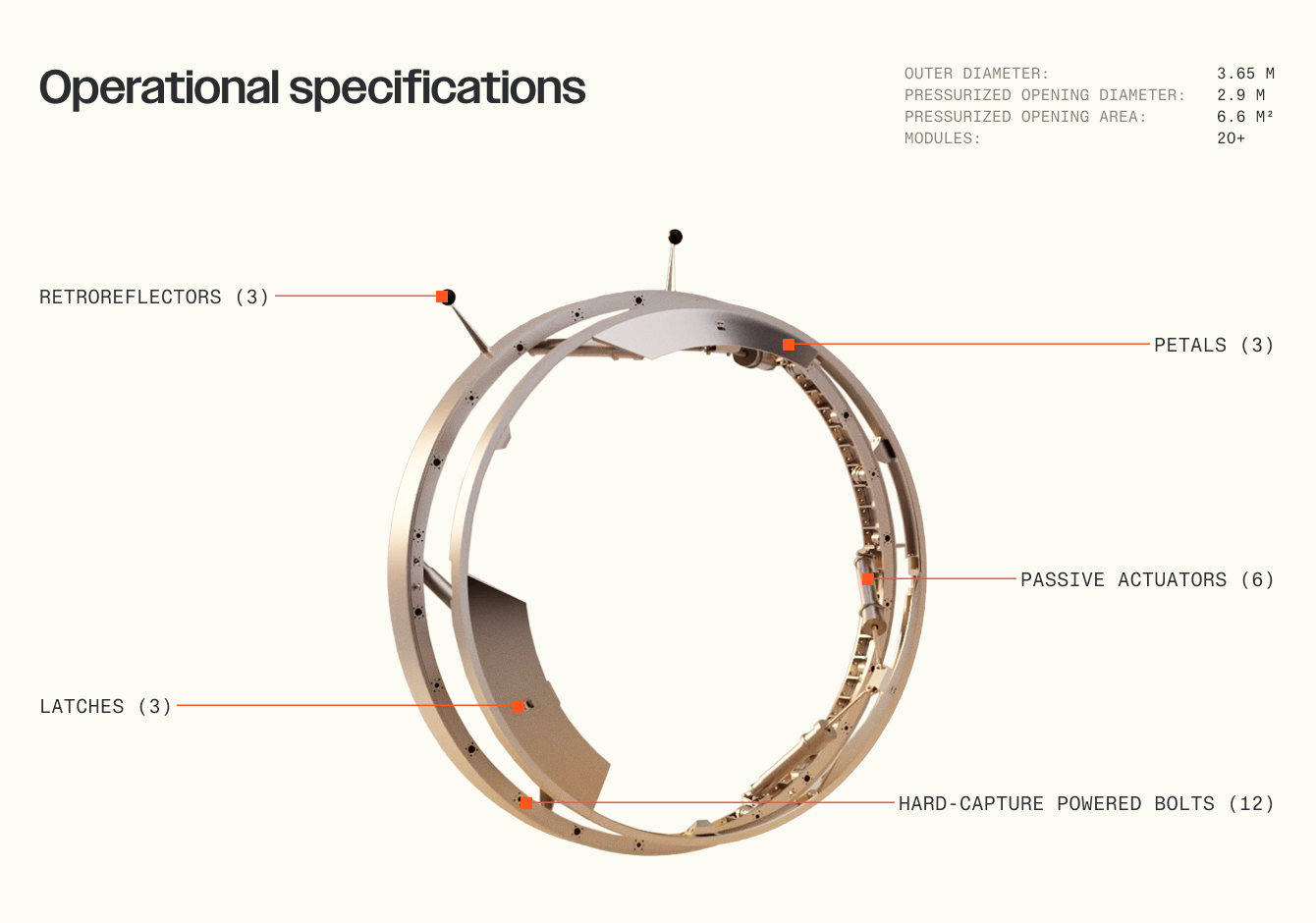
Features of the Large Docking Adapter. (Image Credit: Vast).
The adapter is compatible with the existing International Docking System Standard. The interface is designed to support large crewed vehicle-to-station docking, and is proposed as a standard interface for commercial and international partners. Vast has invited space agencies, commercial space station companies, as well as cargo and crew vehicle manufacturers to adopt the standard. Interested parties can either purchase the docking adapter directly from Vast and integrate it into their own hardware, or manufacture their own interface using the open-sourced user guide.
Vast is testing the hardware on the ground
The International Space Station (ISS) uses the International Docking Adapter (IDA), with an aperture of 0.8 metres as well as the larger Common Berthing Mechanism (CBM), with an aperture of 1.6 metres. The IDA is typically used by visiting crewed ships, such as the SpaceX Dragon and the Boeing Starliner. The CBM is typically used by the modules of the ISS themselves, that are berthed rather than docked, as well as visiting cargo shuttles. The Large Docking Adapter has a much larger, generous aperture of 2.9 metres. The hardware is being developed and tested on the ground.