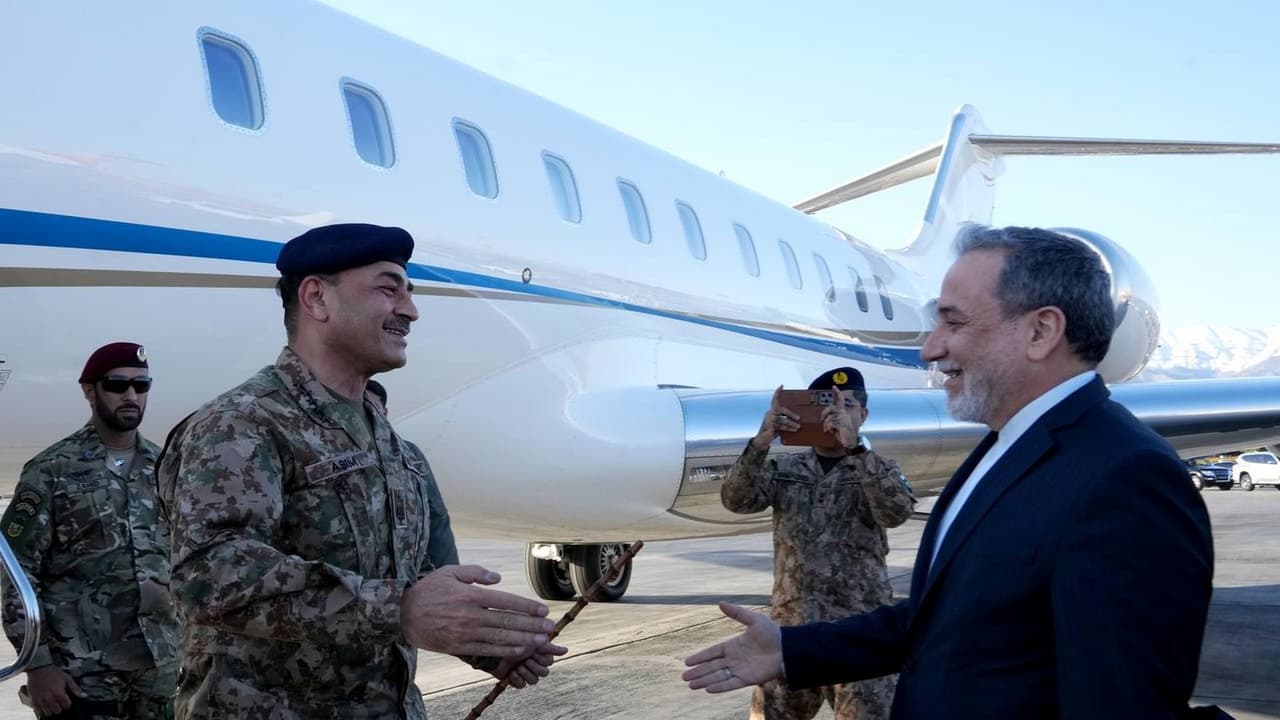
Pakistan’s Army Chief arrived in Tehran with a new US message to revive peace talks. President Trump signalled a preference for a deal, hinting at new negotiations within 48 hours as a fragile ceasefire and looming naval blockade add urgency.
Amidst a fragile two-week ceasefire and a looming naval blockade, Pakistan’s Chief of Army Staff arrived in Tehran on Wednesday. His high-stakes visit is seen as a final-hour attempt to resuscitate peace negotiations between Washington and Tehran after the “Islamabad Talks” ended without a breakthrough. General Munir, accompanied by Interior Minister Mohsin Naqvi, was received by Iranian Foreign Minister Abbas Araghchi. According to Iranian state media and diplomatic sources, the delegation is carrying a specific new message from the United States intended to outline a framework for a second round of high-level negotiations.
Trump Signals Preference for Diplomatic Resolution
This diplomatic push in Tehran comes as US President Donald Trump indicated that, while he is not considering extending the ongoing two-week ceasefire, a negotiated settlement remains the preferred path. Speaking to ABC News’ Chief Washington Correspondent Jonathan Karl, the US President expressed confidence that extending the truce would not be necessary, remarking, “I think you’re going to be watching an amazing two days ahead. I really do.”
Building on this sentiment, when questioned on whether the hostilities would conclude through a deal or the neutralisation of Iranian capabilities, Trump emphasised the benefits of a diplomatic resolution. “It could end either way, but I think a deal is preferable because then they can rebuild,” he stated, adding that “no matter what, we took out the radicals.” The urgency for such a breakthrough was further highlighted by Trump’s suggestion that additional talks could materialise within the next 48 hours.
Islamabad Weighed as Venue for Follow-Up Talks
While initial discussions pointed toward a European venue, the US President later indicated a shift in preference, suggesting Islamabad as a more likely location for the second round of direct negotiations to end the seven-week conflict. Reinforcing the possibility of this venue, CNN reported, citing sources familiar with the matter, that Washington is currently weighing this potential second round, with US Vice President JD Vance likely to lead the American delegation once again. The proposed meeting in Islamabad is expected to include Trump’s special envoy Steve Witkoff and Jared Kushner, both of whom have been central to exploring a diplomatic pathway to end the hostilities. However, while Vance, Witkoff, and Kushner remain in contact with Iranian officials following their previous 21-hour marathon session, the specifics of the next meeting remain under deliberation. “Future talks are under discussion, but nothing has been scheduled at this time,” a US official noted, according to CNN, as the international community watches for a definitive step toward a potential agreement.
Previous Talks Failed Over ‘Red Line’ Issues
Direct talks held on April 11-12 between US Vice President JD Vance and Iranian officials lasted 21 hours but failed over “red line” issues, primarily Iran’s nuclear program. Vice President Vance departed Pakistan stating the U.S. had left behind its “final and best offer,” while President Trump immediately announced a naval blockade of the Strait of Hormuz to curb Iranian “extortion.”
(Except for the headline, this story has not been edited by Asianet Newsable English staff and is published from a syndicated feed.)