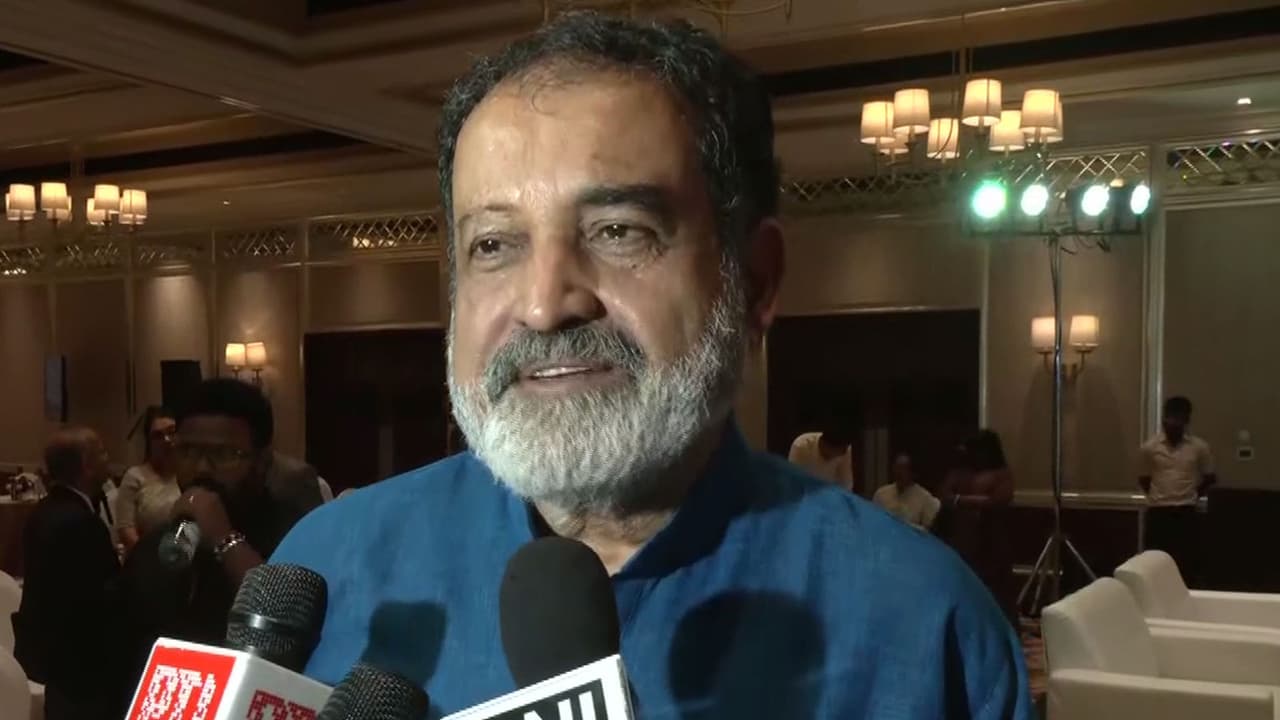
Mohandas Pai lauded the Centre’s decision on UPI and MDR, stating it will fund digital payment infrastructure. He clarified that 96% of UPI transactions, including all P2P and those under Rs 2,000, will remain completely free of charge.
The central government’s decision regarding MDR and UPI is a welcome move that will help fund the infrastructure needed to support rapidly growing digital payment volumes, former Chief Financial Officer and Board Member of Infosys Mohandas Pai has said, noting that nearly 96 per cent of UPI transactions would remain unaffected.
‘MDR is not a tax’: Mohandas Pai
Speaking with ANI on the sidelines of International Tax Conference, Pai noted that around 70 per cent of UPI payments are Person-to-Person (P2P) transactions, which remain free, while transactions below Rs 2,000 are also exempt from MDR. “It is important to look at the data: 96% of UPI transactions will not be affected by MDR at all. Because roughly 70% of all payments are person-to-person (P2P)—which carry no charges whatsoever. The remaining payments below Rs 2,000 are also completely exempt. Only transactions above Rs 2,000 will be subject to a nominal MDR. It is important to clarify that MDR is not a tax. It is a payment made to the banks and payment providers, similar to how credit cards work,” he said. “When you use a credit card, merchants pay a processing fee to the credit card company and the bank. Furthermore, if someone needs to make a payment of Rs 2,500, most people will simply split it into two smaller payments. By paying Rs 1,500 and Rs 1,000, they easily remain below the Rs 2,000 threshold,” he added.
Why is MDR required now?
Mohandas Pai, who is a CA, said that with transaction volumes expected to grow from 24 billion to 50 billion in two years, the entire IT infrastructure must be upgraded. “Why is MDR required now? We operated under a completely free regime for a long time, placing the heavy burden of investment entirely on banks, fintech startups, and digital payment companies. The financial losses and capital investments required to maintain this infrastructure have been huge,” he said.
“In the past, UPI experienced transaction failure rates as high as 15% to 30% due to sudden surges in volume. With transaction volumes expected to grow from 24 billion to 50 billion in two years, the entire IT infrastructure must be upgraded to support real-time processing. Who is going to fund that upgrade? If banks bear the entire cost, it ultimately impacts depositors. Instead, the cost will now be shared by merchants who directly benefit from offering online payments,” he added.
Government Clarifies Stance
The government has said that the new UPI framework introduced has no impact on any person to person transactions. It said that UPI will continue to remain completely free for all person-to-person transactions, irrespective of the amount transferred.
Approximately 96% of all P2M transactions will remain unaffected. MDR will apply only to specified merchant transactions above Rs 2,000. The government clarified that MDR is neither a tax nor a charge collected and is distributed among payment ecosystem participants, including banks and payment application providers, to support the operation and continued expansion of the UPI ecosystem. (ANI)
(Except for the headline, this story has not been edited by Asianet Newsable English staff and is published from a syndicated feed.)