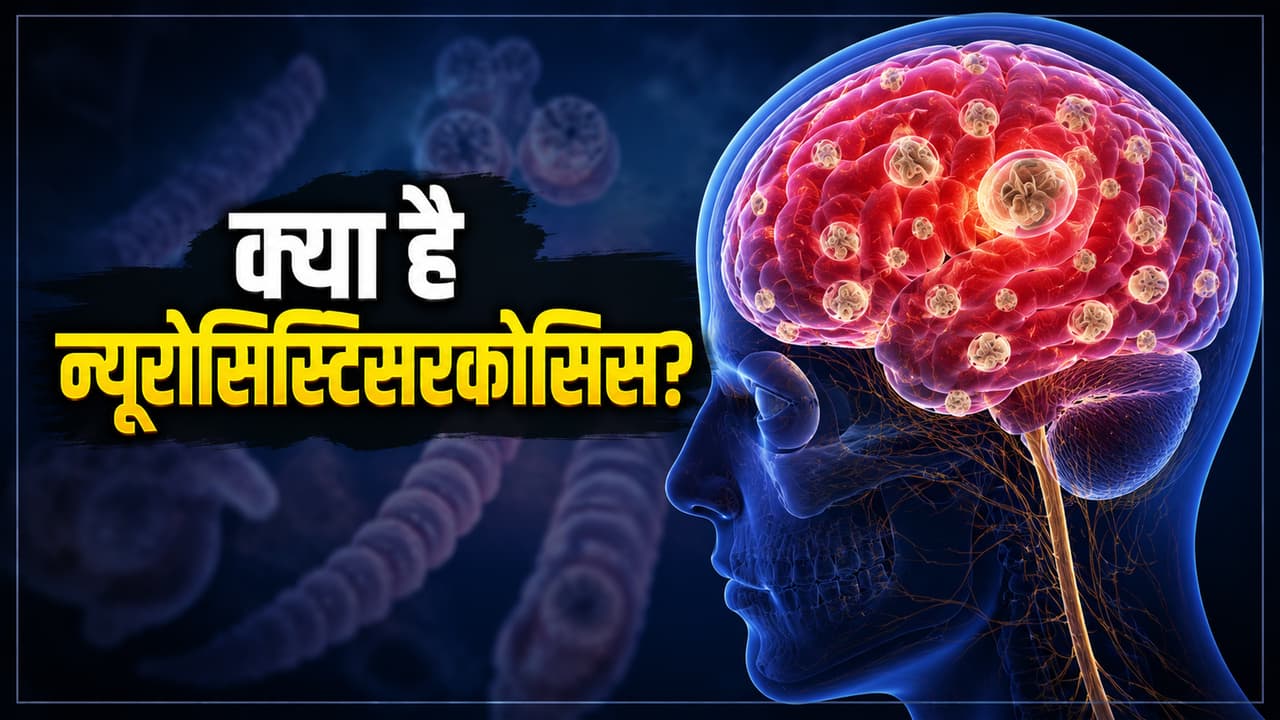
38 parasites found in the brain of a British woman. Doctors considered travel to India as a possible cause, although there is no firm scientific evidence that the infection spread there.
Brain Parasite Case: Britain’s 42-year-old Laurie Denman is in the news these days. According to UK media reports, 38 parasitic cysts were found in his brain. He was diagnosed with a rare parasitic disease called Neurocysticercosis, which is caused by the pork tapeworm (Taenia solium). Doctors believe he may have contracted the infection during his two-month trip to India in 2007. However, this is just a possibility. There is no scientific or lab test that can definitively tell in which country or place the infection occurred.
What is Neurocysticercosis?
Neurocysticercosis is a disease in which tapeworm larvae reach the brain and central nervous system. Very few cases are reported every year in the UK and Lori Denman is one of those rare cases.
How was the disease detected?
According to BBC report, in 2011, about four years after returning from India, Lori Denman felt something unusual for the first time. He told that while using the toilet, he saw a tapeworm about one meter long. After this, the doctors got him an MRI scan, in which 38 parasitic cysts were found in the brain. After this, he was treated for many years. Now he will have to take medicines for the rest of his life to control the epilepsy caused by the infection.
Neurocysticercosis is not caused by eating pork alone.
According to Denman’s doctor, he may have contracted the infection from accidentally eating pork that contained microscopic eggs of tapeworm. However, it is important to understand that eating pork alone is not the cause of this disease. But Neurocysticercosis is caused only by Taenia solium. According to WHO and the US CDC, the disease occurs when a person ingests microscopic eggs of tapeworm through contaminated food or hands. These eggs can reach food, fruits, vegetables or other edible items through the feces of an infected person. That is, the cause of the disease can be not only eating pork, but also contaminated food.
Contaminated water can also cause infection
According to WHO, contaminated water is also a major medium for spreading infection. If microscopic tapeworm eggs are present in water and a person drinks it, the eggs can enter the body and turn into larvae. After this, they can reach the brain, muscles and other organs through blood and form cysts. According to experts, there can be a risk if accidentally swallowing water while swimming in natural water sources. At the same time, the risk of infection from well-chlorinated and filtered swimming pools is considered almost negligible.
Rare in UK, more cases in many countries including India
This disease is extremely rare in the UK. The reasons for this are considered to be the better sanitation system there, food safety standards and regular meat inspection. According to one study, only 26 active cases were reported in the UK between 2001 and 2015. Of these, 65.4% patients came from other countries. 34.6% were people who were born in the UK but had traveled to countries where the disease is more prevalent. According to WHO, this disease is relatively prevalent in many parts of Asia, Sub-Saharan Africa and Latin America.
What is the situation in India?
In India, separate records of this disease are not maintained at the national level. However, a study from Vellore district of Tamil Nadu, published in the Indian Journal of Medical Research, found that neurocysticercosis was responsible for 28 to 34 percent of epilepsy cases. Researchers estimated that approximately one in every 1,000 people in India could be affected by this disease. However, its situation may be different in different areas and this is only an estimate.