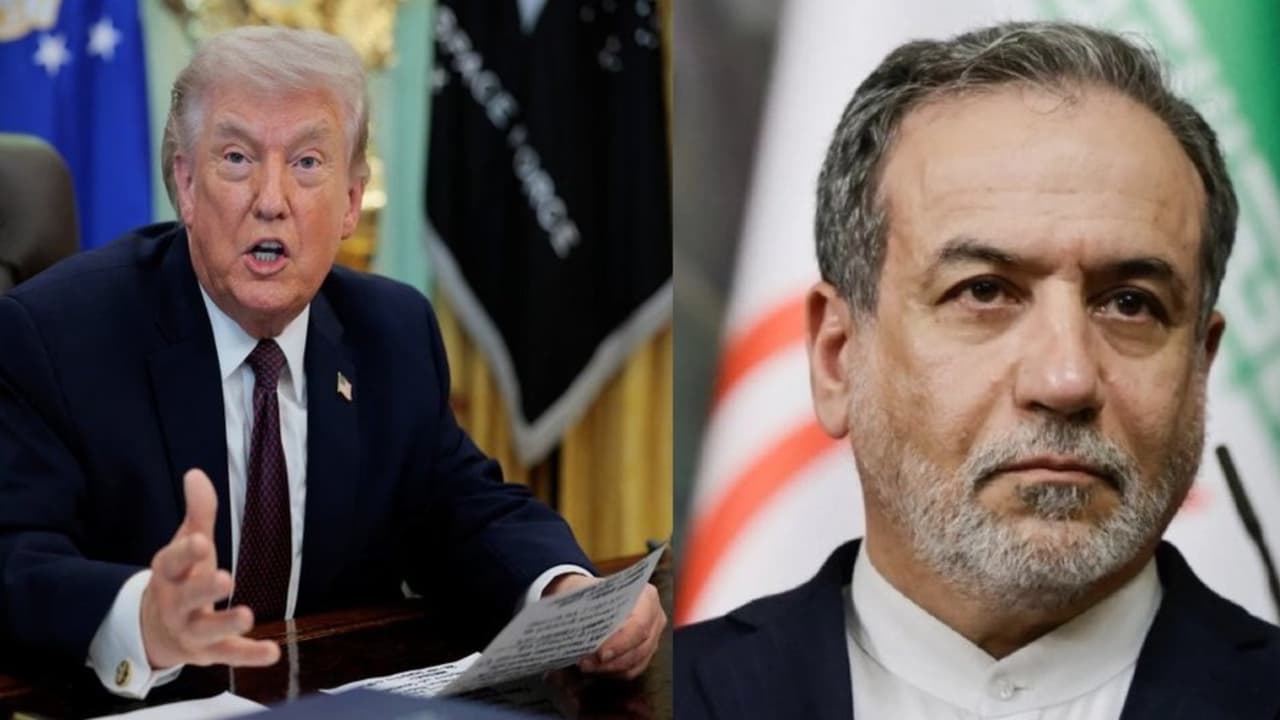
Iran rejected Trump’s 20% tariff proposal on the Strait of Hormuz, saying it would take the decision. Concerns have increased regarding US-Iran tension, blockade and global oil supply.
Middle East Conflict: The Strait of Hormuz has once again become the most dangerous arena of conflict between global superpowers. The war of words between Iran and America has now reached such a point from where the sound of the Third World War can be clearly felt. A social media post by US President Donald Trump has created a stir in the markets of the whole world including Gulf countries, in response to which Iran has also reacted in a strong and mysterious tone.
Trump’s ‘Truth Social’ blast: Will sea routes be taxed?
All this controversy started when US President Donald Trump made a shocking announcement on his social media platform ‘Truth Social’. Trump announced that from now on the United States declares itself “the rightful custodian of the Strait of Hormuz.” But the matter was not limited to just guarding. Trump went a step further, saying: “In exchange for providing security in this very sensitive part of the world, there will be a massive 20 percent tax on all commercial cargo passing through here.” This decision of Trump is not only against global trade rules, but it directly challenges Iran’s dominance. This step of America has put the global oil supply chain and freight transportation companies in trouble.
Iran’s counterattack: “20% is too much, we are the real owner!”
Iran has given a very aggressive and strategic response to this unexpected claim of America. Iran’s Foreign Minister Seyed Abbas Aragchi, while criticizing Trump on social media platform X, wrote that Trump is absolutely right in believing that the person providing security should be compensated. But, he immediately turned the tables and reminded: “The real protector of this strait has always been and always will be Iran. The 20 percent tariff proposed by the US President is extremely high. We will take the right and appropriate decision on this.” This statement by Aragchi clearly indicates that Iran will not accept American supremacy on this important sea route at any cost and if necessary, it can itself start taking action to collect toll from the ships.
Scroll to load tweet…
4 pm deadline: war chessboard laid in the sea
The matter is not limited to just statements. Tensions on the ground have escalated to such an extent that the US Central Command (CENTCOM) has officially announced that a full naval blockade of Iranian ports will be resumed starting at 4 pm ET on July 14. The US Navy has warned all ships operating in the area to remain in contact and alert on ‘Bridge-to-Bridge Channel 16’. This blockade was earlier also in force between April and June, which was lifted after an interim agreement. But now Trump has made it clear that that interim agreement has completely “ended”, after which the armies of both the countries are standing on the brink of war.
Why is the Strait of Hormuz important?
The Strait of Hormuz is one of the most important maritime trade routes in the world. About 20 percent of crude oil exported globally and a large amount of LNG passes through this route. This is why any kind of military tension or blockade here can affect the entire world’s energy supply, oil prices and the global economy. Experts believe that if this conflict between America and Iran deepens, then a big impact can be seen in the energy markets not only in West Asia, but also in Asia, Europe and America.
Will the pace of the world stop? Why is Hormuz burning?
The importance of the Strait of Hormuz can be understood from the fact that approximately one-fifth (20%) of the world’s total oil and Liquefied Natural Gas (LNG) passes through this narrow passage. If war breaks out here or the blockade drags on, global fuel prices will skyrocket, causing a massive recession across the world. This latest tension is a sequel to the wider conflict that began after the death of Iran’s supreme leader Ali Khamenei on February 28 this year. It now remains to be seen what form Iran’s “appropriate decision” takes when US warships begin the blockade after the 4 pm deadline today. Is the world going to witness another devastating war? The eyes of the global community are currently fixed on this chokepoint.