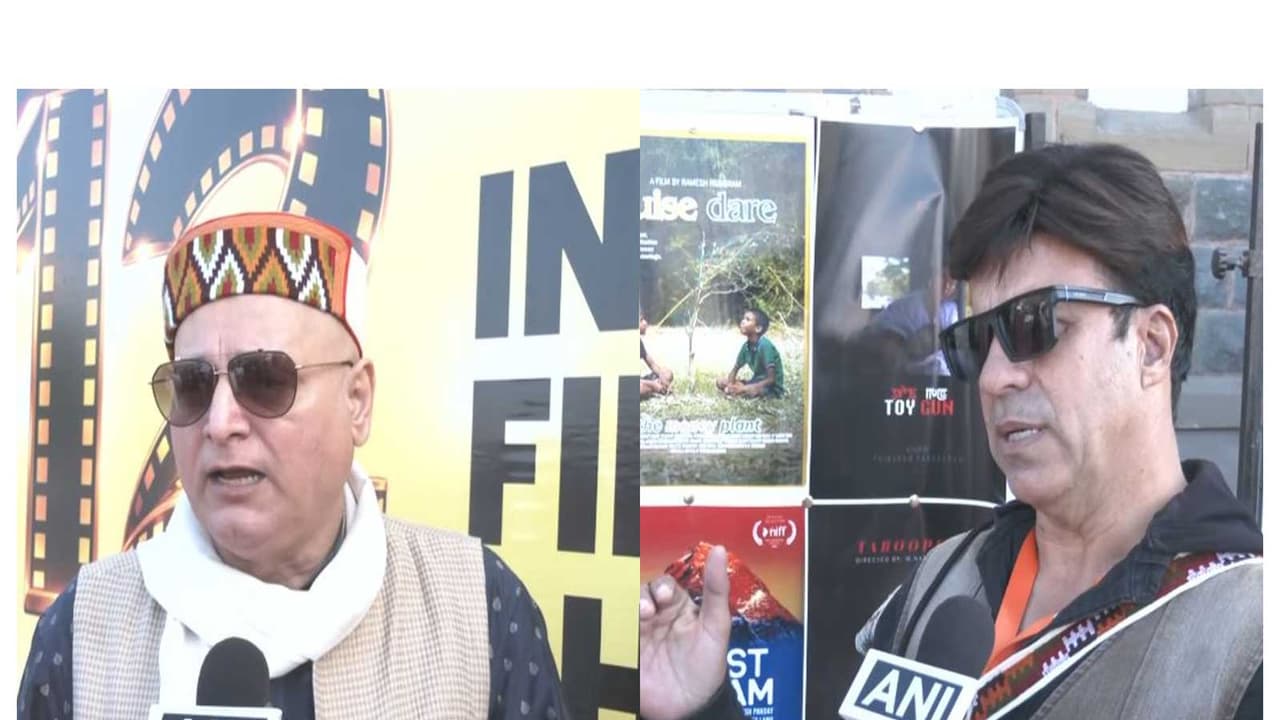
The 12th International Film Festival of Shimla opened, screening 96 films from 32 countries. The event includes feature films, documentaries, and AI-generated films, with special screenings for inmates and students to promote film culture.
The 12th International Film Festival of Shimla (IFFS) opened at the historic Gaiety Heritage Cultural Complex on Friday, bringing together 96 films from 32 countries and 15 Indian states. The three-day festival features feature films, short films, documentaries, animation, music videos and AI-generated films. Filmmakers from countries including Iran, Portugal, Canada, Mexico, Nepal, the US, South Korea, Ukraine, Bulgaria, Armenia, France, Rwanda, Uganda and Spain are taking part in the festival.
The festival is being organised under the Union Ministry of Information and Broadcasting through the National Film Development Corporation (NFDC), along with the Department of Language and Culture, Government of Himachal Pradesh, and Himalayan Velocity.
Festival’s Scope and Outreach
Speaking to ANI, festival organiser Devkanya Thakur spoke about the 12th edition and the response from filmmakers and audiences. “This is the 12th edition of the International Film Festival of Shimla. Every year, it is organised for three days. This time, 96 films are being screened, from 32 countries and 15 states. Filmmakers have come from across the country and are interacting with the audience,” Thakur said.
The festival has also taken screenings beyond the main venue. Selected films are being shown at Model Central Jail Kanda and Model Central Jail Nahan for inmates. A screening venue has also been set up at RKMV College for students. “For the last seven years, and this is our eighth season, we have been putting up screens at Model Central Jail Kanda and Model Central Jail Nahan for inmates. This year, we have also put up a screen at RKMV College to reach young people,” she said.
Showcasing Diverse Cinema
Films from Himachal Pradesh are also part of the festival, along with films from other parts of India. Thakur mentioned films such as ‘10F’, which deals with climate change in Kinnaur, and ‘Chuppi’. The festival is also screening National Award-winning ‘The Shape of Momo’, along with ‘Dholi’ from Uttarakhand and ‘Kakori’.
Thakur said film festivals give audiences a chance to watch films that often travel through festivals before reaching mainstream or social media platforms. “These films first travel through festivals. People who are genuinely interested in cinema should come and watch them. It helps us as filmmakers in our professional grooming, and when young people watch this kind of cinema, they realise that such films can be made,” she said.
She also spoke about the role of the festival in building a film culture in Himachal Pradesh. “We cannot look at everything only in terms of monetary benefits. Sometimes you have to develop a culture, and I think we are successful in that. Slowly, a culture is developing in Himachal Pradesh,” she said.
AI in Filmmaking Takes Center Stage
AI-generated films are also part of this year’s festival, with workshops being held on the use of the technology in filmmaking. “AI films have also come this time. There is a film made through a project at FTII Pune. Manu Dixit has come from Mumbai and is also conducting AI workshops. Our festival teaser was made by a team of filmmakers from Iran, and our cuckoo emblem also uses AI and VFX,” she said.
Filmmaker Manu Bisht, who is attending the festival for the fifth time, said he has received four Best Film awards at the event. He has brought a 13-minute short film made completely using AI. “This is my fifth time at the Shimla Film Festival. I have already received awards for Best Film four times here. This time I have brought a short film which I have produced, directed by Rajesh Bhatia and Bharat Arora. It is a 13-minute film made completely using AI and it will be screened tomorrow after 3 pm,” Bisht told ANI.
Filmmakers’ Perspectives
Filmmaker Manu Bisht on Audience and AI
Bisht said AI could reduce the time and money needed to make films, but he also called for more efforts to bring local students and young cinema lovers to the festival. “I think Devkanya deserves credit for working so hard on this. But I feel the crowd that should be here is missing. There are media colleges, but the students who watch films are missing. Most of the people here are tourists. I think work should be done on this,” he said.
He also spoke about the value of having filmmakers from different parts of India and other countries at the festival. “People have come from Bangladesh, Nepal, Tamil Nadu and Sikkim. We also spoke to a filmmaker from Kashmir for nearly one-and-a-half hours. There were many things I learned from him that I would not have known sitting in Bombay,” Bisht said.
Gul Riyaz on Independent Cinema and Cultural Exchange
Actor and filmmaker Gul Riyaz from Jammu and Kashmir is showcasing his short film ‘The House That Still Cries’, which deals with migration. “A postman comes to deliver letters to a house after 35 years. When he reaches there, he finds that there is nothing in the house; it is in ruins. Through the letters, he discovers who lived there and that their souls are still there. The house has not forgotten them and is still waiting for them,” Riyaz told ANI.
Riyaz said festivals allow independent filmmakers to meet other creators and learn about different cultures and styles of filmmaking. “You get to know where cinema from different parts of the world and across the country has reached. You also learn about different cultures, where people are working and what they are doing. We also share our culture with them. That is why an international film festival is a platform for emerging and independent filmmakers to showcase their films,” he said.
On AI, Riyaz said the technology could help independent filmmakers working with limited budgets. “AI can be useful because independent cinema often has budget constraints. If we have to show something big, AI can help us do it at a much lower cost. But overall, I believe a film should be made naturally. I do not believe in relying entirely on AI,” he said.
Actor Manoj Joshi on Nurturing Talent and Responsible AI
Actor Manoj Joshi, who is also taking part in the festival, said such events give young filmmakers and writers a chance to meet people from the industry. “Film or any form of art is a part of Indian life. When such festivals are organised, there is an opportunity to meet and interact with new creators, new directors and new writers,” Joshi told ANI.
He also spoke about the growing reach of short films and the role of social media platforms. “Today is the era of short films. Short films are watched widely and platforms for short films have also opened up. There are many social and environmental issues, and people are making very sensitive and good films on these subjects. Many such films have also travelled to international festivals,” he said.
On AI, Joshi said the technology should remain a tool and should not replace human creativity. “Artificial intelligence is for us; we are not for it. If we consciously accept it, it can certainly help us. After all, humans created it for humans. But it should never become something that dominates us,” he said.
Joshi also said film festivals should be organised in smaller cities, giving local audiences and young creators more chances to interact with people from the industry. “Every state of India has people who make films, people who work in films and technicians who work in films. It feels good, and such festivals should definitely be held in smaller cities and other wonderful cities as well,” he said.
The actor also used his interaction with young audiences to speak about drug abuse and urged them to stay away from drugs. “Drugs destroy a person. They affect the body, the brain and the ability to think. I have seen many people, including students, destroying their lives,” he said.
Masterclasses and Festival Conclusion
The festival is also hosting interactive sessions and masterclasses with writer-director Amit Rai, actor Sharib Hashmi and other filmmakers and artists. The 12th edition of the International Film Festival of Shimla will conclude on September 27 with the closing and award ceremony, which will be presided over by Governor Kavinder Gupta. (ANI)
(Except for the headline, this story has not been edited by Asianet Newsable English staff and is published from a syndicated feed.)