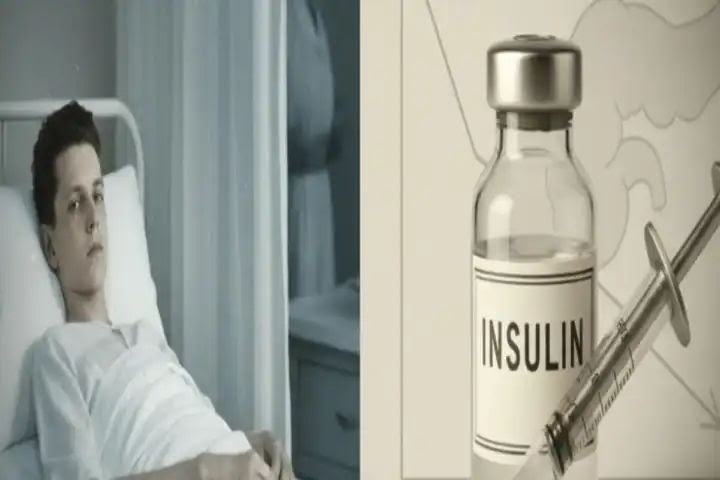
Diabetes patients are living a normal life by taking insulin injections, but a hundred years ago this disease was considered a death sentence. In 1922, a dying boy not only saved himself but also gave new hope to the entire world. His bravery and the hard work of scientists made the discovery of insulin successful, which has saved more than 50 crore lives so far.
14 year old Leonard Thompson was suffering from Type-1 diabetes in Toronto, Canada. There was no treatment for this disease at that time. Patients were kept on starvation diets and most patients died within a year. Leonard’s weight was only 65 pounds (about 29 kg). He was going into coma again and again. Doctors did not expect him to survive. But at the same time, doctors Frederick Banting, Charles Best, James Collip and John Macleod were discovering insulin. He had conducted successful trials on dogs. But the risk of trial on a human being was very high. Leonard’s father showed courage and prepared his son for this experimental treatment. This one decision changed history.
Injection given without trial
On January 11, 1922, Leonard was given the first insulin injection. An allergic reaction occurred due to low purity in the initial injection, but on January 23, a miracle happened when better and pure insulin was given. Leonard’s blood sugar started becoming normal, his health started improving and he came out of the coma. After Leonard’s recovery, insulin was rapidly made available around the world. Banting and Macleod received the Nobel Prize in 1923. He did not take out a patent and helped make insulin available at cheap prices. Today, millions of people around the world are dependent on insulin. It is estimated that insulin has saved more than 50 crore lives in the last 100 years. Without insulin, patients with type 1 diabetes would still die within a few months or years. Leonard himself lived another 13 years because of insulin. He died of pneumonia in 935 at the age of 27, but the work he started continues to this day.
hard work of scientists
Dr. Banting and Best had developed the technique of extracting insulin from the pancreas. Initially it was taken from animals (cow-buffalo). Today human insulin is made through genetic engineering which is safer. The number of diabetes patients is very high in India also. The availability of insulin has saved the lives of millions of Indians. But even today lack of awareness and access is a big problem in rural areas. Leonard Thompson’s story is not just a medical breakthrough, but an example of courage, hope and scientific curiosity. A dying boy not only saved himself but also paved the way for future generations.