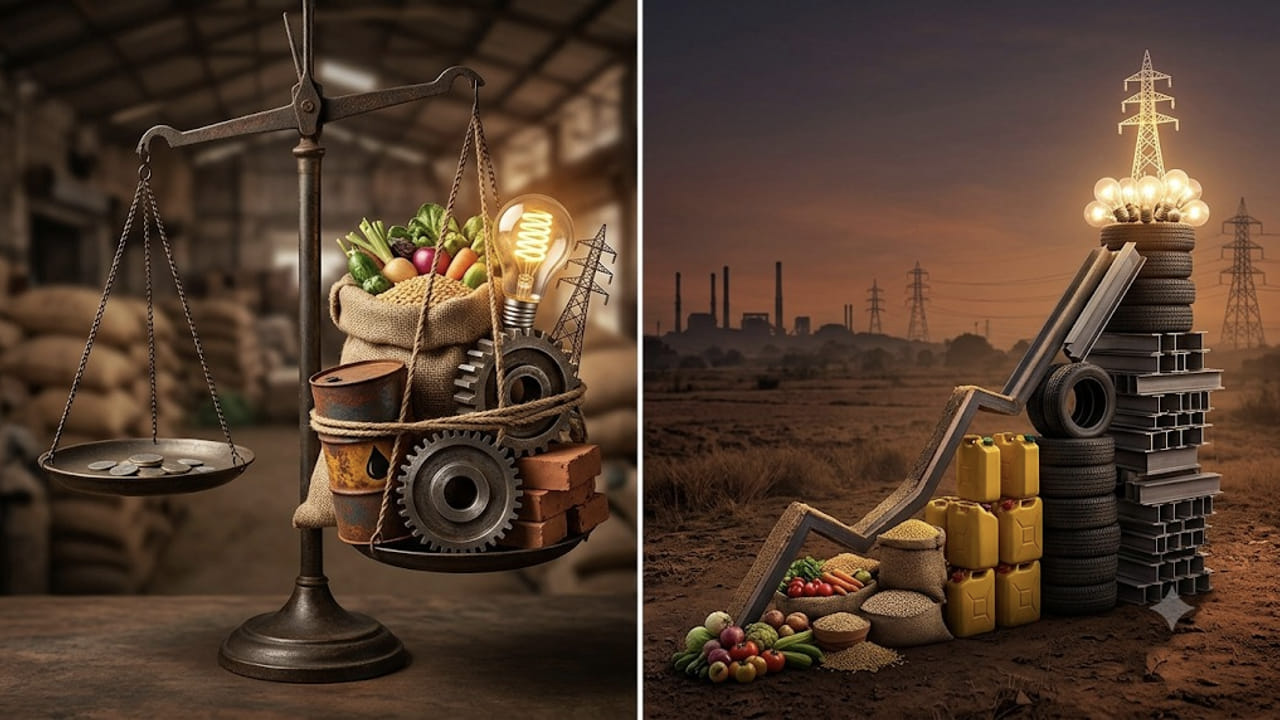
Wholesale inflation measures the change in prices of goods sold in bulk before they reach retailers and consumers. It tracks price movements across categories such as food articles, fuel, electricity, minerals and manufactured products.
A rise in WPI means businesses are paying more for goods, raw materials, energy and other inputs. Depending on how much of these additional costs businesses pass on to customers, consumers may eventually feel the impact through higher prices.
However, wholesale inflation does not automatically translate into an equal increase in retail prices. The extent of the impact depends on demand, production costs, competition and the ability of businesses to absorb higher expenses.
Why did wholesale inflation rise to 12.29% in October?
The biggest contributor to October’s increase was the fuel and power category.
Inflation in this group jumped to 32.84 per cent in October, compared with 25.85 per cent in September. Higher prices of mineral oils, crude petroleum, natural gas and electricity contributed to the increase.
Non-food articles also recorded a sharp rise in inflation. Their rate increased to 11.69 per cent in October from 10.28 per cent in the previous month.
Minerals recorded inflation of 12.64 per cent, compared with 9.51 per cent in September.
Food articles saw a smaller increase, with inflation rising to 8.26 per cent from 8.14 per cent.
The overall primary articles category, which includes food articles, non-food articles and minerals, recorded inflation of 9.24 per cent in October, against 8.67 per cent in September.
Manufactured products provided some relief. Inflation in this category eased slightly to 9.54 per cent from 9.76 per cent in September.
The Commerce and Industry Ministry said the increase was also influenced by higher prices of basic metals, chemicals and chemical products, food products, textiles, and rubber and plastic products.