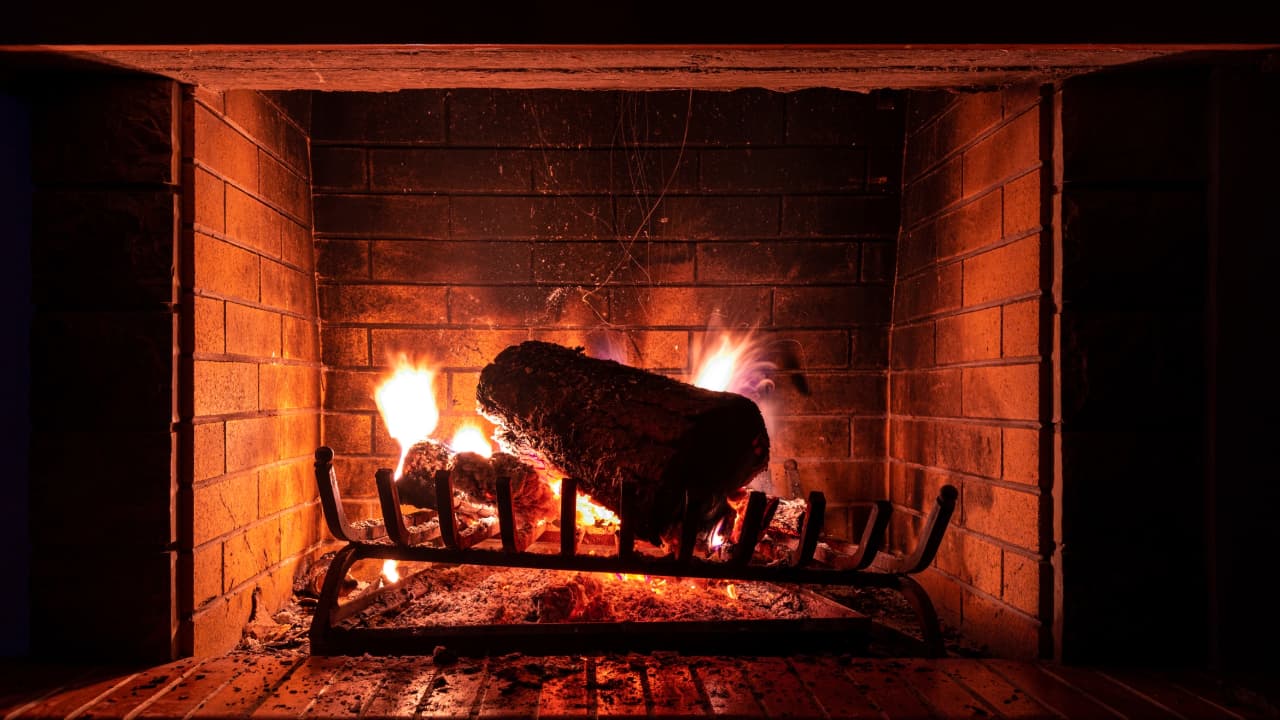
Think your fireplace is just cozy? Discover how residential wood burning creates dangerous winter air pollution, leading to serious health risks. Learn who is most affected.
On a cold winter evening, sitting by a crackling fireplace can feel warm and comforting. However, recent research suggests that burning wood at home may pose more health risks than many people are aware of. A study from Northwestern University has revealed that smoke from burning wood in homes contributes significantly to winter air pollution throughout the United States.
Although only a small number of homes use wood as their primary heating source, the pollution created has far-reaching impacts. In fact, the researchers estimate that smoke from fireplaces, wood stoves, and similar devices accounts for more than one-fifth of people’s exposure to fine particle pollution during the winter months. The study was published in Science Advances.
Serious Health Risks
These fine particles, known as PM2.5, are extremely small and can be inhaled deep into the lungs and even enter the bloodstream. Prolonged exposure to these particles has been connected to severe health issues, including heart disease and respiratory problems. Based on their findings, the researchers believe that pollution from residential wood burning may be responsible for around 8,600 premature deaths annually.
Cities Most Affected
One of the most surprising findings is where the damage is most severe. Contrary to expectations, people living in towns and cities are at the highest risk, rather than those in rural areas. Smoke from suburban neighbourhoods often spreads into nearby urban areas, where more people reside. As a result, many city dwellers are exposed to pollution even if they do not burn wood themselves.
Unequal Impact
The study also reveals that the health impact is not evenly distributed. People of colour are more likely to experience greater exposure and worse health effects from wood smoke, even though they generally contribute less to the pollution. The researchers suggest this disparity may be due to existing health disparities and the long-term consequences of historical housing and environmental policies that have not treated everyone fairly.
Tracking the Smoke
To draw these conclusions, the research team used detailed emissions data and sophisticated computer models to track how wood smoke travels through the air. They mapped air pollution hour by hour across the country which helped them to pinpoint local areas with high pollution levels that are often overlooked in larger-scale studies.
The study suggests that reducing wood burning in homes could lead to significant improvements in public health. Transitioning to cleaner heating alternatives, such as electric or other non-combustible systems, could greatly reduce winter air pollution.