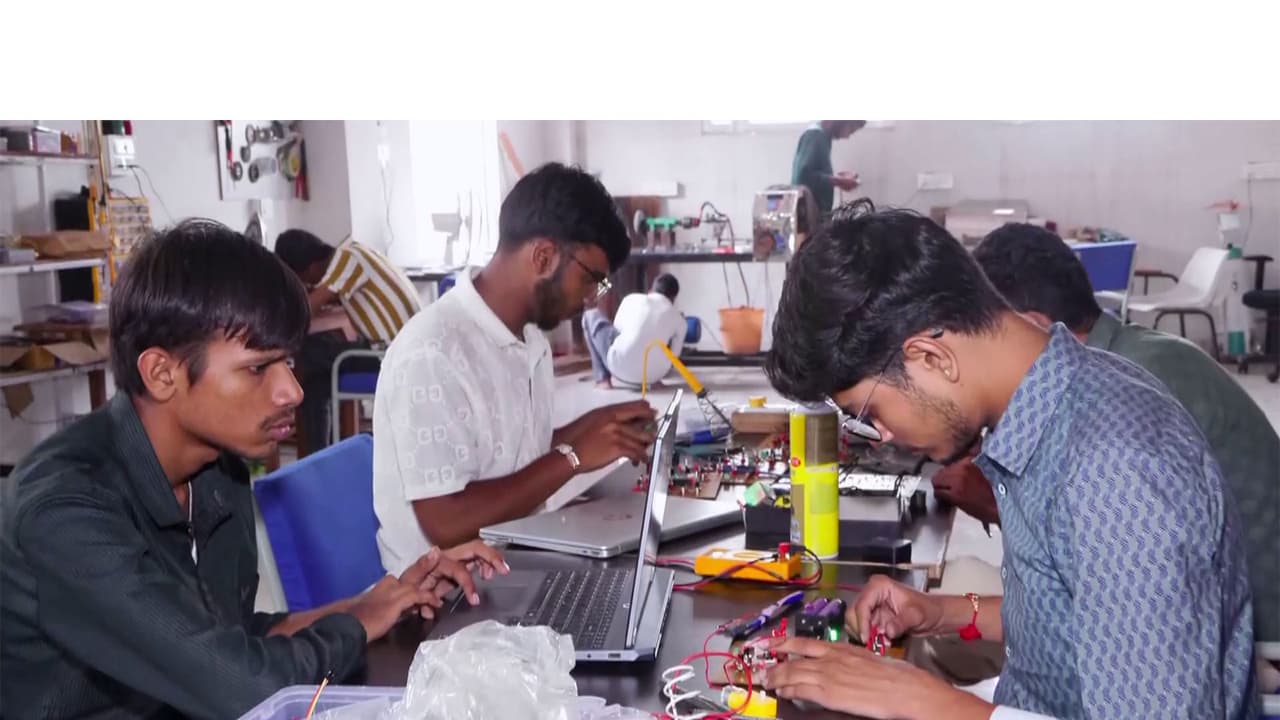
Innovators in smaller Indian cities like Jodhpur and Dombivli are developing indigenous tech solutions. Jodhpur’s Robo AI Hub builds custom automation machines, while a Dombivli startup creates ultrasonic cleaners, boosting manufacturing and ‘Make in India’.
Robotics, automation and artificial intelligence are increasingly transforming industrial operations, and young innovators in India’s smaller cities are developing technology-driven solutions to address practical challenges across industries. From customised machines designed to improve factory efficiency to indigenous ultrasonic cleaning systems, these initiatives highlight the growing role of homegrown innovation in strengthening India’s manufacturing capabilities.
Jodhpur Hub’s Customised Automation
In Jodhpur, Robo AI Hub, founded by Narayan Jangid, is developing automation and AI-based machines tailored to the specific requirements of different industries. Jangid returned to his hometown after working in larger cities to pursue his vision of making advanced industrial technology accessible to businesses beyond major metropolitan centres. “We have developed several types of machines according to industrial requirements. These include automation and cutting machines for the jewellery industry, as well as machines capable of cutting pipes in different shapes and directions. Going forward, we aim to develop similar machines for the agricultural sector to make farmers’ work easier and more efficient,” Jangid said.
A Client-Centric Approach
The hub follows a customised approach to industrial automation, designing solutions based on the specific challenges faced by individual factories. Its team studies client requirements before developing three-dimensional (3D) machine designs, supported by sensor coding, circuit design and research and development.
Neha Sharma, Chief Operating Officer at Robo AI Hub, said understanding the client’s problem is the first step in developing an appropriate technological solution. “We first understand the customer’s problem and document the specific features they require in a machine. Our R&D team then conducts research based on those requirements and develops a suitable technological solution,” Sharma said.
Fostering Future Talent
Beyond developing machines, the organisation is also focusing on preparing young people for emerging opportunities in robotics and artificial intelligence through specialised courses and industrial training programmes. The initiative emphasises practical learning, enabling students to gain hands-on experience in electronics, coding and robotics rather than relying solely on theoretical instruction.
“I have learned many new things here, including Arduino and different electronic components, as well as how they work. The opportunity to learn through practical experience has made understanding technology much easier and more interesting for me,” said Vishnu, a student at the hub.
Jangid said the organisation had introduced an industrial training course to equip young people with the technical skills required by the evolving industrial sector. “Keeping future requirements in mind, we have launched an industrial training course in robotics and AI. The objective is to provide practical training and prepare young people with the technical skills needed to work in industries,” he said.
Indigenous Cleaning Technology from Dombivli
While Jodhpur-based innovators are focusing on automation and robotics, a startup in Dombivli, near Mumbai, is addressing another industrial challenge: cleaning the intricate internal surfaces of small components used in heavy machinery and engines. Leela Electronics is developing indigenous machines based on ultrasonic cleaning technology. These systems use high-frequency sound waves to remove dirt and contaminants from narrow gaps and hard-to-reach areas of industrial components.
The technology has applications across sectors where precision cleaning is essential, including automobiles, aviation, printed circuit boards (PCBs) and pharmaceuticals. Virendra Palan, founder of Leela Electronics, said the company had developed the technology domestically to reduce dependence on imported equipment. “Ultrasonic cleaning machines are used across industries where components require thorough cleaning. Their applications range from automobile and aircraft parts to PCBs and the pharmaceutical industry. Earlier, such machines were imported from China and were quite bulky. We have now developed this technology in India,” Palan said.
Strengthening ‘Make in India’
Together, these initiatives reflect how technology-driven enterprises are addressing industrial needs through locally developed solutions while creating opportunities for technical learning and skill development. As Indian businesses increasingly explore automation and advanced manufacturing, the efforts of young innovators and indigenous technology developers underscore the potential of homegrown engineering to improve industrial efficiency, strengthen domestic capabilities and support the broader vision of Make in India. (ANI)
(Except for the headline, this story has not been edited by Asianetnews Editorial staff and is published from a syndicated feed.)