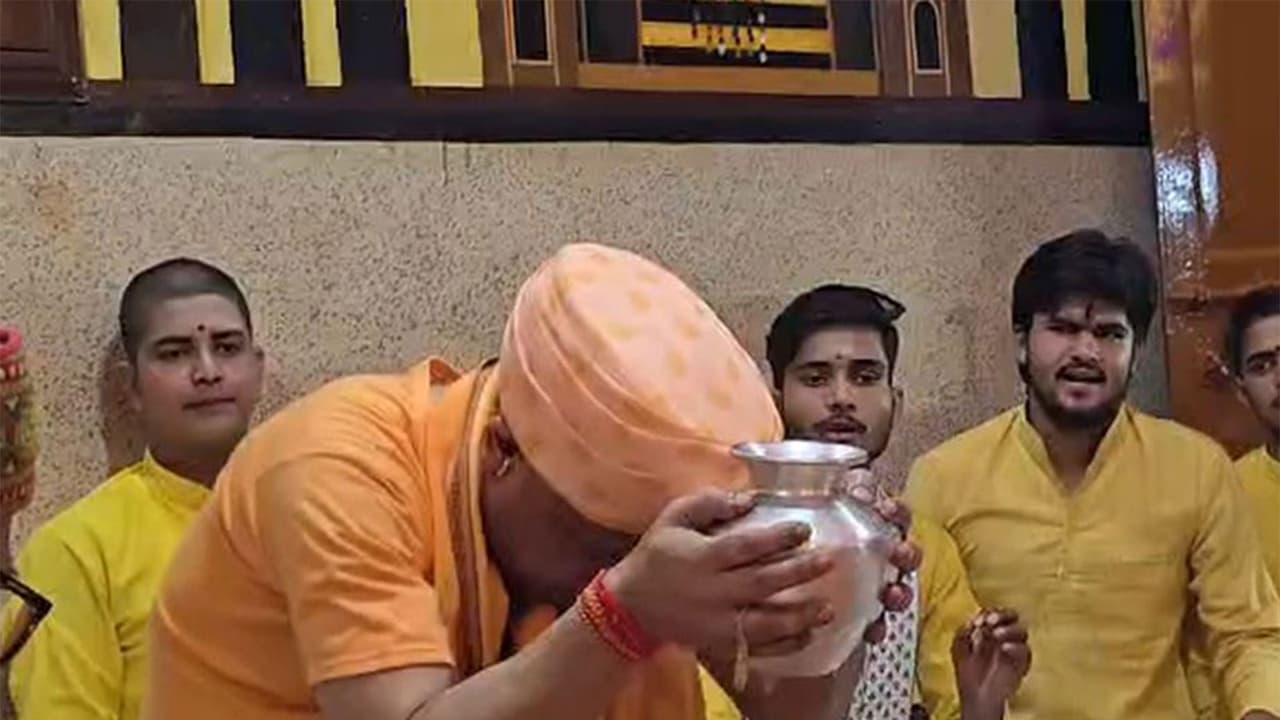
Uttar Pradesh Chief Minister Yogi Adityanath performed Kalash Sthapana at Gorakhnath Temple on the first day of Shardiye Navratri. Union Minister Jitendra Singh also paid obeisance at the historic Mahakali Temple in Jasmergarh Fort.
Uttar Pradesh Chief Minister Yogi Adityanath performed Kalash Puja on the first day of Shardiye Navratri at Gorakhnath Temple on Sunday. UP CM performed the traditional rituals of Shardiye Navratri at Gorakhnath Temple, which also included Aarti of Goddess Durga.
“On the first day of the sacred festival ‘Shardiya Navratri’ dedicated to the worship of Adi Shakti Maa Bhagwati, the Kalash Sthapana was performed today with due rituals amidst the chanting of Vedic mantras at Shri Durga Temple located within the Shri @GorakhnathMndr premises. We pray to Maa Bhagwati that her boundless grace may remain upon all the residents of the state and that happiness, peace, prosperity, and well-being may permeate everyone’s lives. Jai Mata Ki,” Yogi wrote on X.
Union Minister Offers Prayers in Hiranagar
Union Minister Jitendra Singh on Sunday visited the historic Mahakali Temple located inside the Jasmergarh Fort in Hiranagar to pay obeisance and seek blessings on the auspicious occasion of the first Navratri. Accompanied by members of the prominent Sant Samaj, local administration, and socio-political representatives, the Union Minister performed special prayers for the peace, progress, and prosperity of the region and the nation. Speaking on the occasion, Jitendra Singh highlighted the cultural and historical significance of the Jasmergarh Fort temple. He emphasised the government’s commitment to preserving heritage sites while driving comprehensive infrastructure development across the region.
About Shardiya Navratri
Shardiya Navratri is a vibrant and sacred Hindu festival that spans nine nights, celebrating the divine feminine energy embodied by Goddess Durga. Observed in the lunar month of Ashwin, this festival is marked by fervent worship, elaborate rituals, and cultural performances. Each day is dedicated to a different form of the goddess, symbolising various aspects of strength, compassion, and wisdom. Devotees engage in fasting, singing devotional songs, and participating in traditional dances, such as Garba and Dandiya, creating a joyful atmosphere. (ANI)
(Except for the headline, this story has not been edited by Asianet Newsable English staff and is published from a syndicated feed.)