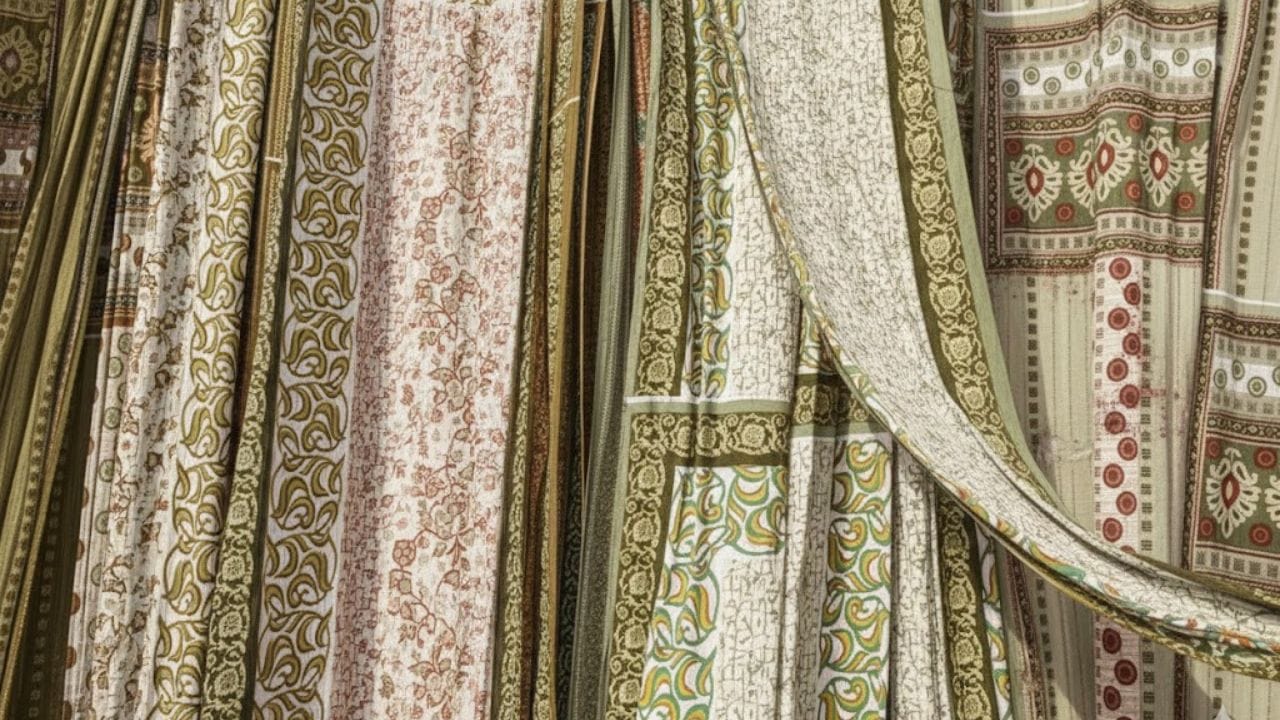
Growth in textile sector
The year 2025 proved to be a year of change and strength for India’s textile sector. During this period, the Central Government and the Textile Ministry laid special emphasis on reforms, modern infrastructure and increasing exports. Its effect was that the foundation of growth connecting farmers, artisans, small industries and big manufacturers became stronger and India established itself more firmly on the global textile map.
New momentum gained from PM MITRA Parks
PM Mega Integrated Textile Region and Apparel i.e. PM MITRA scheme started showing impact on the ground in 2025. Seven big textile parks were taken forward in different parts of the country, where infrastructure development work progressed rapidly. Through these parks, an attempt was made to bring textile manufacturing at one place, thereby reducing costs and increasing production. This has also raised hopes of creating lakhs of employment opportunities.
PLI scheme boosts investment and production
The Production Linked Incentive (PLI) scheme brought for the textile sector also gave positive results. Many companies started investing and started production. Especially the participation of companies related to technical textile was high, which strengthened this emerging segment. This scheme played an important role in preparing India for high-value textile products.
Strength in exports, India’s global identity
India’s textile and apparel exports will increase to approximately $37.8 billion by 2025. Demand for Indian products increased in big markets like America, Europe and Britain as well as in new countries. The government reiterated the target of taking textile exports to $100 billion by 2030, in which sustainability and innovation were considered important.
Focus on technical textile and skill development
Research, startups and new products were promoted under the National Technical Textile Mission. At the same time, lakhs of people were given training through skill development schemes, in which women had the highest participation. This opened up new avenues of employment and the sector got skilled workforce.
Improvement in cotton, silk, wool and jute
In the cotton sector, farmers got support through better prices, digital tools and branding. India maintained its strong position in silk production and new initiatives were also seen in the areas related to wool and jute. Due to this, efforts to connect traditional sectors with modern technology intensified.
Marketing, digital platforms and women entrepreneurship were promoted for handloom and handicraft artisans. India’s preparation in the field of fashion education has also been strengthened by new campuses and international cooperation.